• About
  • Special Reports
  • Topics
    • Climate
    • Earth Science
    • Oceans
    • Space & Planets
    • Health & Ecosystems
    • Culture & Policy
    • Education & Careers
    • Opinions
  • Projects
    • Postcards From the Field
    • ENGAGE
    • Editors’ Highlights
    • Editors’ Vox
    • Eos en Español
    • Eos 简体中文版
    • Print Archive: 2015–2025
  • Policy Tracker
  • Blogs
    • Research & Developments
    • The Landslide Blog
  • Newsletter
  • Submit to Eos
  • AGU.org
  • Career Center
  • Join AGU
  • Give to AGU
  • About
  • Special Reports
  • Topics
    • Climate
    • Earth Science
    • Oceans
    • Space & Planets
    • Health & Ecosystems
    • Culture & Policy
    • Education & Careers
    • Opinions
  • Projects
    • Postcards From the Field
    • ENGAGE
    • Editors’ Highlights
    • Editors’ Vox
    • Eos en Español
    • Eos 简体中文版
    • Print Archive: 2015–2025
  • Policy Tracker
  • Blogs
    • Research & Developments
    • The Landslide Blog
  • Newsletter
  • Submit to Eos
Skip to content
  • AGU.org
  • Career Center
  • Join AGU
  • Give to AGU
Eos

Eos

Science News by AGU

Support Eos
Sign Up for Newsletter
  • About
  • Special Reports
  • Topics
    • Climate
    • Earth Science
    • Oceans
    • Space & Planets
    • Health & Ecosystems
    • Culture & Policy
    • Education & Careers
    • Opinions
  • Projects
    • Postcards From the Field
    • ENGAGE
    • Editors’ Highlights
    • Editors’ Vox
    • Eos en Español
    • Eos 简体中文版
    • Print Archive: 2015–2025
  • Policy Tracker
  • Blogs
    • Research & Developments
    • The Landslide Blog
  • Newsletter
  • Submit to Eos

CC BY-NC-ND 2017

NOAA’s former chief scientist shared insights on his time at the agency and concerns for scientific endeavors.
Posted inNews

Former NOAA Chief Scientist Warns of Threats to Science

by Randy Showstack 14 April 201714 April 2023

Rick Spinrad frets about threats to science from the current administration's attitudes and budget priorities but remains hopeful that things can be turned around.

Plumes
Posted inNews

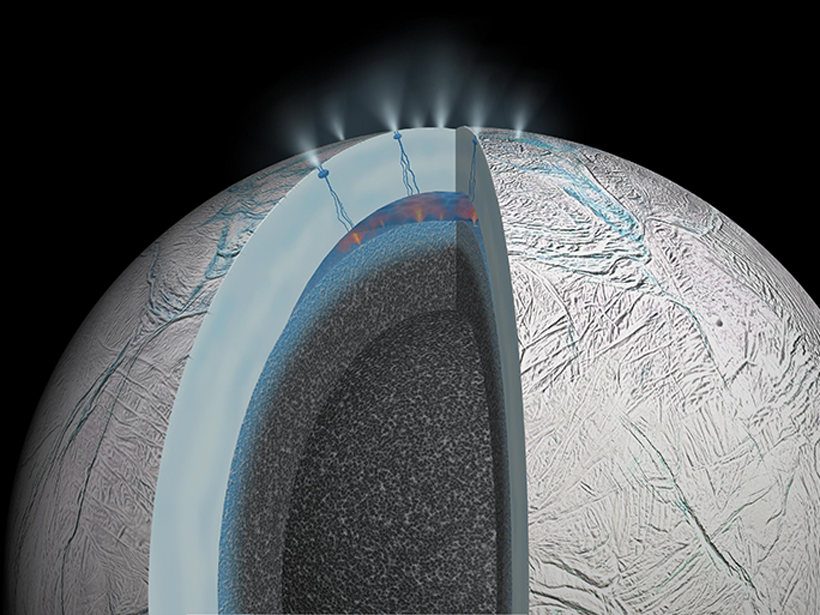
Hydrogen Molecules Hint at Habitability of Enceladus's Ocean

JoAnna Wendel, freelance science writer and illustrator by JoAnna Wendel 13 April 201711 January 2022

Scientists suggest that the hydrogen could be evidence of hydrothermal activity on the ocean floor of Saturn's sixth largest moon.

Researchers use zircon dating to unravel the processes behind the Toba supereruption.
Posted inResearch Spotlights

What Led to the Largest Volcanic Eruption in Human History?

by S. Witman 13 April 201716 March 2022

A mineral-dating project at the Toba caldera in Indonesia sheds light on the science of supereruptions.
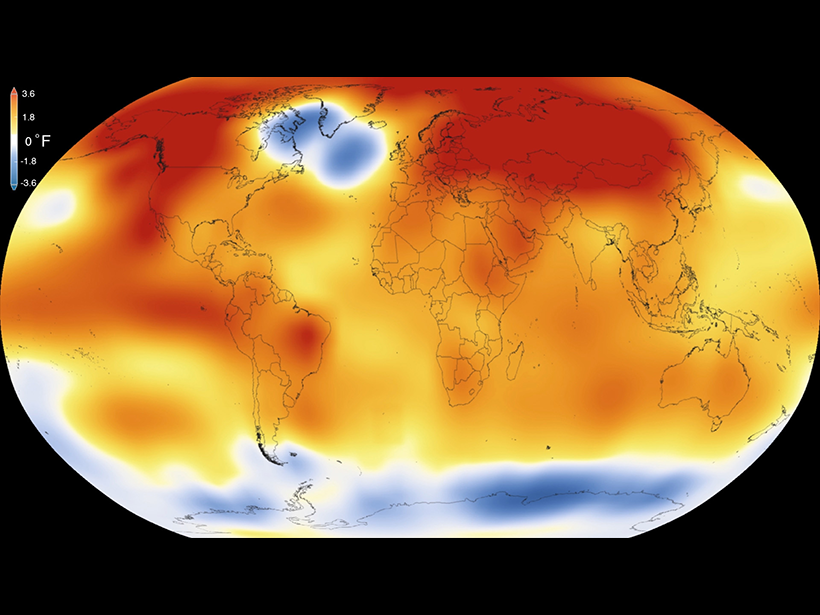
A new study examines how El Niño impacted fish populations off the coast of Mexico.
Posted inResearch Spotlights

How "Godzilla" El Niño Affected Tropical Fish in Low-Oxygen Zone

by E. Underwood 13 April 201718 March 2022

A warm period unexpectedly boosted some species of fish larvae off the coast of Mexico.
Posted inEditors' Vox

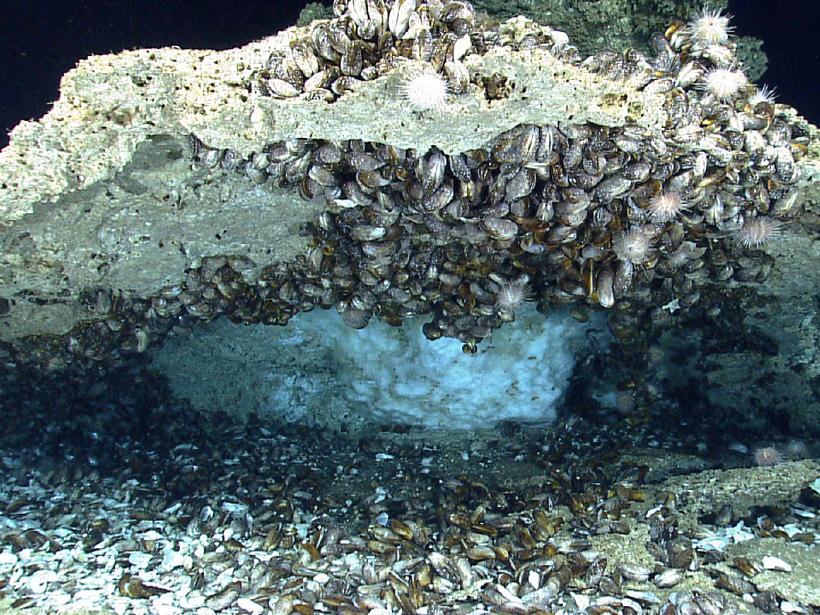
Could Subsea Methane Hydrates Be a Warming “Tipping Point”?

by Alan Robock 13 April 201731 July 2023

The authors of a recent paper in Reviews of Geophysics answer questions about the potential for subsea methane hydrates to contribute to global warming.

Researchers work to unravel the unpredictable cycles of rainfall during India’s monsoon.
Posted inResearch Spotlights

Mysterious Intraseasonal Oscillations in Monsoons

by S. Witman 12 April 201716 December 2021

The unpredictable cycles of rainfall during India's summerlong monsoon have stymied scientists for decades.

Posted inEditors' Vox

Why It’s Time for a New Mission to Venus

by J. Filiberto 12 April 20177 March 2022

A packed session entitled "Unveiling Venus" at the recent Lunar and Planetary Science Conference shows renewed interest in our sister planet.
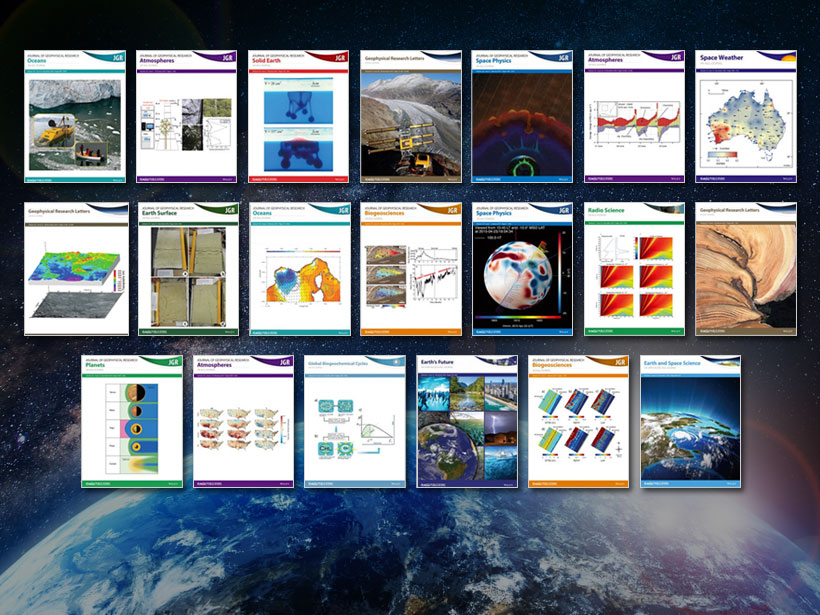
Recent covers of some of the 20 journals that AGU currently publishes.
Posted inAGU News

Providing Greater Context for Earth and Space Science Research

by Jenny Lunn and Brooks Hanson 12 April 201730 August 2022

A new "highlights" page, plain-language summaries, and other recent initiatives further enhance the material in journals and books published by the American Geophysical Union.

Amanita thiersii mushrooms
Posted inResearch Spotlights

Mushrooms Could Provide a Record of Grassland History

Alexandra Branscombe by A. Branscombe 11 April 20174 October 2021

Scientists measured carbon isotopes in certain types of fungi to assess whether the organisms can track how climate change is affecting grasses.
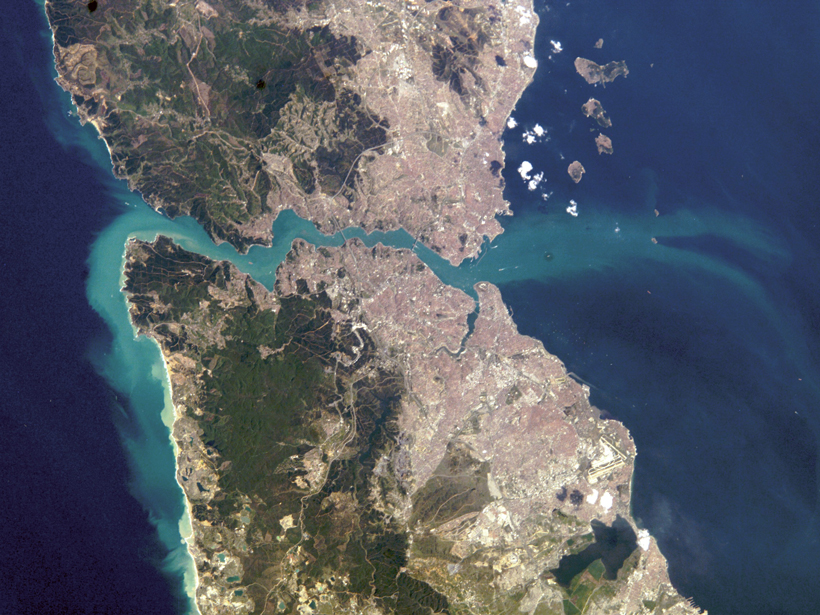
Researchers track waters from the Mediterranean where they meet the Black Sea to see how they interact.
Posted inResearch Spotlights

Big Storms Pump Mediterranean Water Far into the Black Sea

Sarah Stanley, Science Writer by Sarah Stanley 11 April 20176 February 2023

For the first time, scientists provide a sea-wide view of what happens to Mediterranean waters that flow into the Black Sea through the Bosporus Strait.

Posts pagination

Newer posts 1 … 54 55 56 57 58 … 74 Older posts
Over a dark blue-green square appear the words Special Report: The State of the Science 1 Year On.

Features from AGU Publications

Research Spotlights

How Internal Waves Transport Energy Thousands of Miles Across the Ocean

26 March 202626 March 2026
Editors' Highlights

Revolutionizing Interference Detection to Protect the Silence of the Cosmos

1 April 202626 March 2026
Editors' Vox

The Future of Earth’s Future

24 March 202624 March 2026
Eos logo at left; AGU logo at right

About Eos
ENGAGE
Awards
Contact

Advertise
Submit
Career Center
Sitemap

© 2026 American Geophysical Union. All rights reserved Powered by Newspack