

Challenges to studying the ionosphere’s ability to conduct electrical currents undercut scientists’ efforts to improve space weather forecasting models. Let’s tackle them together.
CC BY-NC-ND 2020
Posted inNews
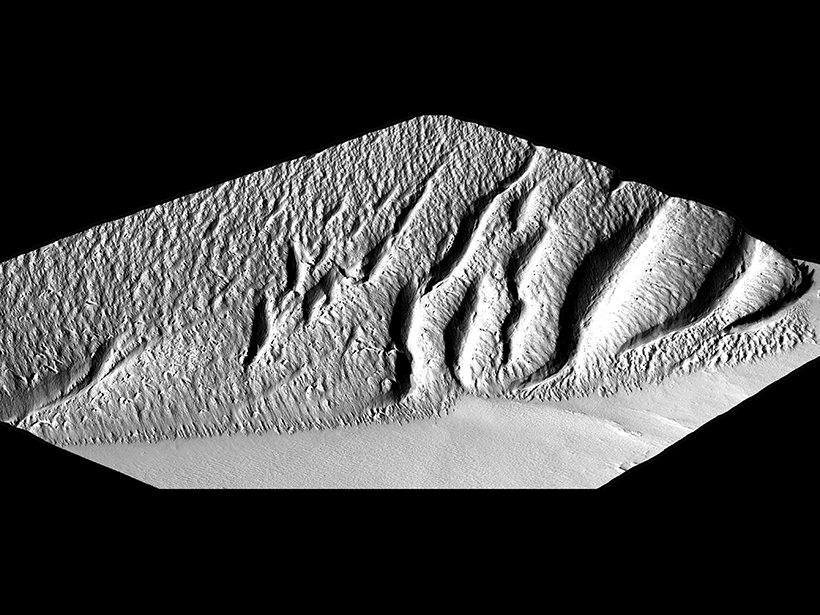
Scientists Float a New Theory on the Medusae Fossae Formation

Pumice-like rafts of lightweight material could have carried volcanic debris across an ancient Martian ocean to build one of the most puzzling features on the Red Planet.
Posted inScience Updates
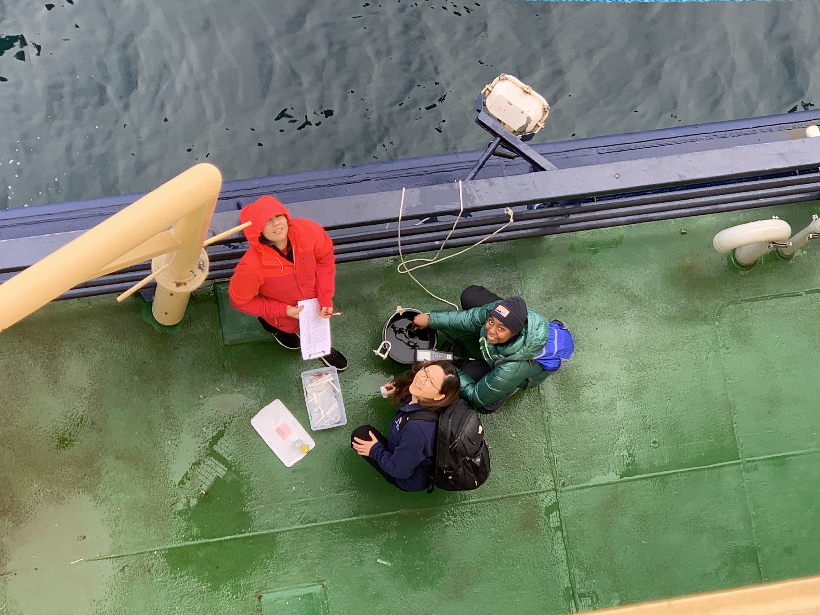
Once Again into the Northwest Passage
After two unsuccessful tries, a hardy band of undergraduate students conducted a successful Arctic research and outreach expedition through the Northwest Passage.

Posted inEditors' Vox
From Blowing Wind to Running Water: Unifying Sediment Transport
Laboratory experiments and grain-scale computer simulations during the past decade have led to a more universal understanding of flow-driven sediment transport across flows in oil, water, and air.

Posted inNews
A Plate Boundary Emerges Between India and Australia

Bathymetric and seismic data point to a new plate boundary in a fracture-riddled zone beneath the northern Indian Ocean.
Posted inNews
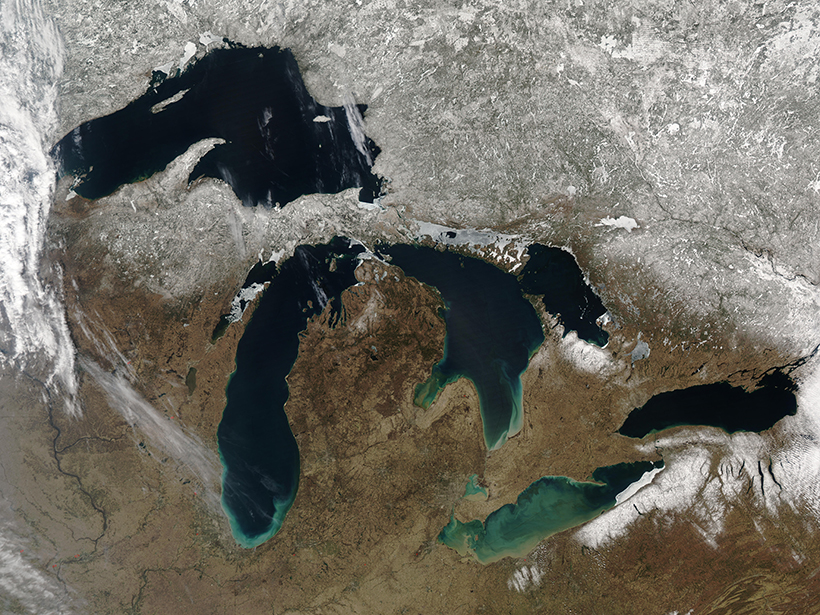
Long Live the Laurentian Great Lakes

Living in Geologic Time: Billion-year-old rifting events set the stage for Earth’s greatest lakes.
Posted inNews
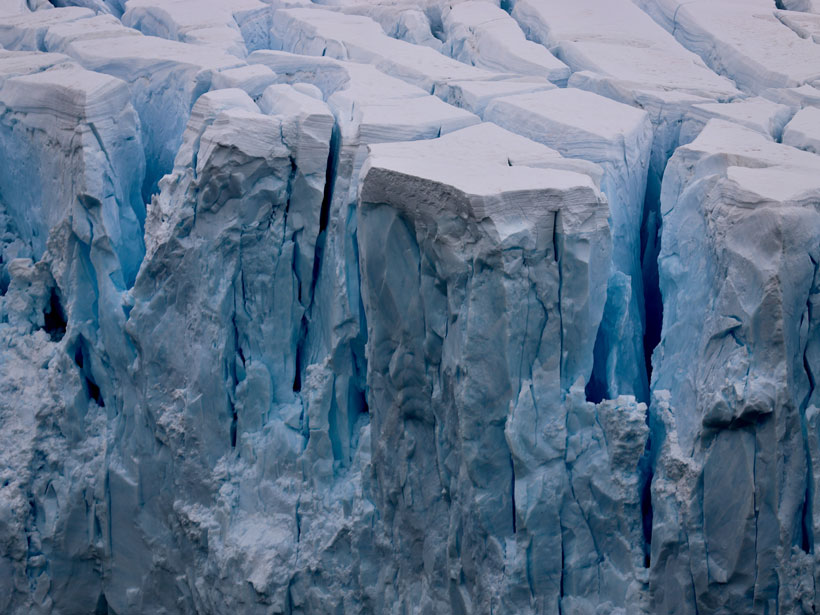
Shrinking Ice Sheets Lifted Global Sea Level 14 Millimeters

Researchers measure both grounded and floating ice sheets using satellite data spanning a 16-year period.
Posted inScience Updates
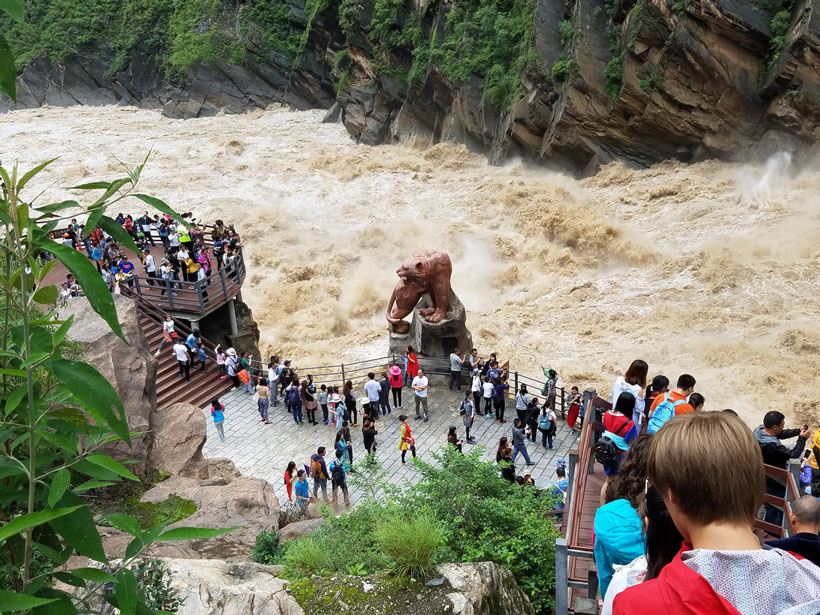
Asia’s Mega Rivers: Common Source, Diverse Fates
How do humans affect the ways that Asia’s mega rivers deliver sediment and dissolved matter to farms, river deltas, and, eventually, the sea? A proposed study would construct an integrated picture.

Posted inEditors' Highlights
How Does Convection Work Over the Tropics?
A new conceptual framework on how convection works in the tropics helps advance understanding of the contrast between land and ocean and how the tropics will respond to climate change.

Posted inNews
Humans Colonized Polynesia Much Earlier Than Previously Thought

Evidence from mud, charcoal, and feces suggests humans arrived in East Polynesia during the driest period in 2 millennia.