
Editors’ Highlights are summaries of recent papers by AGU’s journal editors.
Source: Community Science
Frontline communities are commonly described as groups most affected by environmental and social challenges. Marston et al. [2025] offer a broader definition based on the experiences of community-based organizations that directly serve these communities.
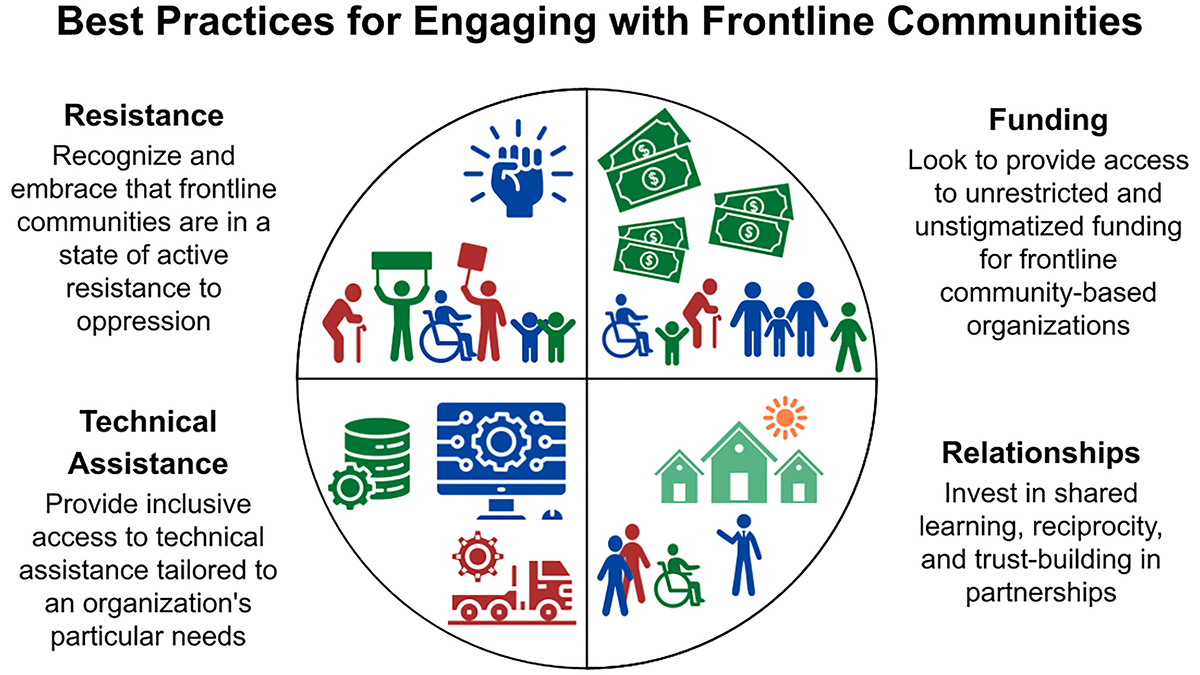
Drawing on surveys, interviews, and text analysis, the authors show that “frontline” refers not only to vulnerability but also to active leadership, resistance, and cultural strength. The study finds that community-based organizations want support that respects their self-determination and avoids imposing outside definitions of success. They also emphasize the need for respectful, two-way partnerships rather than top-down guidance. These insights matter because misalignment between funders and communities can weaken well-intended projects. The study provides a rare look at what frontline organizations say they truly need. Overall, it offers practical guidance for building ethical, reciprocal, and community-centered partnerships.
Citation: Marston, R., Lutz, N., Mangabat, D., Sánchez Ainsa, G., Stober, J., Brown, M., & Turner, K. M. (2025). A mixed-methods needs assessment of frontline communities: Insights for engagement and partnerships between communities and intermediary organizations. Community Science, 4, e2025CSJ000133. https://doi.org/10.1029/2025CSJ000133
—Claire Beveridge, Editor, Community Science