• About
  • Special Reports
  • Topics
    • Climate
    • Earth Science
    • Oceans
    • Space & Planets
    • Health & Ecosystems
    • Culture & Policy
    • Education & Careers
    • Opinions
  • Projects
    • Postcards From the Field
    • ENGAGE
    • Editors’ Highlights
    • Editors’ Vox
    • Eos en Español
    • Eos 简体中文版
    • Print Archive: 2015–2025
  • Policy Tracker
  • Blogs
    • Research & Developments
    • The Landslide Blog
  • Newsletter
  • Submit to Eos
  • AGU.org
  • Career Center
  • Join AGU
  • Give to AGU
  • About
  • Special Reports
  • Topics
    • Climate
    • Earth Science
    • Oceans
    • Space & Planets
    • Health & Ecosystems
    • Culture & Policy
    • Education & Careers
    • Opinions
  • Projects
    • Postcards From the Field
    • ENGAGE
    • Editors’ Highlights
    • Editors’ Vox
    • Eos en Español
    • Eos 简体中文版
    • Print Archive: 2015–2025
  • Policy Tracker
  • Blogs
    • Research & Developments
    • The Landslide Blog
  • Newsletter
  • Submit to Eos
Skip to content
  • AGU.org
  • Career Center
  • Join AGU
  • Give to AGU
Eos

Eos

Science News by AGU

Support Eos
Sign Up for Newsletter
  • About
  • Special Reports
  • Topics
    • Climate
    • Earth Science
    • Oceans
    • Space & Planets
    • Health & Ecosystems
    • Culture & Policy
    • Education & Careers
    • Opinions
  • Projects
    • Postcards From the Field
    • ENGAGE
    • Editors’ Highlights
    • Editors’ Vox
    • Eos en Español
    • Eos 简体中文版
    • Print Archive: 2015–2025
  • Policy Tracker
  • Blogs
    • Research & Developments
    • The Landslide Blog
  • Newsletter
  • Submit to Eos

Community Science

Visit the journal.

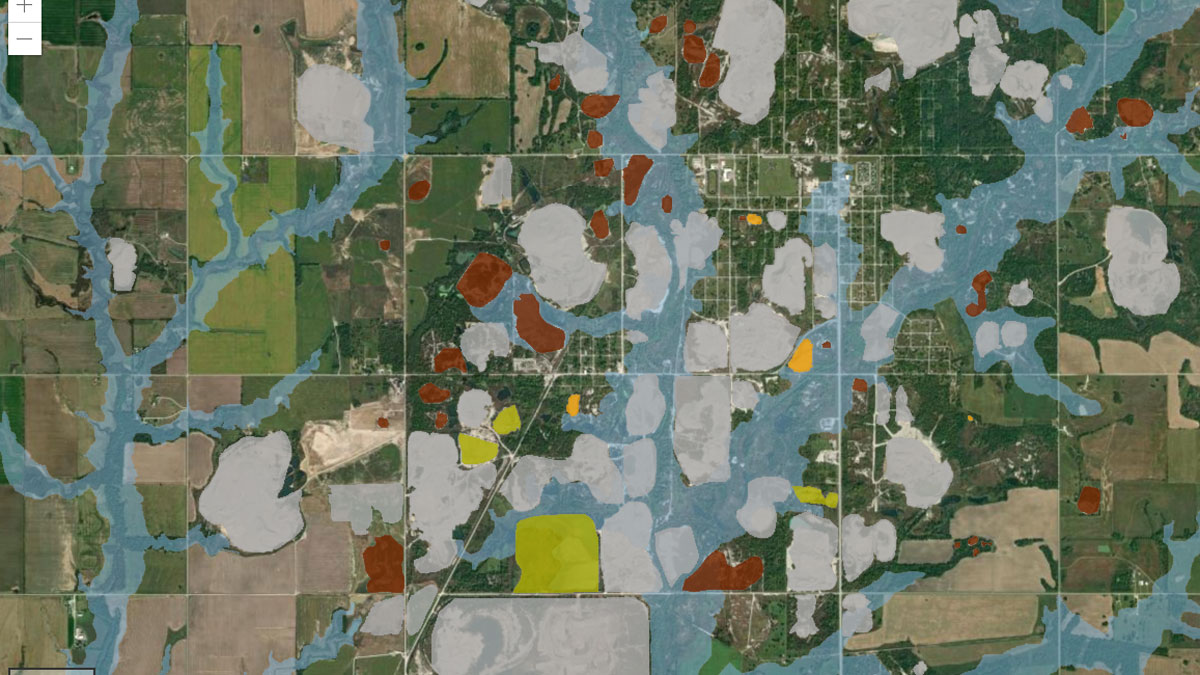
A geographic information system (GIS) map shows a number of different layers: Blue areas represent flood zones or floodways, whereas white areas are those with minimal flood hazard. Red, orange, green, and gray areas represent mining waste.
Posted inResearch Spotlights

Making a Map to Make a Difference

by Rebecca Owen 11 February 202611 February 2026

A new study highlights the partnership between scientists and nonscientist community members in building an interactive GIS map to show flooding risk in a Superfund site.

A small river bordered by rocky beaches and trees, which are also reflected in the river.
Posted inResearch Spotlights

Watershed Sustainability Project Centers Place-Based Research

by Madeline Reinsel 4 December 20254 December 2025

A community science project supports an innovative watershed management plan.

Graphic showing best practices for engaging with frontline communities.
Posted inEditors' Highlights

Rethinking Engagement with Frontline Communities

by Claire Beveridge 24 November 202524 November 2025

A new perspective from community-based organizations explains how scientists, funders, and other supporters can collaborate ethically and effectively while respecting community identities and priorities.

Photo of silos with a mural painted on them.
Posted inEditors' Highlights

Voicing Farmers’ Concerns on the Future of Agriculture

by Claire Beveridge 31 October 202531 October 2025

A new study explores the deep, multi-faceted concerns of small- and mid-scale farmers about the direction of farming and food systems in the United States.

Two people passing a plant to each other.
Posted inEditors' Vox

Publishing Participatory Science: The Community Science Exchange

by Allison Schuette, Julia Parrish, Kathryn Semmens, Kristina Vrouwenvelder and Sarah Dedej 20 October 202517 October 2025

Our peer-reviewed journal and innovative editor-vetted Hub offer new ways to share research performed by, with, and for communities.

Posted inEditors' Highlights

中国推进现代农业,小农户面临风险

by Claire Beveridge 24 September 202524 September 2025

一项对中国循环农业项目的研究表明,小农户的自主权和公平代表权既有希望,同时也面临着挑战。

Two people wearing waders stand in a river holding orange trash bags. Between them is a cage flanked by two lines of buoys, which have funneled trash into the cage.
Posted inResearch Spotlights

How North Carolina Trash Traps Could Help Inform Policy

by Rebecca Owen 11 September 202511 September 2025

Staff and volunteers at Waterkeepers collected and categorized more than 150,000 pieces of trash from the state’s waterways, the vast majority of which were plastic.

Farmers standing next to a large pile of pomelos.
Posted inEditors' Highlights

Smallholder Farmers Face Risks in China’s Push for Modern Agriculture

by Claire Beveridge 9 September 202524 September 2025

A study of a circular agriculture project in China shows both the promise and the political challenges for smallholder farmers’ autonomy and fair representation.

Posted inEditors' Highlights

Balancing Comparability and Specificity in Sustainability Indicators

by Xin Zhang 5 August 20254 August 2025

A new study shows how engaging national stakeholders in Austria helps adapt global sustainability indicators to better reflect regional agricultural priorities, especially social and economic aspects.

A dirt road curves into the distance. On either side are trees and brush.
Posted inResearch Spotlights

Flood Prediction Could Boost Road Resilience off Georgia’s Coast

Sarah Derouin, Science Writer by Sarah Derouin 2 May 20252 May 2025

Researchers and community members worked together to develop recommendations for how Little Cumberland Island can mitigate flooding hazards.

Posts pagination

1 2 3 Older posts
Over a dark blue-green square appear the words Special Report: The State of the Science 1 Year On.

Features from AGU Publications

Research Spotlights

A Long-Term Look Beneath an Antarctic Ice Shelf

6 March 20269 March 2026
Editors' Highlights

The Fate of the Greenland Ice Sheet: Deep Learning from SkySat Images

9 March 20269 March 2026
Editors' Vox

How Radar Reveals the Hidden Fabric of Ice Sheets

9 March 20269 March 2026
Eos logo at left; AGU logo at right

About Eos
ENGAGE
Awards
Contact

Advertise
Submit
Career Center
Sitemap

© 2026 American Geophysical Union. All rights reserved Powered by Newspack