
Editors’ Vox is a blog from AGU’s Publications Department.
After a 6-year term as Editor-in-Chief of Perspectives of Earth and Space Scientists, Michael Wysession has handed over the reins to Annalisa Bracco. Here, Dr. Wysession reflects on his tenure and Dr. Bracco discusses her priorities for the journal moving forward.
Reflections from Outgoing Editor-in-Chief, Michael Wysession
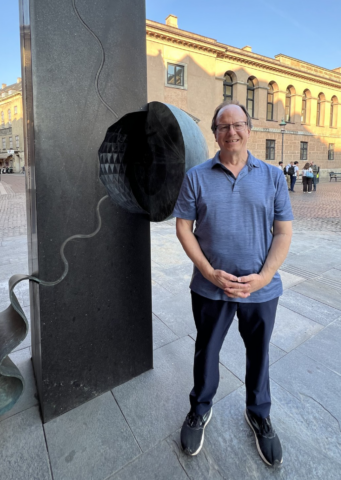
I think it was in 2001, driving across a blood-red dirt road in southwest Georgia, when I first realized that a journal like Perspectives was needed. I was anxious because we were behind schedule. It had taken longer than expected to dig through the hard red laterite Georgia soil to install our seismometer and seismic equipment, and after finding a place to eat dinner we’d have to drive late into the night to get back on schedule and get to the next site in the Florida-to-Edmonton seismic array I was co-leading with Karen Fischer of Brown University.
I was anxious because all of this felt like a waste of time to me. I had had to learn so much for this project that would never make it into the handful of short papers I’d write on the seismic structure of the deep mantle. Things like how to build a seismic vault in a flat farmer’s field that wouldn’t flood in the spring (a lesson never fully learned); how to convince a farmer to let me dig a couple holes in a corner of his field; how to install and maintain the seismometer, GPS clock, solar panels, and recording equipment; the best places to eat across the continent to meet the dietary needs (physical and religious) of my crew; how to keep graduate students alive (while installing instruments in 3 feet of snow during subzero temperatures, avoiding Lyme disease, or being gored by bison); transporting equipment that looked like bombs across international borders soon after 9/11; staying sane while driving 10,000s of miles.
There were so many stories here that would never get written down.
But none of these seemed to matter to me. It was only the seismograms we would get that would matter and really just a very small number of the terabytes of data. Even this was only a means to the final one-line conclusion of what we’d learned about a very particular aspect of Earth’s core-mantle boundary, which would get our papers published and allow us to get the next grant to write the next papers. It seemed like 99% of my time was wasted—just a means to an end. There were so many stories here that would never get written down. Hopefully my students would learn the ones that mattered, but the rest would be lost.
And then I looked at that blood-red rutted dirt road cutting down through the Georgia fields as far as I could see, like a long straight deep-red permanent marker streaking across bright green paper, and noticed how remarkably beautiful it was. I had never seen soil this red (and was reminded of it regularly for years with the permanently marked red stains on my white socks and t-shirt). With the sunset starting, it was a rare sight. Over the ensuing weeks I slowly talked myself into enjoying the means as well as the end, relaxing enough to enjoy the process. I even learned to appreciate the driving. There’s a form of Japanese Buddhism called Soto Zen, or “just sitting”, a form of meditation. You don’t sit with a desire to gain enlightenment; you just sit and maybe enlightenment will come. I began to practice “Moto-Zen.” I wasn’t driving to get anywhere, I was just driving, and maybe I would get to where I needed to get.
I began to be a much happier person, in general, to the point that when I was invited to address the seniors in an Arts & Sciences graduation ceremony, I combined my stories from my scientific and seismology life lessons into a lecture on how to be happy, which I then gave as a regular part of my classes from that point onward. I had found a place for some of my stories: the stories that were very helpful for me and seemed to be greatly appreciated by those who heard them.
Why don’t we use storytelling to pass on the traditions of our science?
And this is the power of storytelling. I have a rather mundane message on the importance of capturing the stories from our work, but I’ve couched it in a personal account that gave it context and relevance. It’s a much better way of saying “we need to capture the stories of our scientific research that don’t make it into our JGR and GRL papers.” Because humans have uniquely evolved over thousands of years to learn through stories. Our ancestors did this in their caves to pass on their traditions of survival. We’re great storytellers and story-learners. We’re really good at it. It’s perhaps our most successful evolutionary adaptation. So why don’t we use storytelling to pass on the traditions of our science? To pass on those critical lessons that we learn by doing, by trial and error, by repeated failures and resilience. The lessons that we don’t have room for in our terse scientific publications, but that are critical to the continued advancement of our fields.
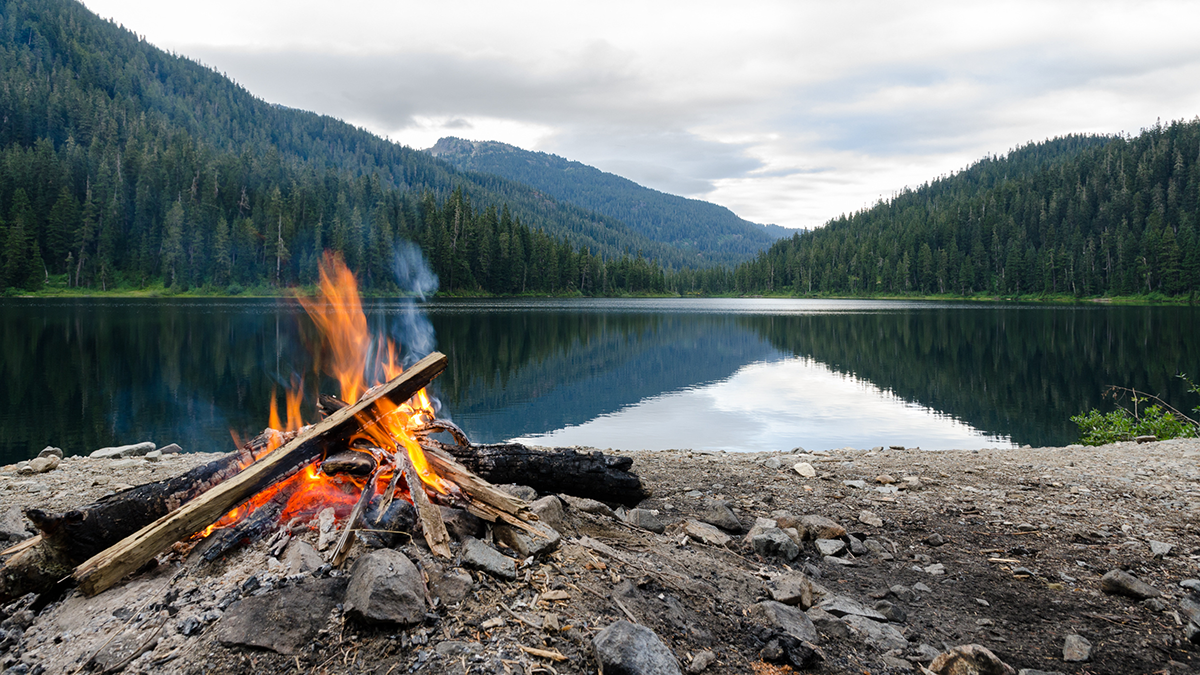
And I’ve also now made this story more accessible by breaking down the 4th wall and inviting you into my metacognitive process, my motivation for telling you this. I’ve shared my reasoning with you, speaking in the first-person, which remarkably creates a sense of conversation, even though I’ve written this far off in some distant space and time. The story remains current and engaging. This is what storytelling can do. It’s why we love to read books. Not just for the information provided but for the flash of recognition of the vibrancy of being part of that time-honored conversation, huddled around a cave fire listening to the lore of our clan.
[Perspectives] is a unique place for us to go to hear the stories of those who’ve come before us, or of those who have different voices or perspectives that we hadn’t thought of before.
Perspectives of Earth and Space Scientists is exactly that literal cave fire. It’s a unique place for us to go to hear the stories of those who’ve come before us, or of those who have different voices or perspectives that we hadn’t thought of before. We get to learn how our fields came into being. We get to share in the pains and elations of obstacles faced and overcome. We get to hear of people’s attempts to find life’s meaning and reward within the special context of scientific discovery, a privileged joy shared by our worldwide clan that is unbounded by political, cultural, racial, or gender divides.
If you were lucky enough to have wise mentors who helped you learn the “tricks of the trade”, maybe on a field trip or while looking at data, or even sitting around the coffee room, then you know how important these lessons are. But suppose that mentees and mentors alike had access to those lessons from so many others? Think of how powerful and helpful that would be! This is what we’ve started to do with Perspectives.
It’s a rare thing to start a journal, and it’s been a rare honor and privilege for me to be the first Editor-in-Chief of Perspectives. It’s the 5th AGU journal I’ve been an editor for, but the most rewarding by far, not because of what we’ve accomplished but rather because of my dreams of what Perspectives will become in the future. Starting a journal is hard, gaining recognition and buy-in from the community. But in working with an excellent and experienced Editorial Board, I’m really pleased by where it’s come in just 5 years, and I’m even more excited to see the great places it’ll go in the next years under Annalisa’s leadership.
So let me end with a challenge to you, whoever you are, as you read this. What are your stories? What have you learned? What gives your work meaning? Do you have a perspective on our science, its history, or its process, that should be told? Something you share with your students or colleagues because you value it. I challenge you to write it up so that it can be shared with others. We want to read it. We want to read it so much that we will pay all publication costs for you to write it. Yes, Perspectives is a fully diamond open-access journal.
We’re all busy, I know. We have to write those papers to get those grants, to write more papers. But in the end, what will be the most important things that you write? Maybe you need time to think about it? That’s great! Good storytelling can’t be forced or rushed. But start a mental notebook on your stories and keep it open. As you go through your work, take note of those lessons or perspectives that don’t seem to have a place anywhere else but that shouldn’t get lost. And when it’s time, your Perspectives article will flow out and seem to write itself. And it will bring joy and reward to others.
Aspirations from Incoming Editor-in-Chief, Annalisa Bracco:
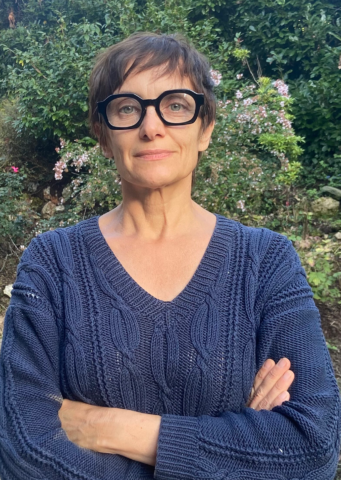
I am immensely grateful and honored to succeed Dr. Wysession. Perspectives has grown incredibly under his leadership.
I envision Perspectives growing into new topics and most importantly, spreading our wings to other countries. With the editorial board, I hope the journal will grow to facilitate publications that link across talents and interests of the international scientific community, the general public, and interested stakeholders. In doing so, I hope that articles will incorporate perspectives from a multitude of disciplines and approaches to maintain relevance, and will empower all voices and talents, irrespective of career stage, gender, racial, social or cultural considerations.
I am committed to making Perspectives an ambassador for transdisciplinary research at the forefront of Earth and space science that celebrates our diverse backgrounds, talents, and interests as a source of strength and innovation.
In addition, the funding landscape for research and the tools we use is evolving fast like anything else. How do we inspire the next generation to join Earth and Space sciences? What role will emerging technologies, such as AI, play into how we conduct and communicate research? And how can we reach broader audiences, especially when so much of our work carries profound societal implications? These questions guide my service as Editor‑in‑Chief at Perspectives. I believe that by strengthening our communication practices, embracing new tools, and broadening who we engage with, our community can build deeper connections across generations and with the public that depends on our science.
Last, but not least, I hope to engage early career scientists in the editorial board who will be the future of Perspectives. If you are reading this article and are interested in serving, please send me your CV (email address below).
—Michael Wysession ([email protected];  0000-0003-4711-3443), Washington University in St Louis, United States; and Annalisa Bracco ([email protected], 0000-0002-1619-6103), Euro-Mediterranean Center on Climate Change (CMCC), Italy