

Editors’ Vox is a blog from AGU’s Publications Department.
After a 6-year term as Editor-in-Chief of Tectonics, Taylor Schildgen has handed over the reins to Giulio Viola. Here, Dr. Schildgen reflects on her tenure as Dr. Viola discusses his priorities for the journal moving forward.
Wrapping up – Reflections from Outgoing Editor-in-Chief Taylor Schildgen
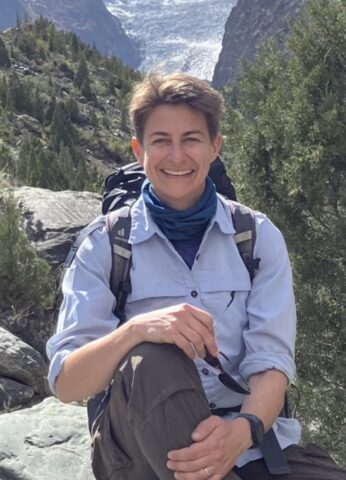
It has been a great privilege, and sometimes a challenge, to serve as Editor-in-Chief of Tectonics for the past six years. Only a few months into my term, which started in January 2020, many of us long accustomed to field-based work and teaching scrambled to adjust to travel restrictions, loss of access to classrooms, offices, and laboratories, and all of the personal challenges associated with the isolation and illness of the pandemic. Writing manuscripts quickly proved to be one relatively clear path of productivity for those of us with at least a little data on hand.
The associated onslaught of manuscripts (approximately 30% increase in submissions above pre-pandemic levels) quickly highlighted our need for greater geographic diversity on our editorial board, and an overall greater number of Associate Editors to help shepherd manuscripts through the review process. I’m delighted that in that process, we also managed to bring a higher percentage of women onto the editoral board, as well as people whose specialities helped to increase the range of the board’s expertise. The editorial board’s need to evolve and remain representative of the authorship community, with regards to geographic, methodological, and process expertise, will remain a challenge as the field itself continues to evolve, incorporating new technologies and new priorities.
Parallel to these efforts, and together with the other AGU journals, we have aimed to better clarify the Aims and Scope of each journal, to ensure the best chances that manuscripts submitted will be handled by Editors, Associate Editors, and reviewers that are most capable of providing constructive reviews. Since these adjustments, for manuscripts that go out to review, the median time to first decision has been about 2.5 months in the last three years, and the median time to final decision has ranged from 5 to 6 months.
Since 2022, our need to make our science more open and accessible led to the implementation of FAIR (findable, accessible, interoperable, readable) data guidelines at all AGU journals, together with Plain Language Summaries in most journals. I was pleased by the speed and relative ease with which these guidelines were taken up, and that the members of our community and editorial board were among the first to suggest modifications of the guidelines and helped to craft guidelines for authors.
Political threats to science have always existed, and on some level have always directly impacted our ability to conduct research. But for the AGU journals, never has the political threat to science and scientific publication been more acute than with the inauguration of Donald Trump as United States president in January 2025. Withholding of grant money awarded by the U.S. National Science Foundation, widespread layoffs at nearly all governmental research agencies, and uncertainty in the funding future have hampered both ongoing projects and the future careers of many of our deeply valued, often early-career colleagues. The Editors of Tectonics, led by Djordje Grujic, published an editorial in April 2025, “Tectonics in Turbulence: Defending Science in Unstable Times,” to highlight the impacts of these threats and provide links to effective counter actions.
Moreover, the hypocritically named “Restoring Gold Standard Science” executive order of 25 May 2025 purports a need for political nominees to assess which science can and cannot be published. AGU journal Editors-in-Chief, led by Michael Wysession, published a response in August 2025 titled “The Executive Order ‘Restoring Gold Standard Science’ is Dangerous for America” in AGU Advances to this blatant move toward censorship and attempt to sow distrust in science. Most recently, threats of detention by Immigration and Customs Enforcement, even for those with work permits, have chilled what was once a vibrant and open research environment. These changes not only affect U.S. based researchers, but also international colleagues who had plans for or who still hope to conduct research stays in the U.S. Regardless of the outcome of the next mid-term and subsequent presidential election, vulnerabilities to a global powerhouse in scientific research have been vividly exposed.
Finding ways to articulate the value of our research, both on practical, applied levels and for the pure satisfaction of human curiosity, remains crucial.
How do we move forward? Finding ways to articulate the value of our research, both on practical, applied levels and for the pure satisfaction of human curiosity, remains crucial. Sharing our research widely, with appropriate context so that results are reproducible and can be built upon, is a necessity. Holding ourselves and our colleagues to the highest level of scientific rigor and ethical behavior is a basic tenet of our work. And reaching out for new perspectives from throughout the diverse membership of our community is likely the best route to solving our hardest problems. Publications at Tectonics play but a small role in these aims, but facilitate the kinds of broad international collaborations and networks that accomplish far more lofty goals, and can provide a buffer against the negative impacts of any given political administration.
I wish to express my sincerest gratitude to our authors, who decide to publish their excellent work and innovative ideas in Tectonics; to our reviewers, who generously contribute their time to providing feedback and guidance to authors; to our Associate Editors, who help guide authors through this process and often provide additional constructive comments; to the AGU staff, who help manage communication and trouble-shoot the challenges we all encounter with the GEMS online submission system; to the Editors-in-Chief of the other AGU journals, who create a community of shared experiences and support that help AGU journals as a whole to adapt to changes in the publication landscape and maintain a forward-looking perspective; and to the other Editors of Tectonics (Laurent Jolivet, Margi Rusmore, Djordje Grugic, Federico Rossetti), who have kept a watchful eye over all, including the direction of the journal, the work load of the board, and were a continuous source of helpful advice to both me and the AGU staff regarding what we can do to improve the experience for everyone involved with the journal.
I have full confidence that the new Editor-in-Chief will take up leadership of the journal with the level of energy, enthusiasm, and care that this flagship of our community deserves.
Finally, I thank John Geissmann, the previous Editor-in-Chief of Tectonics who first brought me onto the editorial board in 2014, and since that time has been a true friend and mentor in various aspects of publications and life. It has been a tremendous pleasure and honor to work with you all. I have full confidence that the new Editor-in-Chief of Tectonics, Guilio Viola, will take up leadership of the journal with the level of energy, enthusiasm, and care that this flagship of our community deserves. And I look forward to reading your work in Tectonics.
Looking forward – Aspirations from Incoming Editor-in-Chief Giulio Viola
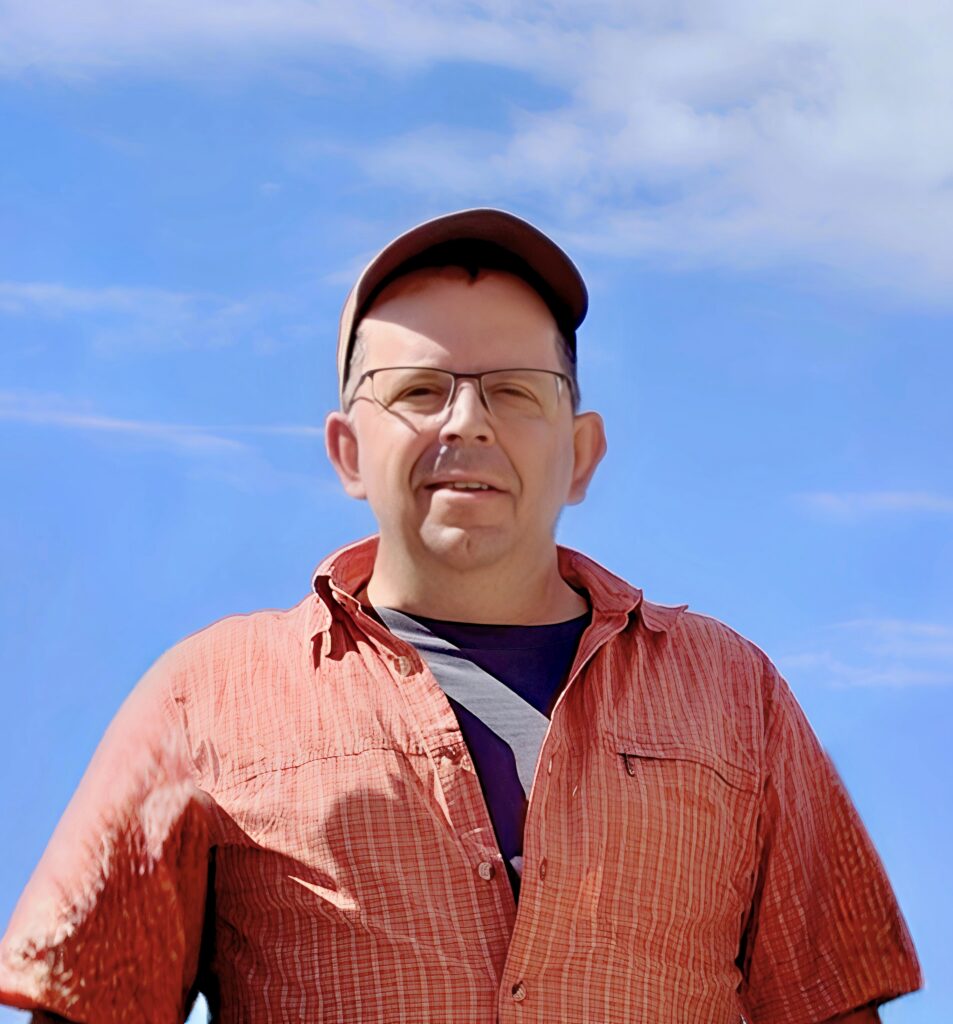
I am grateful and honored to succeed Prof. Taylor Schildgen as Editor-in-Chief of Tectonics. I have long considered this journal to be at the forefront of publishing high-impact, multidisciplinary research on the evolution, structure, and deformation of the Earth’s lithosphere through time. Since publishing my first paper in Tectonics more than twenty-five years ago, I have always admired its blend of methodological rigor, vision, and editorial quality, all aspects that have grown even stronger under Taylor’s leadership.
After a career devoted to studying deformation from the grain to the plate scale, mentoring young scientists, and serving on editorial boards, I am thankful for the opportunity to help guide the journal through the scientific and publishing challenges ahead. Together with the Editors and the renewed board of Associate Editors, I hope to build further on the journal’s already strong foundation, continue to develop its strategic vision, and explore new topics and directions for our community.
My immediate priority is to improve turnaround times while maintaining the highest scientific standards and adhering to a clear and well-defined strategic plan for the journal’s scope. I want to offer authors a transparent, straightforward, and efficient editorial path, which I believe is one of the most important aspects of scientific publishing. By making our processes more transparent and efficient, we can allow authors to focus on what matters most, i.e., producing excellent science for our readers, and attract even more outstanding contributions.
Looking ahead, I see important opportunities for Tectonics. The societal relevance of our field has never been greater. Research in tectonics informs earthquake hazard assessment, critical metals exploration, waste disposal, energy storage, and the broader energy transition. Inspired by the “Challenges and Opportunities for Research in Tectonics” white paper prepared for the U.S. National Science Foundation, I hope to see even more contributions that address these pressing needs while continuing to support fundamental, curiosity-driven research.
We will continue to broaden the geographical representation of our editorial board and reviewer community, and we will explore mentorship initiatives to support early-career researchers, especially those from underrepresented regions, as well as early-stage Editors.
I am committed to fostering an open dialogue in which anyone interested in the journal and in the future of the journal can contribute.
The publication landscape is evolving rapidly. How do we keep authors, reviewers, and readers engaged? What role should new technologies, including generative AI, play in scholarly publishing? How can we reach a broader, truly global audience beyond the English-speaking community, especially given the societal impact of much of our research? Not all the answers are clear to me, but I am committed to fostering an open dialogue in which anyone interested in the journal and in the future of the journal can contribute.
No Editor-in-Chief works alone. The success of Tectonics depends on the dedication of editors, associate editors, reviewers, authors, readers, and our publisher. I hope to contribute scientific breadth, editorial experience, and a genuine commitment to an engaged community.
Tectonics has been an important part of my professional life for over two decades, and I take on this role with both enthusiasm and a strong sense of responsibility. I hope that new generations of researchers will feel the same appreciation for the journal and will continue to choose it to publish their very best work.
—Taylor Schildgen ([email protected],  0000-0002-4236-4609), GFZ Helmholtz Centre for Geosciences, Germany; and Giulio Viola ([email protected], 0000-0002-8383-3328), Università di Bologna, Italy