• About
  • Special Reports
  • Topics
    • Climate
    • Earth Science
    • Oceans
    • Space & Planets
    • Health & Ecosystems
    • Culture & Policy
    • Education & Careers
    • Opinions
  • Projects
    • Postcards From the Field
    • ENGAGE
    • Editors’ Highlights
    • Editors’ Vox
    • Eos en Español
    • Eos 简体中文版
    • Print Archive: 2015–2025
  • Policy Tracker
  • Blogs
    • Research & Developments
    • The Landslide Blog
  • Newsletter
  • Submit to Eos
  • AGU.org
  • Career Center
  • Join AGU
  • Give to AGU
  • About
  • Special Reports
  • Topics
    • Climate
    • Earth Science
    • Oceans
    • Space & Planets
    • Health & Ecosystems
    • Culture & Policy
    • Education & Careers
    • Opinions
  • Projects
    • Postcards From the Field
    • ENGAGE
    • Editors’ Highlights
    • Editors’ Vox
    • Eos en Español
    • Eos 简体中文版
    • Print Archive: 2015–2025
  • Policy Tracker
  • Blogs
    • Research & Developments
    • The Landslide Blog
  • Newsletter
  • Submit to Eos
Skip to content
  • AGU.org
  • Career Center
  • Join AGU
  • Give to AGU
Eos

Eos

Science News by AGU

Support Eos
Sign Up for Newsletter
  • About
  • Special Reports
  • Topics
    • Climate
    • Earth Science
    • Oceans
    • Space & Planets
    • Health & Ecosystems
    • Culture & Policy
    • Education & Careers
    • Opinions
  • Projects
    • Postcards From the Field
    • ENGAGE
    • Editors’ Highlights
    • Editors’ Vox
    • Eos en Español
    • Eos 简体中文版
    • Print Archive: 2015–2025
  • Policy Tracker
  • Blogs
    • Research & Developments
    • The Landslide Blog
  • Newsletter
  • Submit to Eos

Opinions

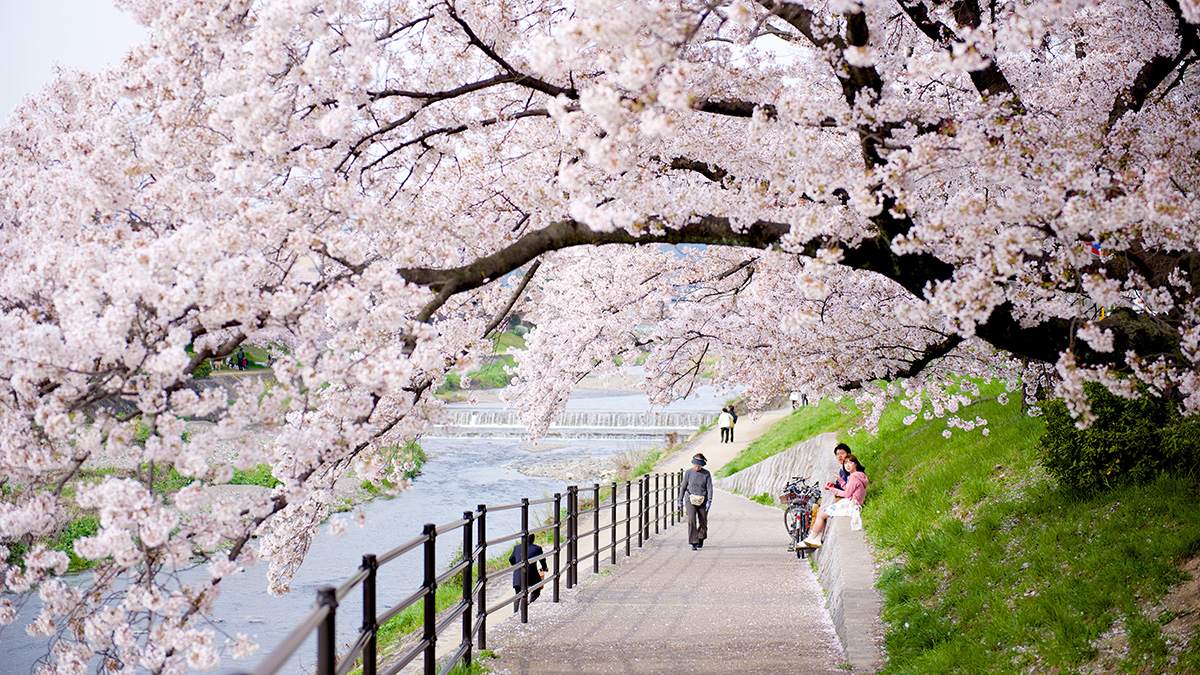
Cherry trees cover a path by a river where people are walking and sitting.
Posted inOpinions

Taking the Pulse of Global Change with World Heritage Data Sets

by Emma J. Rosi, Emily S. Bernhardt, Irena Creed, Gene E. Likens and William H. McDowell 17 May 202325 September 2023

Applying World Heritage status to highly valuable environmental records would spotlight the vital insights they provide into how Earth is changing and would ensure their longevity and accessibility.

Vertical streaks of digital ones and zeroes rise from digitized representation of Earth against a deep blue background.
Posted inOpinions

We Need a Better Way to Share Earth Observations

by Zhong Liu, Yixin Wen, Vasco Mantas and David Meyer 12 May 202325 July 2023

A more accessible, open data-sharing infrastructure will engage a broader community of contributors, helping to develop satellite data products that benefit Earth science research and applications.

Close-up view of a pencil eraser erasing the word “DATA” on a piece of white paper.
Posted inOpinions

The Vanishing Scholar: Indigenous Erasure in Funding Data

by McKalee Steen 31 March 202326 June 2023

Nonreporting of funding data and exclusion of communities from research harm Indigenous Peoples and contribute to their invisibility in science and society. We can and must do better.

Four CubeSats close together in orbit above Earth.
Posted inOpinions

Looking to the Sky for Better Tsunami Warnings

by Shin-Chan Han, Simon McClusky, T. Dylan Mikesell, Paul Tregoning and Jeanne Sauber 4 November 20222 July 2025

Pairing navigation satellites and CubeSats could provide earlier, more accurate warnings of approaching tsunamis and other impacts of extreme events.

View from space showing lights illuminating the U.S. Gulf Coast
Posted inOpinions

Converging Toward Solutions to Grand Challenges

by Ryan McGranaghan, Adam Kellerman and Mark Olson 25 October 20221 June 2023

A hypothetical, space weather–induced power grid catastrophe served as a practice case for building unity and collaborative skills among disparate communities to address a major global hazard.

A headwater stream flows down the side of a rocky and grassy mountainside under a blue sky.
Posted inOpinions

Protecting the Mountain Water Towers of Spain’s Sierra Nevada

by Bopaiah A. Biddanda, Manuel Villar-Argaiz and Juan Manuel Medina-Sánchez 16 September 202224 August 2023

Students and community members monitor the health of mountain water reserves, which capture and release water, evening out wet and dry periods downstream.

Image of many individuals seated at a conference. The photo was taken from the back of the room and shows the backs of the conference goers; it has a red, posterized treatment applied to it.
Posted inOpinions

The Alarming Rise of Predatory Conferences

by Matthieu Chartier 15 September 202210 April 2023

For-profit conferences that masquerade as legitimate academic events but lack trusted selection and peer review processes are becoming more common. Here’s why that matters.

Artificial, numerically generated false-color image in red, blue, and black hues that appears to show a mountain range under a cloudy sky
Posted inOpinions

Nobel Recognition for the Roles of Complexity and Intermittency

by Daniel Schertzer and Catherine Nicolis 21 July 202223 January 2023

The 2021 Nobel Prize in Physics was awarded to three scientists “for groundbreaking contributions to our understanding of complex physical systems.”

A water tanker truck parked outside an apartment complex in Bengaluru, India
Posted inOpinions

Deploying Community Water Solutions with People, for People

by Indrani Pal, Celena Wasserstrom, Adriel Chang and Ganesh Shanbhag 14 July 20221 June 2023

Guiding principles and strategies for solving local water availability problems in India have emerged from collaborations involving water users, water experts, and water solutions providers.

Close up view of a keyboard with a red “Admission” key, with a miniature mortarboard on it, in place of the “Enter” key.
Posted inOpinions

After GRExit: Reducing Bias in Geoscience Graduate Admissions

by Michele L. Cooke, Hannah Baranes, Isla S. Castañeda, Jonathan D. Woodruff and David F. Boutt 17 June 202210 April 2023

Dropping the GRE is just a first step toward holistic admissions. To further reduce bias in applicant evaluations, the UMass-Amherst geosciences program has changed the way it assesses students.

Posts pagination

Newer posts 1 … 4 5 6 7 8 … 28 Older posts
Over a dark blue-green square appear the words Special Report: The State of the Science 1 Year On.

Features from AGU Publications

Research Spotlights

Navigating the Past with Ancient Stone Compass Needles

16 April 202616 April 2026
Editors' Highlights

Snail-Borne Diseases in Central Africa: Lessons from Citizen Science

16 April 20267 April 2026
Editors' Vox

Synergistic Integration of Flood Inundation Modeling Methods

10 April 202610 April 2026
Eos logo at left; AGU logo at right

About Eos
ENGAGE
Awards
Contact

Advertise
Submit
Career Center
Sitemap

© 2026 American Geophysical Union. All rights reserved Powered by Newspack