Research & Developments is a blog for brief updates that provide context for the flurry of news that impacts science and scientists today.
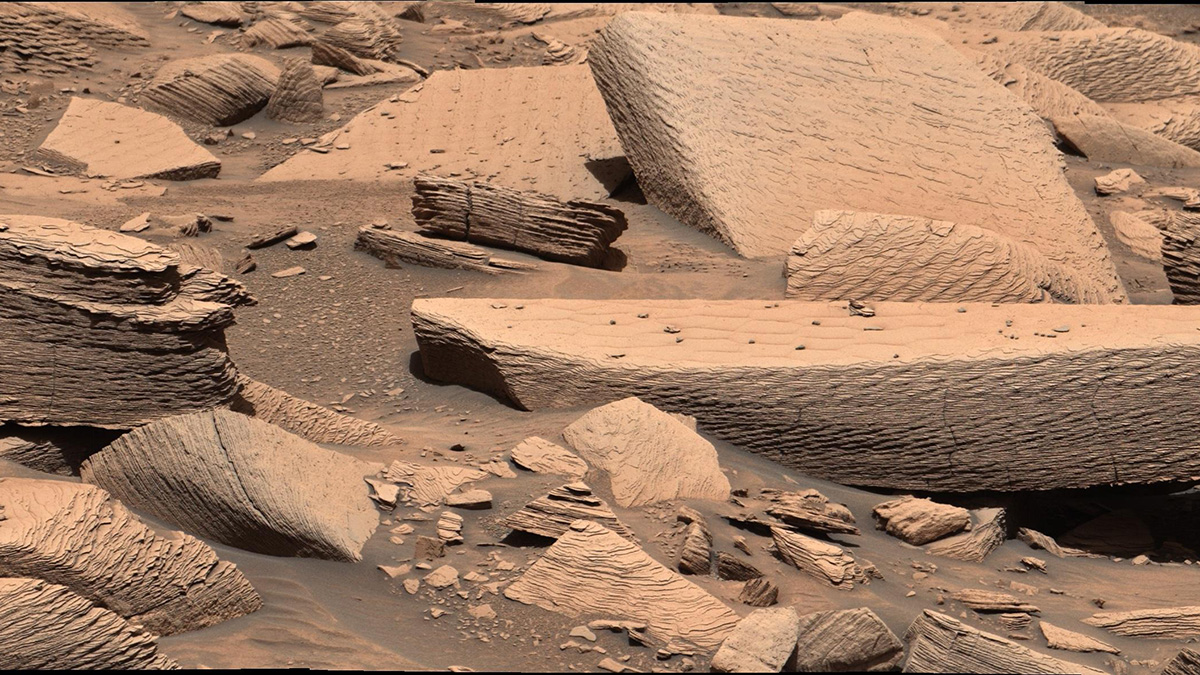
Researchers have found evidence of a sandstorm on Mars that occurred about 3.6 billion years ago, marking the first time a sandstorm has been recognized in the Martian stratigraphic record. They published their findings in Geology.
It’s not that scientists didn’t know that wind once blew on Mars. It does so now, and features on the planet’s surface, like dry riverbeds, have already offered evidence that the Red Planet’s atmosphere was once much thicker—thick enough to loft larger particles of dust and sand. The newly described sand deposits offer one more piece of evidence that Mars once had a thick, Earth-like atmosphere.
“The thing that absolutely amazes me, is you just think that on a Tuesday afternoon, sometime, maybe 3.6 billion or so years ago, there was a sandstorm that rolled into Gale crater,” said Steven Banham, a planetary geologist at Imperial College London and lead author of the study, in a release from the journal. “And we have the physical evidence for it here.”
As the Curiosity Rover explores the Martian surface (as it has been for nearly 14 years), teams of scientists take turns monitoring it. When Banham and his colleagues noticed some unusual features near a place called Texoli butte, they decided to take a closer look with Curiosity’s MASTCAM cameras.
“We weren’t really looking for these deposits, and then lo and behold, we drove around the corner and found them,” said Banham. “We were lucky that we had just the right people on shift that recognized them.”
What they saw were ripple formations in the rock that have never before been seen on Mars. (In fact, this type of formation is rarely seen on Earth, though the Navajo Sandstone in Zion National Park is one example.) “Climbing ripple strata,” as they are known, occur when wind blows for a sustained period and shifts large amounts of sand.
With further proof that Mars may once have had atmospheric conditions much more similar to Earth than it has today, the team looks forward to what further findings may await, such as definitive evidence of rain.
—Emily Gardner (@emfurd.bsky.social), Associate Editor
These updates are made possible through information from the scientific community. Do you have a story about science or scientists? Send us a tip at [email protected].