• About
  • Special Reports
  • Topics
    • Climate
    • Earth Science
    • Oceans
    • Space & Planets
    • Health & Ecosystems
    • Culture & Policy
    • Education & Careers
    • Opinions
  • Projects
    • Postcards From the Field
    • ENGAGE
    • Editors’ Highlights
    • Editors’ Vox
    • Eos en Español
    • Eos 简体中文版
    • Print Archive: 2015–2025
  • Policy Tracker
  • Blogs
    • Research & Developments
    • The Landslide Blog
  • Newsletter
  • Submit to Eos
  • AGU.org
  • Career Center
  • Join AGU
  • Give to AGU
  • About
  • Special Reports
  • Topics
    • Climate
    • Earth Science
    • Oceans
    • Space & Planets
    • Health & Ecosystems
    • Culture & Policy
    • Education & Careers
    • Opinions
  • Projects
    • Postcards From the Field
    • ENGAGE
    • Editors’ Highlights
    • Editors’ Vox
    • Eos en Español
    • Eos 简体中文版
    • Print Archive: 2015–2025
  • Policy Tracker
  • Blogs
    • Research & Developments
    • The Landslide Blog
  • Newsletter
  • Submit to Eos
Skip to content
  • AGU.org
  • Career Center
  • Join AGU
  • Give to AGU
Eos

Eos

Science News by AGU

Support Eos
Sign Up for Newsletter
  • About
  • Special Reports
  • Topics
    • Climate
    • Earth Science
    • Oceans
    • Space & Planets
    • Health & Ecosystems
    • Culture & Policy
    • Education & Careers
    • Opinions
  • Projects
    • Postcards From the Field
    • ENGAGE
    • Editors’ Highlights
    • Editors’ Vox
    • Eos en Español
    • Eos 简体中文版
    • Print Archive: 2015–2025
  • Policy Tracker
  • Blogs
    • Research & Developments
    • The Landslide Blog
  • Newsletter
  • Submit to Eos

air pollution

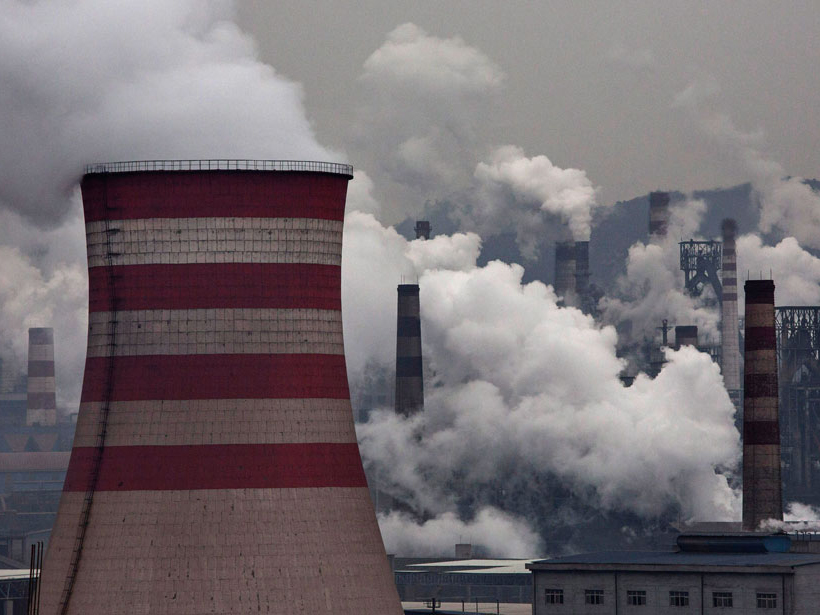
Steam and smoke from a factory in China
Posted inNews

Pollution over Southeast Asia May Threaten Ozone Health

Kimberly M. S. Cartier, News Writing and Production Intern for Eos.org by Kimberly M. S. Cartier 27 October 201729 March 2022

Emissions of short-lived chlorine-based chemicals that deplete ozone are increasing worldwide. But over some regions of Asia, these chemicals may be on a fast track to the ozone layer.

Posted inNews

Sooty Bird Bellies Yield Insights into Historical Air Pollution

by R. Kaufman 16 October 20174 October 2022

A new study mined museum collections to investigate just how sooty the air in the United States has been for the past 135 years.

Image of Iceland’s Eyjafjallajokull volcano erupting in April 2010 was captured by NASA’s Moderate Resolution Imaging Spectroradiometer.
Posted inResearch Spotlights

New Data Record Extends History of Global Air Pollution

by S. Witman 22 August 201730 June 2022

Researchers extend long-term aerosol records to the past 40 years by combining two existing algorithms to process satellite data over both land and sea.

Handlebar view of a courier bicycling in New York City.
Posted inNews

Novel Air Pollution Study Gauges Individual Cyclists’ Risks

by R. Kaufman 13 June 20176 October 2025

By attaching an array of instruments to bike commuters in New York City, researchers aim to evaluate ambient pollution amounts and doses at the level of an individual cyclist.

Anvil clouds over Thailand; such clouds help loft pollutants into the atmosphere during monsoons.
Posted inResearch Spotlights

The Asian Summer Monsoon Launches Pollutants Around the Globe

Kate Wheeling, freelance science writer by Kate Wheeling 5 June 201720 January 2023

New research provides a comprehensive overview of the effect of the Asian summer monsoon (ASM) on atmospheric composition throughout the life cycle of the ASM anticyclone.

Coal-burning power plant in West Virginia.
Posted inNews

Air Pollutant Plays Lesser Role in Climate Change Than Expected

Lucas Joel by L. Joel 26 October 20167 July 2022

Satellite data indicate that pollution control efforts that curbed levels of sulfur dioxide gas did not cause a major decrease in carbon dioxide absorption by plants.

abandoned-oil-gas-wells-leak-methane-contaminate-aquifers
Posted inResearch Spotlights

What Happens to Methane That Leaks from Abandoned Wells?

Sarah Stanley, Science Writer by Sarah Stanley 10 August 201630 March 2023

Three-dimensional simulations suggest that some aquifers may be more vulnerable to contamination from leaky oil wells than others.

Ulaanbaatar Mongolia air pollution
Posted inAGU News

Closing the Air Quality Data Gap in the Developing World

by K. Pierce 11 July 20169 December 2022

How a husband-and-wife team created the world's first open access, open source international air quality data hub—a global resource for health organizations, policy makers, and others.

Posted inResearch Spotlights

What Drives Pollutant Dispersion at Night?

Sarah Stanley, Science Writer by Sarah Stanley 8 February 20167 February 2024

Better understanding of waves and turbulence in calm air could improve predictions of weather and pollutant dispersion.

Posted inNews

Human-Made Fires Pollute Air with Ozone Half a World Away

Cody Sullivan by C. Sullivan 27 January 201621 September 2022

Fires in Africa and Southeast Asia contributed to western Pacific pollution, a study finds. Prior understanding attributed hefty levels of the harmful agent and greenhouse gas to natural processes.

Posts pagination

Newer posts 1 … 15 16 17 18 Older posts
Over a dark blue-green square appear the words Special Report: The State of the Science 1 Year On.

Features from AGU Publications

Research Spotlights

Want to Predict Wildfire Severity? Look to the State of Vegetation

4 May 20264 May 2026
Editors' Highlights

Drone Imagery Reveals Marked Variability in Antarctic Snow Roughness

4 May 20264 May 2026
Editors' Vox

Hydrothermal Heat Flow as a Window into Subsurface Arc Magmas

28 April 20261 May 2026
Eos logo at left; AGU logo at right

About Eos
ENGAGE
Awards
Contact

Advertise
Submit
Career Center
Sitemap

© 2026 American Geophysical Union. All rights reserved Powered by Newspack