• About
  • Sections
  • Topics
    • Climate
    • Earth Science
    • Oceans
    • Space & Planets
    • Health & Ecosystems
    • Culture & Policy
    • Education & Careers
    • Opinions
  • Projects
    • ENGAGE
    • Editors’ Highlights
    • Editors’ Vox
    • Eos en Español
    • Eos 简体中文版
    • Print Archive
  • Science Policy Tracker
  • Blogs
    • Research & Developments
    • The Landslide Blog
  • Newsletter
  • Submit to Eos
  • AGU.org
  • Career Center
  • Join AGU
  • Give to AGU
  • About
  • Sections
  • Topics
    • Climate
    • Earth Science
    • Oceans
    • Space & Planets
    • Health & Ecosystems
    • Culture & Policy
    • Education & Careers
    • Opinions
  • Projects
    • ENGAGE
    • Editors’ Highlights
    • Editors’ Vox
    • Eos en Español
    • Eos 简体中文版
    • Print Archive
  • Science Policy Tracker
  • Blogs
    • Research & Developments
    • The Landslide Blog
  • Newsletter
  • Submit to Eos
Skip to content
  • AGU.org
  • Career Center
  • Join AGU
  • Give to AGU
Eos

Eos

Science News by AGU

Support Eos
Sign Up for Newsletter
  • About
  • Sections
  • Topics
    • Climate
    • Earth Science
    • Oceans
    • Space & Planets
    • Health & Ecosystems
    • Culture & Policy
    • Education & Careers
    • Opinions
  • Projects
    • ENGAGE
    • Editors’ Highlights
    • Editors’ Vox
    • Eos en Español
    • Eos 简体中文版
    • Print Archive
  • Science Policy Tracker
  • Blogs
    • Research & Developments
    • The Landslide Blog
  • Newsletter
  • Submit to Eos

Alaska

Aialik Glacier makes a big splash as it calves into the water at Alaska’s Kenai Fjords National Park.
Posted inNews

Glacier Runoff Becomes Less Nutritious as Glaciers Retreat

Javier Barbuzano, Science Writer by Javier Barbuzano 25 November 202525 November 2025

Sediment from retreating, land-terminating glaciers contains proportionally fewer micronutrients such as iron and manganese, reducing the glaciers’ value to microorganisms at the base of the food web.

A snow-covered mountain on an island is seen from the air, through some parted clouds.
Posted inResearch Spotlights

New Earthquake Model Goes Against the Grain

by Saima May Sidik 27 October 202527 October 2025

Subducting plates are stronger in certain directions than others, which may be a factor in how earthquakes occur and how seismic waves propagate.

A group of caribou graze on a plain. Snow-capped mountains rise behind them.
Posted inResearch & Developments

1.5 Million Acres of Alaskan Wildlife Refuge to Open for Drilling

by Emily Gardner 23 October 202524 October 2025

A large swath of the Arctic National Wildlife Refuge (ANWR) will soon open for drilling, the Trump administration announced today.

Alaska-evacuation
Posted inResearch & Developments

Alaska Awaits Response from FEMA in the Aftermath of Major Floods

by Emily Gardner 20 October 202520 October 2025

Major floods in Alaska have caused the death of at least one person and displaced thousands more over the course of the last two weeks. Many of the displaced may not be able to return home for 18 months or longer, according to Alaska Gov. Mike Dunleavy.

An aerial photo of Alaska’s Copper River Delta
Posted inResearch Spotlights

Tectonics and Climate Are Shaping an Alaskan Ecosystem

by Nathaniel Scharping 16 October 202516 October 2025

Biogeochemical research reveals the web of forces acting on a high-latitude microbe community in the Copper River Delta.

A rock basin with snow on its edges has recently been emptied of water.
Posted inResearch & Developments

Glacial Lake Outburst Causes Record River Crest in Juneau

by Emily Dieckman 13 August 202513 August 2025

The Mendenhall River in Juneau, Alaska, reached a record-breaking crest Wednesday morning thanks to a glacial outburst flood (GLOF) from Suicide Basin. At 16.65 feet, the crest exceeded the previous record flood stage of 15.99 feet in 2024.

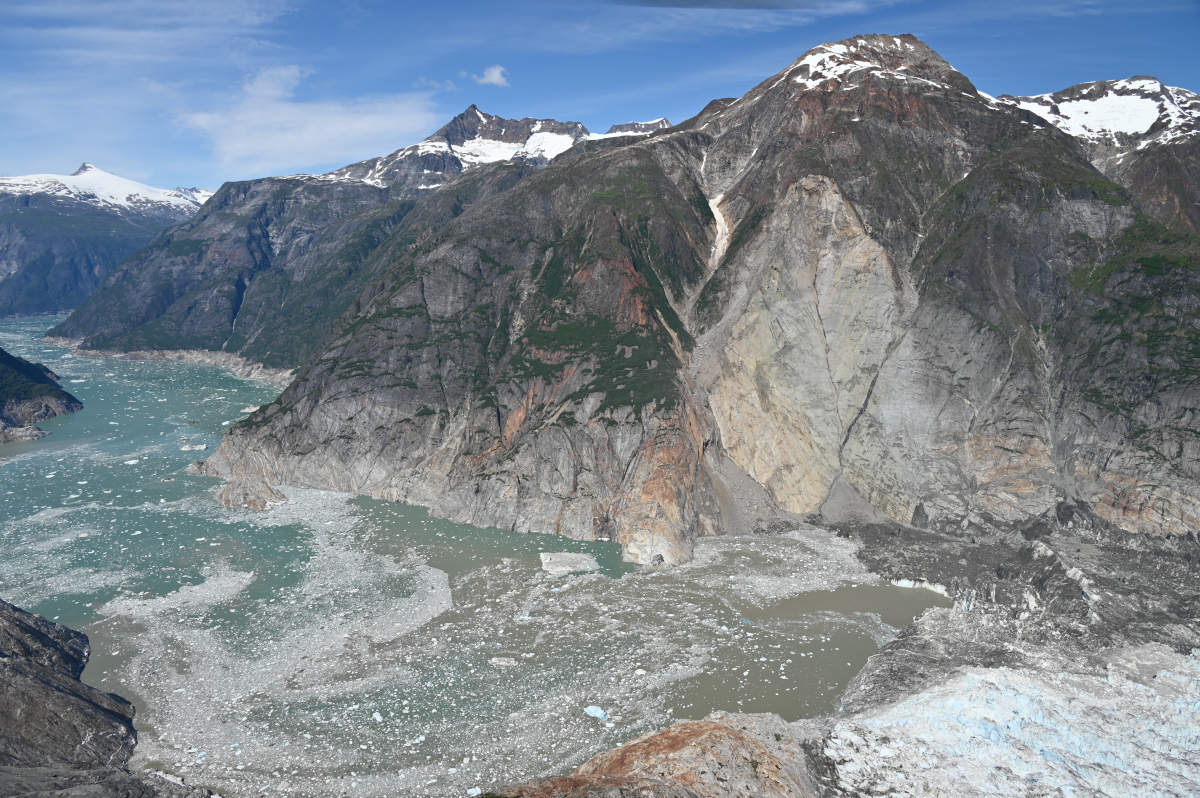
An initial view of the 10 August 2025 landslide onto the South Sawyer Glacier.
Posted inThe Landslide Blog

Updates from the Alaska Earthquake Center regarding the 10 August 2025 landslide

by Dave Petley 13 August 202513 August 2025

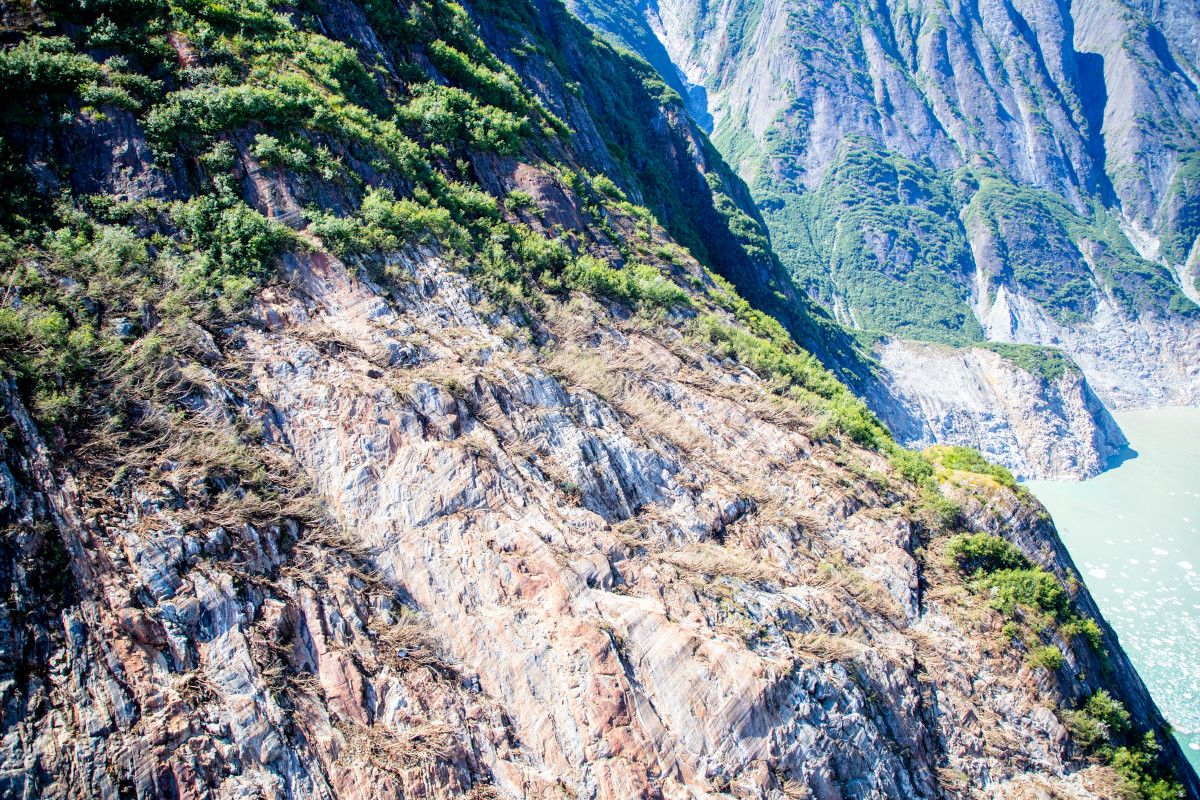
The location of this major event has now been identified. It was a major rock slope failure that ran out across the South Sawyer Glacier. The Alaska Earthquake Center has now provided a detailed update about the 10 August 2025 landslide that occurred in the area of Tracy Arm. This work has been led by […]

Satellite image of Tracy Arm inlet.
Posted inThe Landslide Blog

A likely large, tsunamigenic landslide in Tracy Arm inlet, Alaska on 10 August 2025

by Dave Petley 11 August 202511 August 2025

Seismic data and eye-witness reports of a displacement wave point to a large landslide at 5:30 am. On 10 August 2025, at 5:30 am local time, the Alaska Earthquake Center detected a seismic signal that was almost certainly generated by a landslide. They have posted the record of the seismic signal to Twitter. Their posting […]

A satellite image of a river becoming a fan-shaped delta and then draining into the ocean.
Posted inResearch Spotlights

Arctic Rivers Trade Inorganic Nitrogen for Organic

by Saima May Sidik 6 August 20256 August 2025

Climate change is shifting the makeup of a key nutrient in rivers across Russia, Alaska, and Canada, with the potential for ecosystem-wide impacts.

Google Earth image of the landslide at the Barry Glacier in Alaska in 2019.
Posted inThe Landslide Blog

Landslides during periods of glacial retreat in Alaska

by Dave Petley 30 June 202530 June 2025

An excellent new paper (Walden et al. 2025) examines the occurrence of accelerated movement in rock slope landslides in Alaska as adjacent glaciers melt. The exceptional temperatures in recent days in both North America and Europe has once again highlighted the rate at which the climate is changing in response to anthropogenic increases in greenhouse […]

Posts pagination

1 2 3 … 10 Older posts
A view of a bridge, with the New Orleans skyline visible in the distance between the bridge and the water. A purple tint, a teal curved line representing a river, and the text “#AGU25 coverage from Eos” overlie the photo.

Features from AGU Publications

Research Spotlights

Watershed Sustainability Project Centers Place-Based Research

4 December 20254 December 2025
Editors' Highlights

Changes in Slab Dip Cause Rapid Changes in Plate Motion

4 December 20252 December 2025
Editors' Vox

Hydrothermal Circulation and Its Impact on the Earth System

3 December 20253 December 2025
Eos logo at left; AGU logo at right

About Eos
ENGAGE
Awards
Contact

Advertise
Submit
Career Center
Sitemap

© 2025 American Geophysical Union. All rights reserved Powered by Newspack