
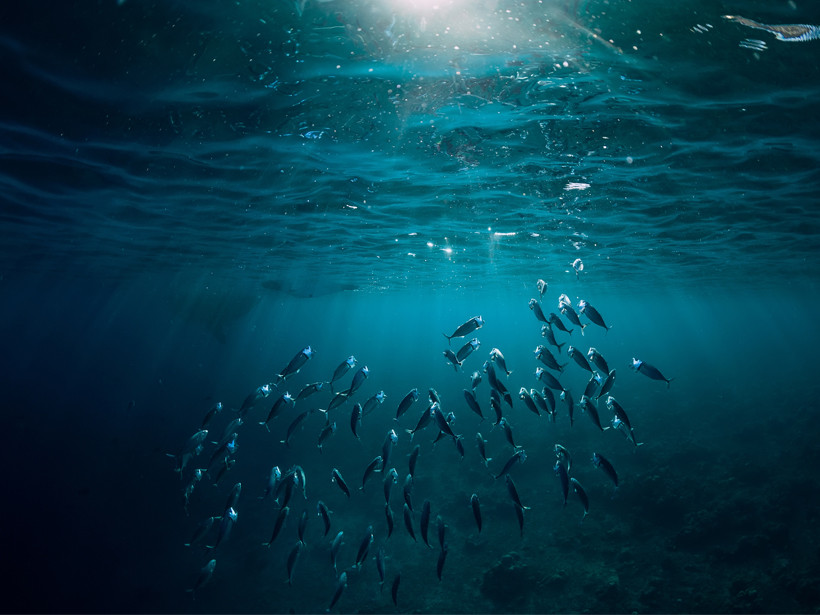

AGU executive director/CEO Chris McEntee provides key takeaways from the first Global Planning Meeting, in Copenhagen, for the United Nations Decade of Ocean Science for Sustainable Development.
Climate Change
Posted inResearch Spotlights
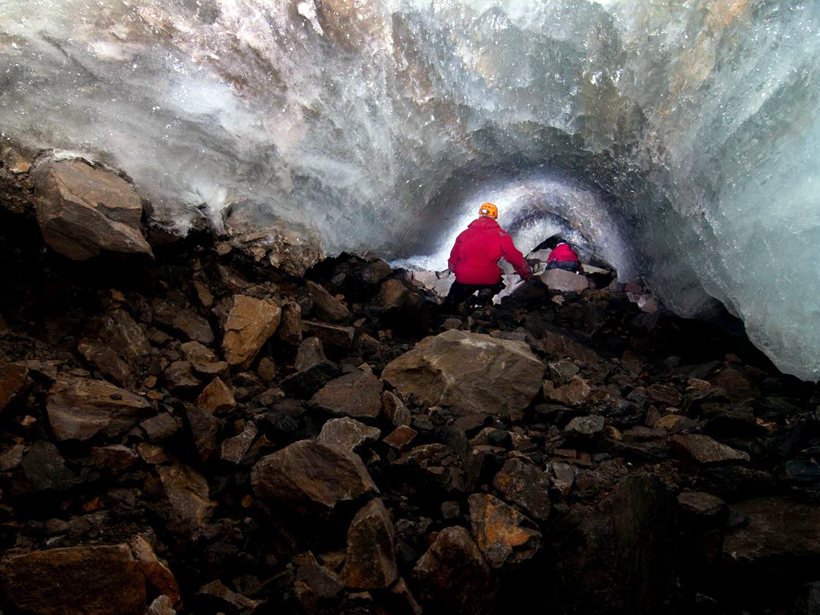
Mapping Subglacial Meltwater Channels
Researchers find that past studies underestimate the friction meltwater channels exert on glaciers by orders of magnitude.

Posted inResearch Spotlights
Shifting Winds Drive Ocean Temps Along South African Coast
A new study could help manage sardine populations in coastal waters.
Posted inNews
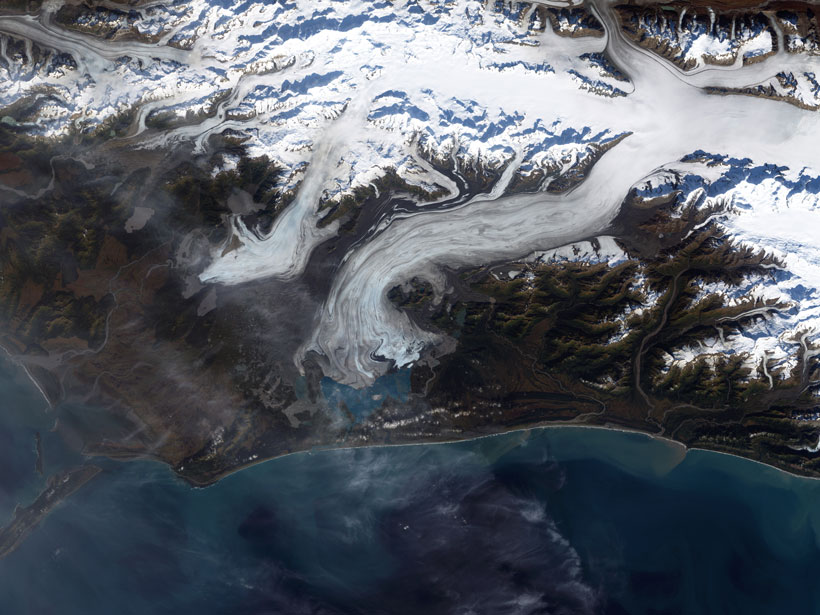
Seismic Clues to Surging Glaciers

Measuring seismic waves passing through a glacier suggests that not only is liquid water playing a role in periodic surging but the water is channeled into cracks from across the ice.
Posted inResearch Spotlights
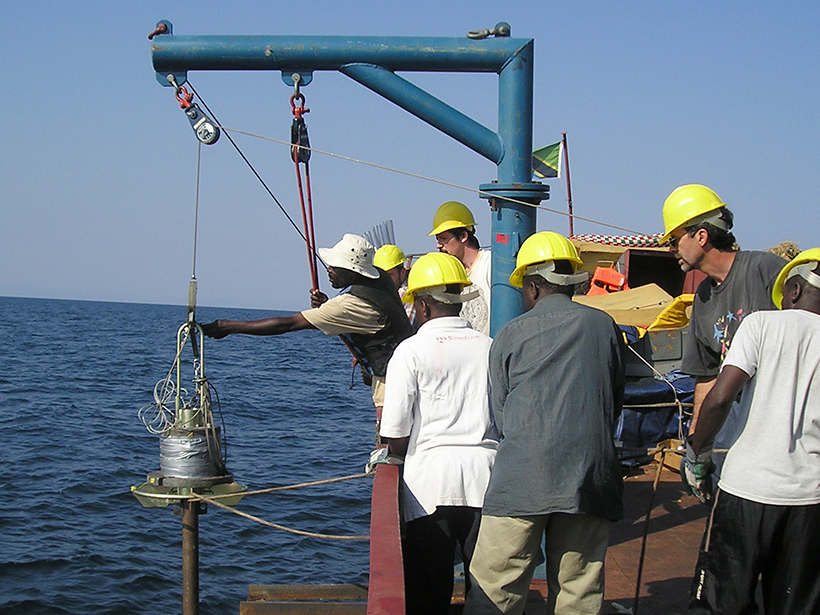
Translating Climate Models to the Language of Paleoclimate Data

A new model will help climate models better interpret paleoclimate reconstructions derived from lake sediment and could improve predictions of future climatic conditions.
Posted inNews
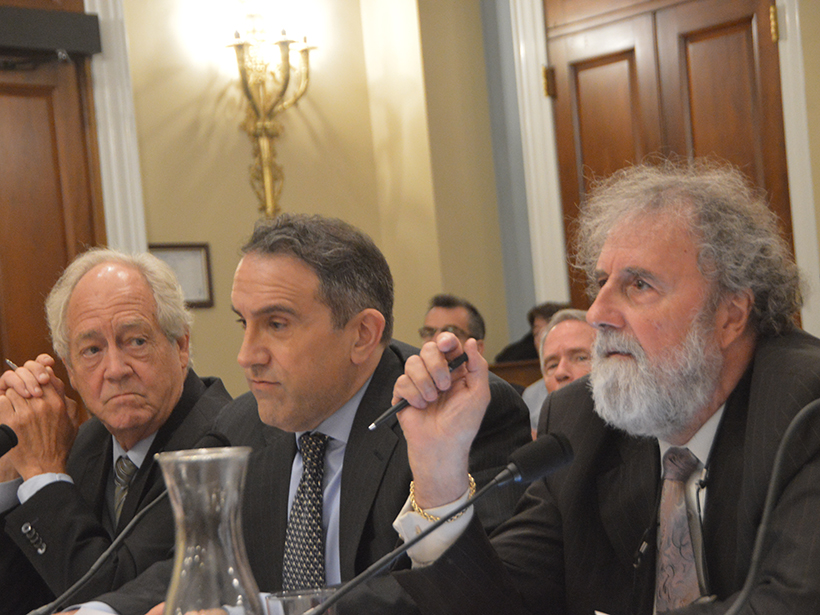
Congress Hears Biodiversity Warning During a Charged Hearing

At a testy congressional hearing, leading experts confronted attacks on the science.

Posted inScience Updates
Understanding ENSO in a Changing Climate
Centre for Southern Hemisphere Oceans Research (CSHOR) ENSO Science Symposium; Hobart, Tasmania, Australia, 29–31 January 2019
Posted inResearch Spotlights
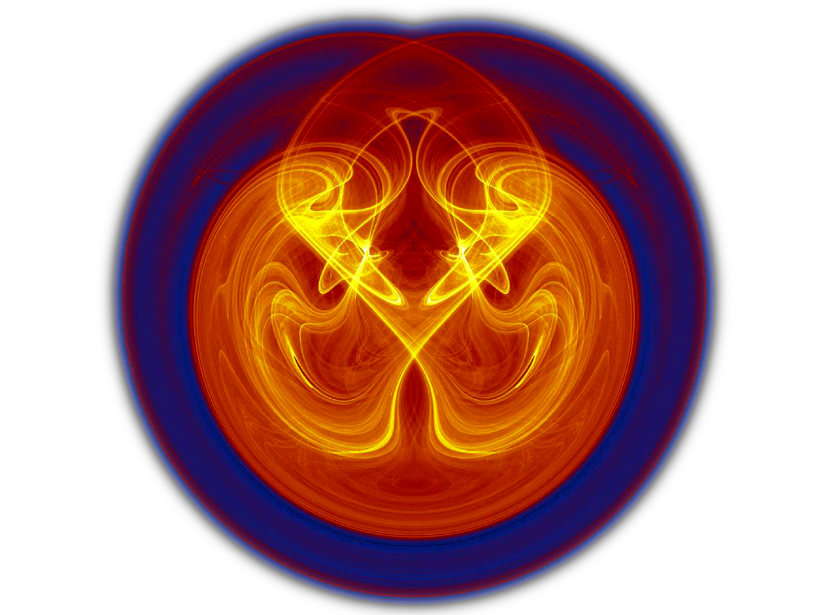
Celebrating a Century of Nonlinearity Across the Geosciences

Nonlinear concepts have evolved and become increasingly applicable to a wide range of geoscience inquiries, thus setting the stage for exciting new advances during AGU’s next 100 years.
Posted inNews
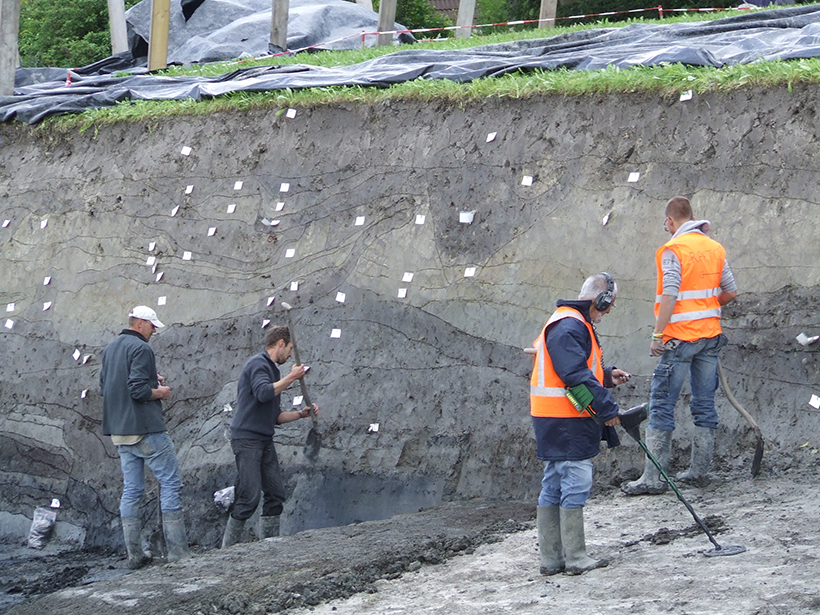
Historic Solutions to Sea Level Rise May Help Modern Communities

Earthen mounds helped ancient Dutch settlers thrive in coastal flood zones. Could historical engineering help us fight against rising seas?
Posted inNews
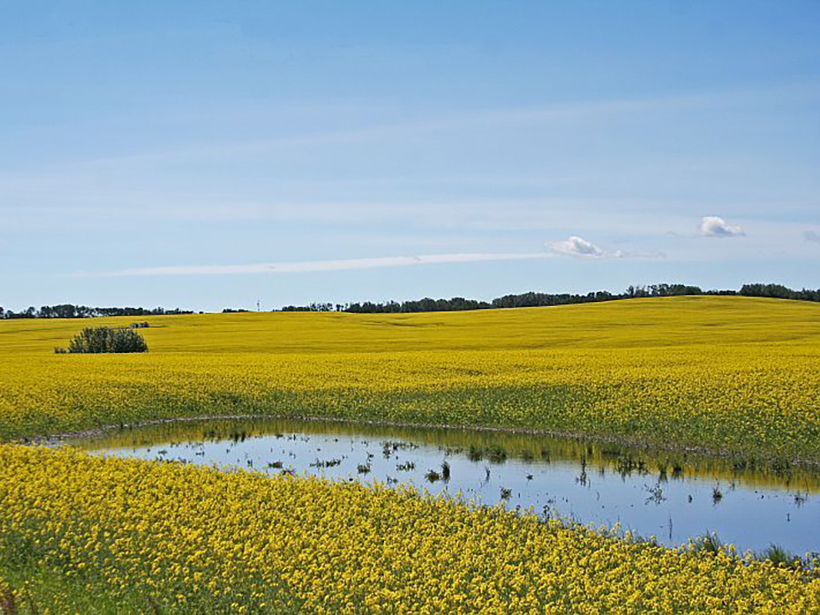
Farm Ponds Sequester Greenhouse Gases
Despite runoff from nitrogen-rich fertilizer, agricultural ponds act as powerful sinks for nitrous oxide.