
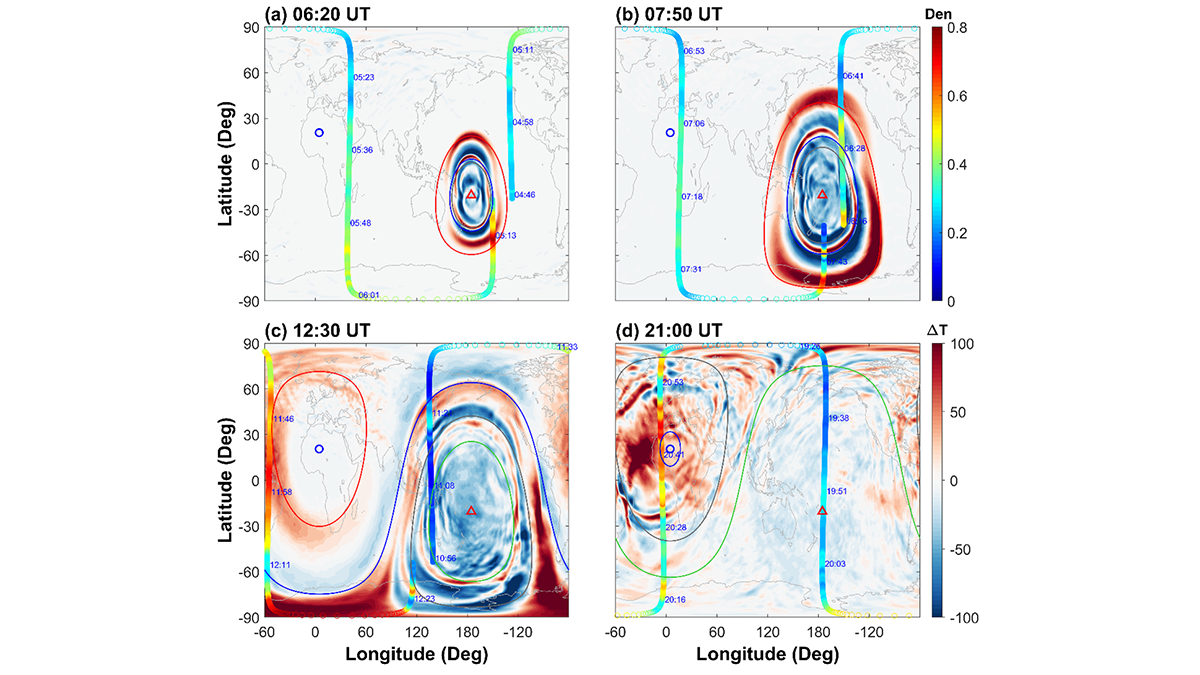
Secondary gravity waves emerge as the hidden architects of global-scale thermospheric upheaval following the Tonga eruption in 2022.
Earth science
Posted inNews
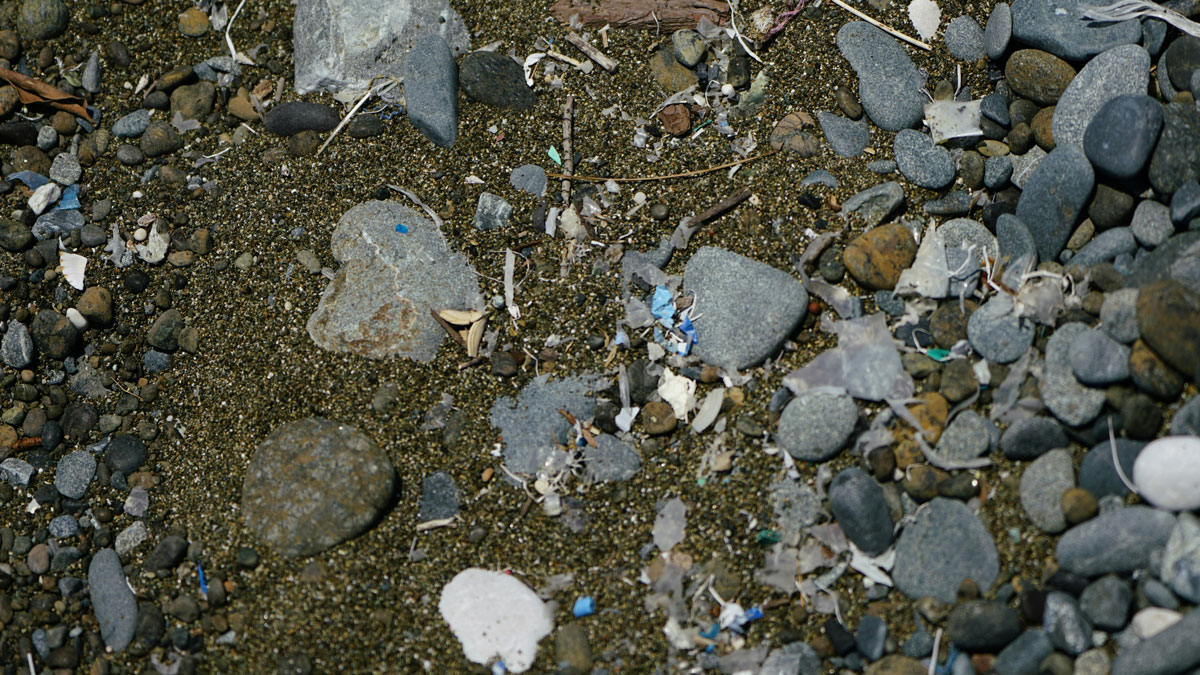
Avalanches of Microplastics Carry Pollution into the Deep Sea

Scientists observed a once-theorized process ferrying microplastics into the deep ocean.

Posted inEditors' Highlights
Why the Southern Alps Turned Red During the Summer of 2019-2020
Snow on the Southern Alps turned from white to red in 2019-2020. New geochemical evidence points to the color change resulting from red Australian desert dust carried across the Tasman Sea.

Posted inNews
Knowledge Flows Both Ways at TierraFest 2025
TierraFest, the biggest Earth science festival in Mexico, embraces diversity as a means of sharing knowledge about our planet.

Posted inNews
Large Outdoor Gatherings Expose Event-Goers to Severe Weather

Researchers pinpointed the riskiest events in terms of lightning and tornado exposure by mining data from more than 16,000 large outdoor gatherings.

Posted inNews
Investigadores cuantifican el impacto de los animales en la transformación de la Tierra
Los animales salvajes utilizan 76,000 gigajulios de energía—el equivalente a cientos de miles de monzones o inundaciones—moldeando los ecosistemas terrestres y de agua dulce de nuestro planeta.

Posted inResearch & Developments
NOAA Datasets Will Soon Disappear

NOAA has quietly reported that they will soon decommission 14 datasets, products, and catalogs related to earthquakes and marine, coastal, and estuary science.
Posted inNews
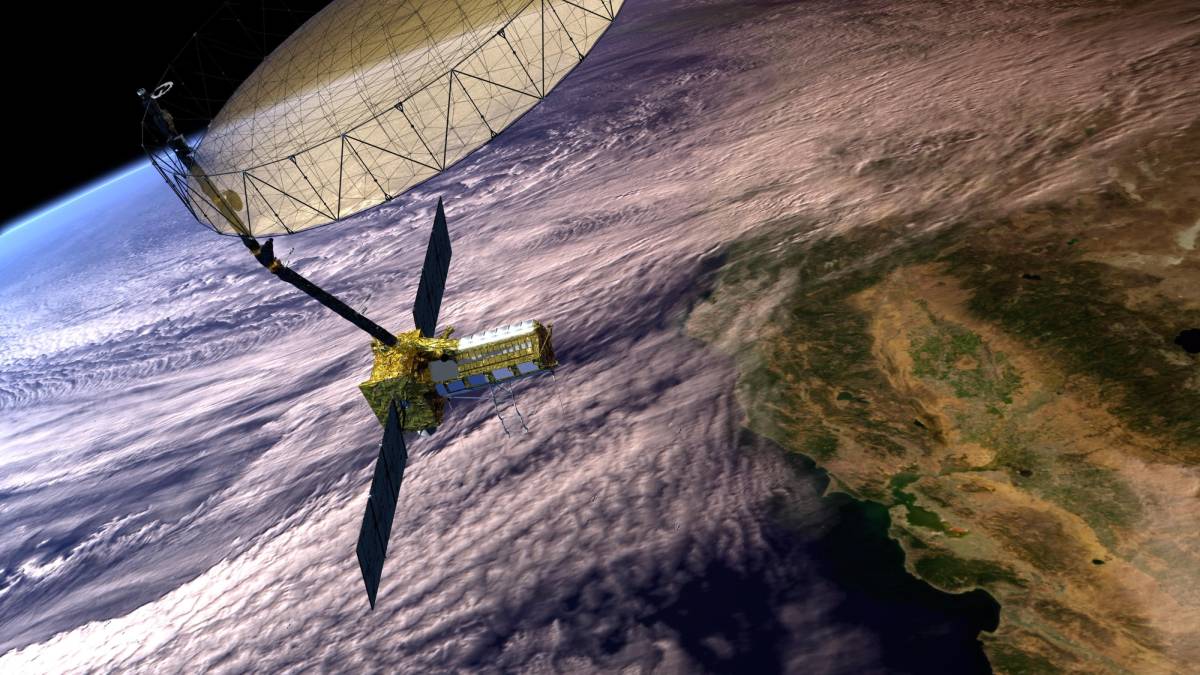
“Transformational” Satellite Will Monitor Earth’s Surface Changes
The mission, jointly operated by the United States and India, will measure minute changes to land, ice, and ecosystems around the globe.
Posted inNews
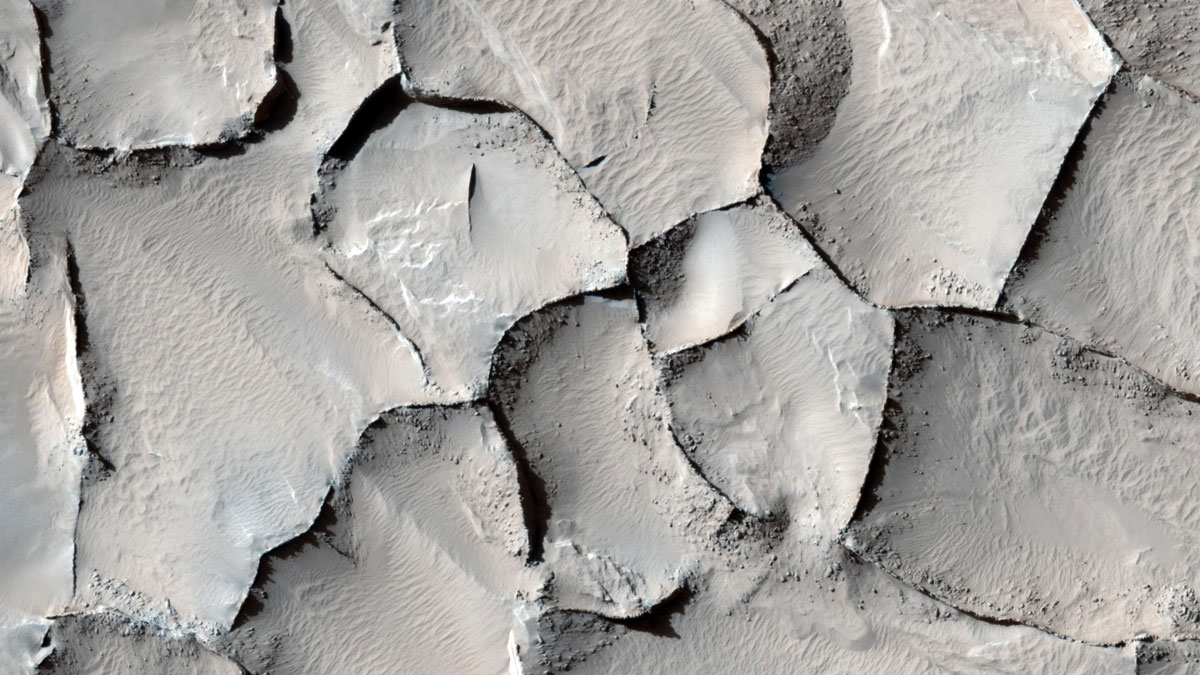
Cracks on Planetary Surfaces Hint at Water
Imagery of fractured terrain on Venus, Mars, and Jupiter’s moon Europa pinpoints environments influenced by water.
Posted inResearch Spotlights
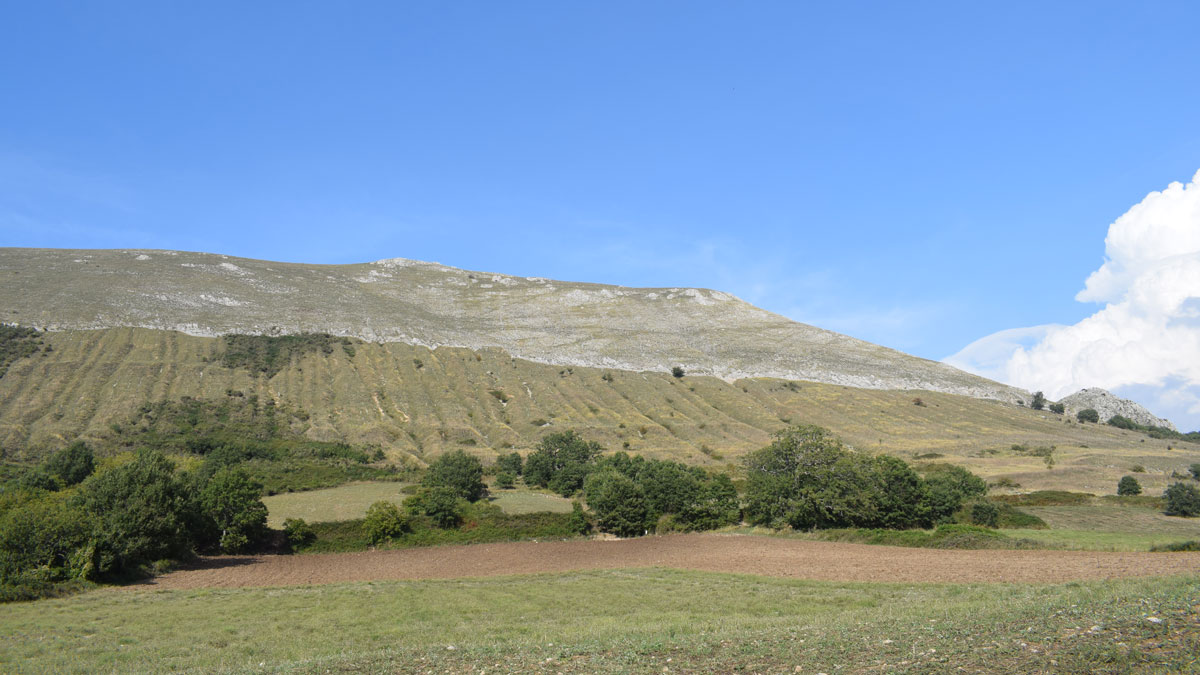
Isotopes Unearth History of Earthquakes in the Apennines
Dating of cosmogenic chlorine isotopes yields long-term estimates of fault activity in Italy, showing that periods of earthquakes and quiescence alternate over millennia.