
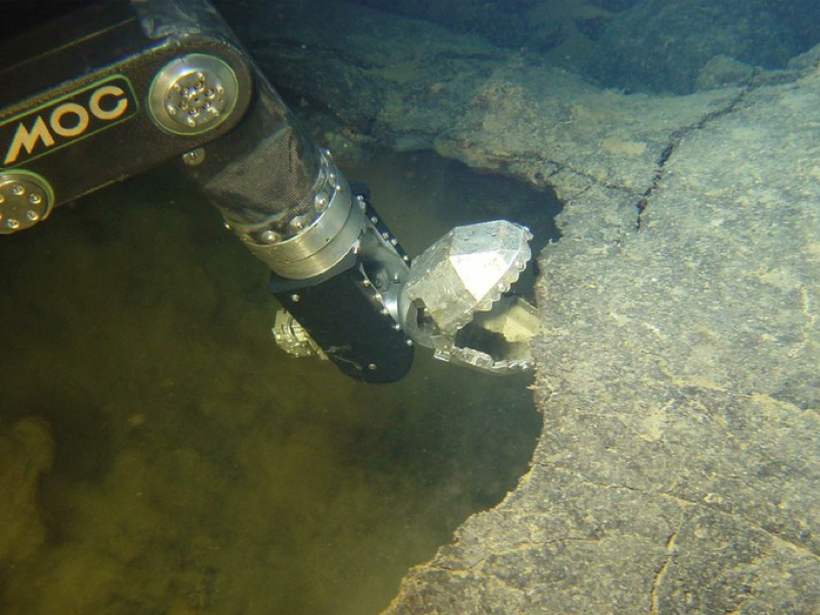

Isotopic signatures in volcanic basalts show that Earth's interior is even less uniform than scientists previously thought.
Earth’s interior
Posted inAGU News
Liu Receives 2015 Jason Morgan Early Career Award
Lijun Liu will receive the 2015 Jason Morgan Early Career Award at the 2015 American Geophysical Union Fall Meeting, to be held 14–18 December in San Francisco, Calif. The award is for significant early-career contributions in tectonophysics.
Posted inAGU News
Cottaar Receives 2015 Keiiti Aki Young Scientist Award
Sanne Cottaar will receive the 2015 Keiiti Aki Young Scientist Award at the 2015 American Geophysical Union Fall Meeting, to be held 14–18 December in San Francisco, Calif. The award recognizes the scientific accomplishments of a young scientist who makes outstanding contributions to the advancement of seismology.
Posted inFeatures
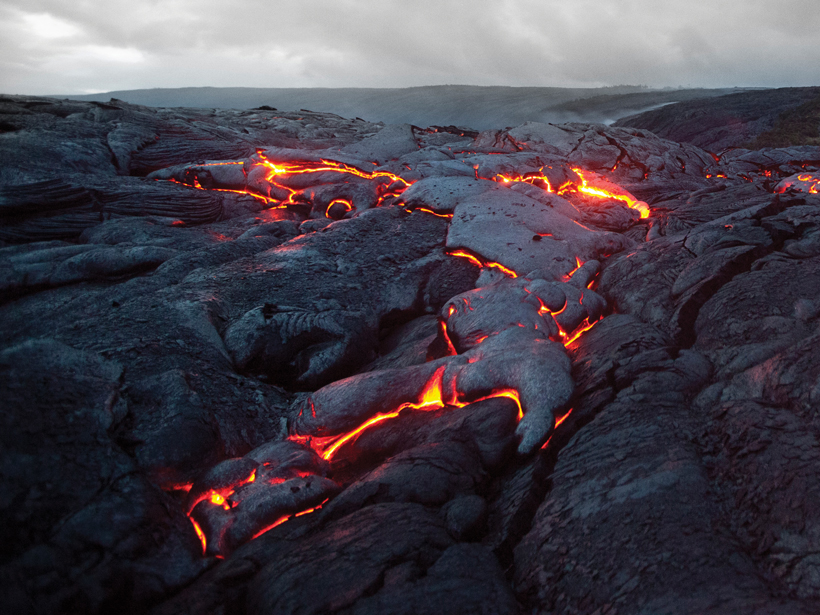
What Lies Deep in the Mantle Below?
For decades, scientists have probed Earth's remote mantle by analyzing how seismic waves of distant earthquakes pass through it. But we are still challenged by the technique's limitations.
Posted inAGU News
Schaeffer Receives 2014 Study of the Earth's Deep Interior Focus Group Graduate Research Award
Andrew Schaeffer received the 2014 Study of the Earth's Deep Interior Focus Group Graduate Research Award at the 2014 American Geophysical Union Fall Meeting, held 15–19 December in San Francisco, Calif.

Posted inResearch Spotlights
Dry Minerals in the Lower Mantle
Laboratory-made perovskite helps explain how water is distributed inside the Earth.
Posted inResearch Spotlights
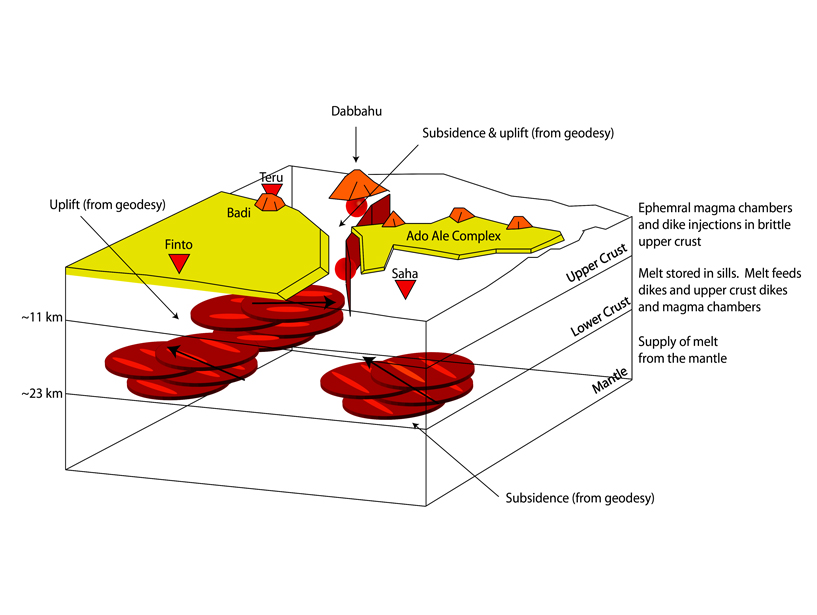
A Modified Technique to Remotely Detect Subsurface Melt
Adapting a much-used analytical method to consider anisotropy opens up the approach to new uses.
Posted inAGU News
Thorne Lay Receives 2014 Inge Lehmann Medal
Thorne Lay was awarded the 2014 Inge Lehmann Medal at the AGU Fall Meeting Honors Ceremony, held on 17 December 2014 in San Francisco, Calif. The medal is for “outstanding contributions to the understanding of the structure, composition, and dynamics of the Earth’s mantle and core.”
Posted inResearch Spotlights
Mantle Below North American Plate Newly Modeled

Data from seismometers spread out across the United States give new clues to the location of structures in the underlying mantle.
Posted inNews
Research Shines Light on Asthenosphere's Contribution to Hot Spots
What role does the asthenosphere play in midplate volcanism?