• About
  • Special Reports
  • Topics
    • Climate
    • Earth Science
    • Oceans
    • Space & Planets
    • Health & Ecosystems
    • Culture & Policy
    • Education & Careers
    • Opinions
  • Projects
    • Postcards From the Field
    • ENGAGE
    • Editors’ Highlights
    • Editors’ Vox
    • Eos en Español
    • Eos 简体中文版
    • Print Archive: 2015–2025
  • Policy Tracker
  • Blogs
    • Research & Developments
    • The Landslide Blog
  • Newsletter
  • Submit to Eos
  • AGU.org
  • Career Center
  • Join AGU
  • Give to AGU
  • About
  • Special Reports
  • Topics
    • Climate
    • Earth Science
    • Oceans
    • Space & Planets
    • Health & Ecosystems
    • Culture & Policy
    • Education & Careers
    • Opinions
  • Projects
    • Postcards From the Field
    • ENGAGE
    • Editors’ Highlights
    • Editors’ Vox
    • Eos en Español
    • Eos 简体中文版
    • Print Archive: 2015–2025
  • Policy Tracker
  • Blogs
    • Research & Developments
    • The Landslide Blog
  • Newsletter
  • Submit to Eos
Skip to content
  • AGU.org
  • Career Center
  • Join AGU
  • Give to AGU
Eos

Eos

Science News by AGU

Support Eos
Sign Up for Newsletter
  • About
  • Special Reports
  • Topics
    • Climate
    • Earth Science
    • Oceans
    • Space & Planets
    • Health & Ecosystems
    • Culture & Policy
    • Education & Careers
    • Opinions
  • Projects
    • Postcards From the Field
    • ENGAGE
    • Editors’ Highlights
    • Editors’ Vox
    • Eos en Español
    • Eos 简体中文版
    • Print Archive: 2015–2025
  • Policy Tracker
  • Blogs
    • Research & Developments
    • The Landslide Blog
  • Newsletter
  • Submit to Eos

Earth’s interior

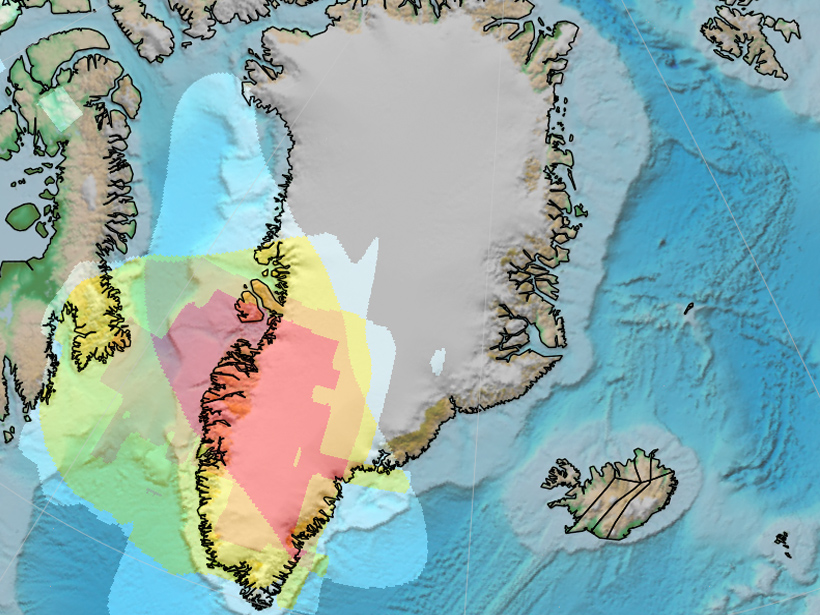
Topography and bathymetry around Greenland overlain with ancient slab material projected from 1400 kilometers depth.
Posted inResearch Spotlights

Evidence of an Extinct Ocean Basin Detected Beneath Greenland

by Terri Cook 25 May 201611 January 2022

An analysis of a seismic and gravity anomaly discovered in the middle mantle sheds new light on ancient oceans, the mantle's evolution, and ancient magmatism in the Arctic.

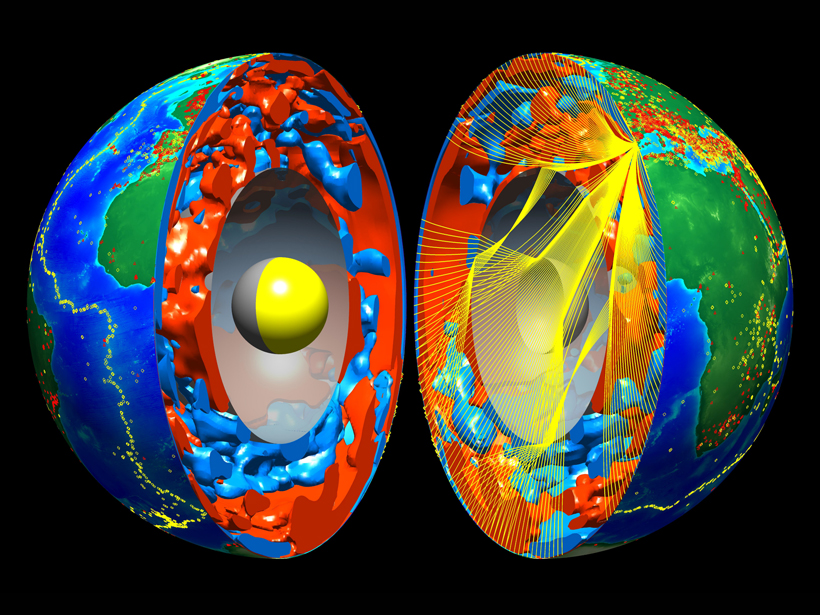
Seismic wave velocity structure in deep Earth revealed through seismic tomography.
Posted inResearch Spotlights

Massive Ancient Tectonic Slab Found Below the Indian Ocean

Cody Sullivan by C. Sullivan 1 April 201611 January 2022

Scientists discover a surprisingly positioned tectonic plate, buried below the southern Indian Ocean, that spans the entire mantle.

Posted inEditors' Vox

Frontiers in Geosystems: Solving the Puzzles

by Thorsten W. Becker 24 March 201616 November 2021

Putting some publishing action into deep Earth-surface interactions

Posted inResearch Spotlights

Variable Mantle Lies Below Ancient Pieces of Earth's Crust

Cody Sullivan by C. Sullivan 16 March 20164 August 2023

Underneath old and stable pieces of Earth's crust in North America, the mantle's uppermost portion contains multiple layers that change the velocities of seismic waves.

Posted inResearch Spotlights

Improved Models of Wind Flow over Mountains

by Terri Cook 15 February 20167 October 2021

A new approach for representing areas of low-lying mountains improves the simulation of atmospheric flow over gentle topography without increasing computational requirements.
Posted inResearch Spotlights

P Wave Amplitude Decay Offers a Glimpse of Earth's Structure

by L. Strelich 22 January 201610 March 2022

Scientists look at deep earthquake signals to map how seismic waves lose energy in the upper mantle across the United States.

Posted inAGU News

Peter Olson Receives 2015 Inge Lehmann Medal

by AGU 29 December 201520 April 2022

Peter Olson was awarded the 2015 Inge Lehmann Medal at the American Geophysical Union Fall Meeting Honors Ceremony, held on 16 December 2015 in San Francisco, Calif. The medal is for "outstanding contributions to the understanding of the structure, composition, and dynamics of the Earth's mantle and core."

Posted inScience Updates

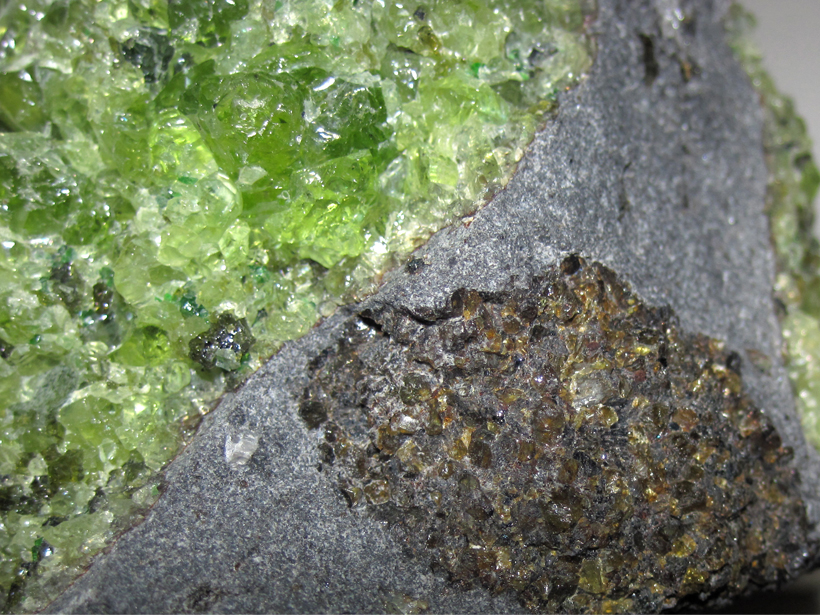
UAE-Oman Mountains Give Clues to Oceanic Crust and Mantle Rocks

by S. Pilia, M. Y. Ali, A. B. Watts and M. P. Searle 9 December 20154 August 2023

When oceanic plates meet continental plates, the continental plates usually come out on top. Cases where this is reversed provide valuable access to oceanic crust and mantle materials.
Posted inNews

Earth's Water Came from Space Dust During Planetary Formation

Cody Sullivan by C. Sullivan 23 November 201510 January 2023

A new analysis of lava from the deep mantle indicates that water-soaked dust particles, rather than a barrage of icy comets, asteroids, or other bodies, delivered water to the newly forming Earth.
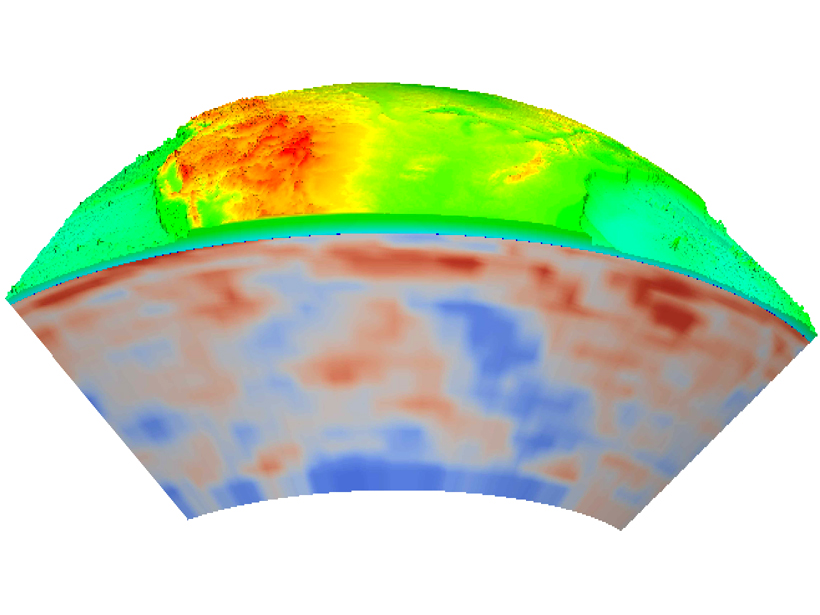
Posted inResearch Spotlights

North America Does the Wave (Slowly)

by N. McGuire 3 November 20157 October 2021

Data-driven modeling helps explain how convection currents in Earth's mantle influence the rise and fall of surface features, but these models are in an early stage.

Posts pagination

Newer posts 1 … 11 12 13 14 15 Older posts
Over a dark blue-green square appear the words Special Report: The State of the Science 1 Year On.

Features from AGU Publications

Research Spotlights

What Australian Lakes Showed Us About Martian Hydrology

27 July 202627 July 2026
Editors' Highlights

Rising CO2 Alters Upper Atmosphere Response to Stratosphere Sudden Warming

29 July 202627 July 2026
Editors' Vox

The Hidden Costs of Mining River Sand

27 July 202627 July 2026
Eos logo at left; AGU logo at right

About Eos
ENGAGE
Awards
Contact

Advertise
Submit
Career Center
Sitemap

© 2026 American Geophysical Union. All rights reserved Powered by Newspack