• About
  • Special Reports
  • Topics
    • Climate
    • Earth Science
    • Oceans
    • Space & Planets
    • Health & Ecosystems
    • Culture & Policy
    • Education & Careers
    • Opinions
  • Projects
    • Postcards From the Field
    • ENGAGE
    • Editors’ Highlights
    • Editors’ Vox
    • Eos en Español
    • Eos 简体中文版
    • Print Archive: 2015–2025
  • Policy Tracker
  • Blogs
    • Research & Developments
    • The Landslide Blog
  • Newsletter
  • Submit to Eos
  • AGU.org
  • Career Center
  • Join AGU
  • Give to AGU
  • About
  • Special Reports
  • Topics
    • Climate
    • Earth Science
    • Oceans
    • Space & Planets
    • Health & Ecosystems
    • Culture & Policy
    • Education & Careers
    • Opinions
  • Projects
    • Postcards From the Field
    • ENGAGE
    • Editors’ Highlights
    • Editors’ Vox
    • Eos en Español
    • Eos 简体中文版
    • Print Archive: 2015–2025
  • Policy Tracker
  • Blogs
    • Research & Developments
    • The Landslide Blog
  • Newsletter
  • Submit to Eos
Skip to content
  • AGU.org
  • Career Center
  • Join AGU
  • Give to AGU
Eos

Eos

Science News by AGU

Support Eos
Sign Up for Newsletter
  • About
  • Special Reports
  • Topics
    • Climate
    • Earth Science
    • Oceans
    • Space & Planets
    • Health & Ecosystems
    • Culture & Policy
    • Education & Careers
    • Opinions
  • Projects
    • Postcards From the Field
    • ENGAGE
    • Editors’ Highlights
    • Editors’ Vox
    • Eos en Español
    • Eos 简体中文版
    • Print Archive: 2015–2025
  • Policy Tracker
  • Blogs
    • Research & Developments
    • The Landslide Blog
  • Newsletter
  • Submit to Eos

Earth’s interior

Posted inEditors' Highlights

Tracking Deep-Earth Processes from Rapid Topographic Changes

by Taylor Schildgen 23 February 201818 April 2022

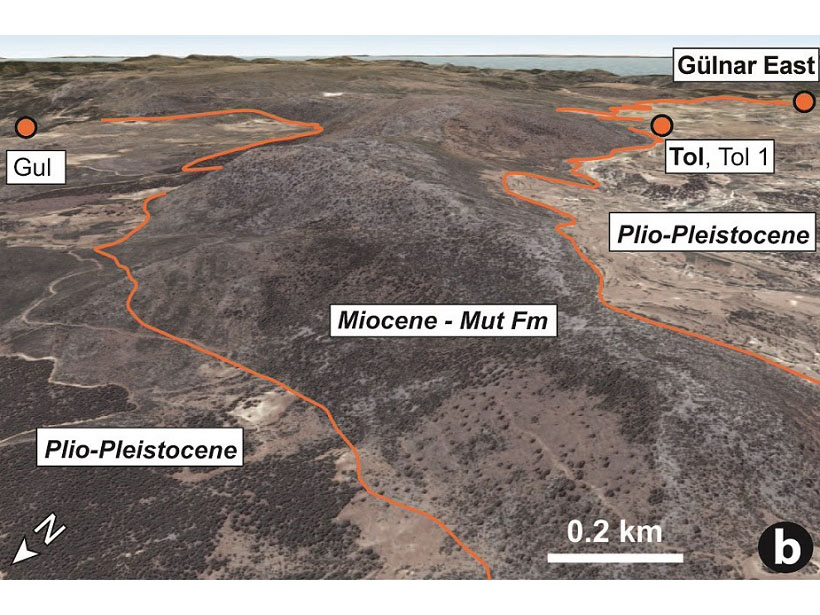
Rapid elevation-rise in Turkey, tracked by marine sediments that now sit at 1.5 km in elevation, is linked to deep-Earth processes that can explain short-lived, extreme rates of topographic change.
Posted inEditors' Highlights

New Thermodynamic Model for Computing Mantle Mineralogy

by M. Walter 16 January 20184 August 2023

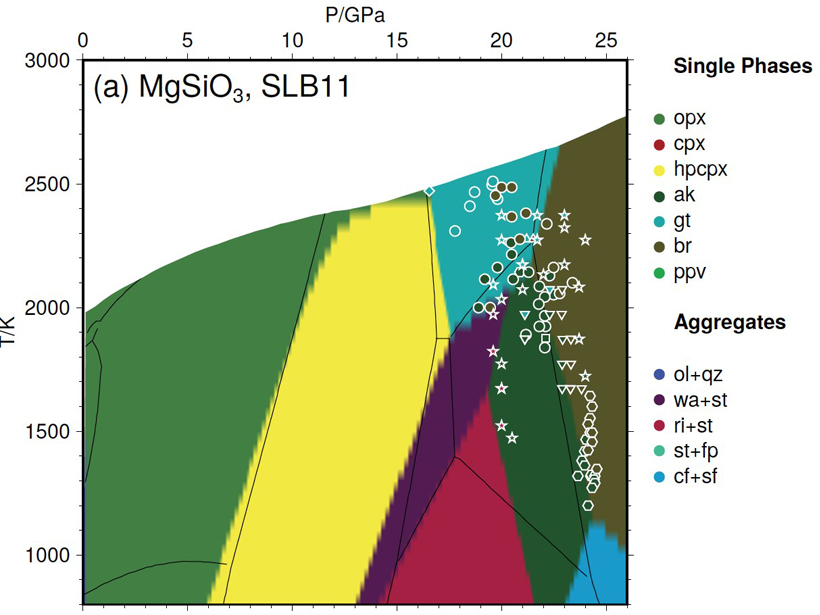
A newly developed open-access software package called MMA-EoS can calculate whole mantle mineralogy in multicomponent systems by Gibbs energy minimization.

Posted inAGU News

Brian Kennett Receives 2017 Inge Lehmann Medal

by AGU 26 December 201711 April 2023

Brian Kennett was awarded the 2017 Inge Lehmann Medal at the American Geophysical Union Fall Meeting Honors Ceremony, held on 13 December 2017 in New Orleans, La. The medal is for “outstanding contributions to the understanding of the structure, composition, and dynamics of the Earth’s mantle and core.”
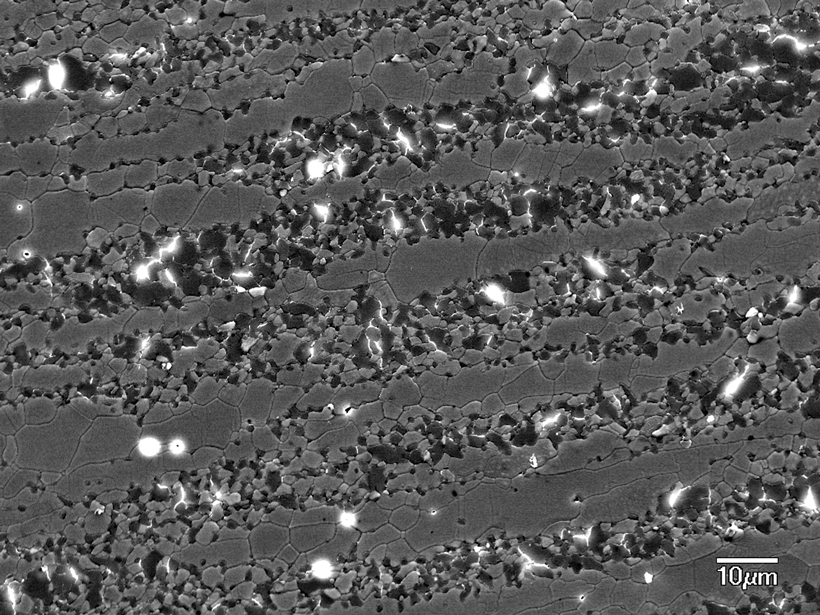
Secondary electron microscope images showing microstructures of stressed grains.
Posted inResearch Spotlights

Probing the Grain-Scale Processes That Drive Plate Tectonics

by Terri Cook 8 December 201722 September 2022

New experimental data suggest that rock composition may play a critical role in forming and perpetuating shear zones.

Posted inNews

Richard J. O’Connell (1941–2015)

by M. Manga and Thorsten W. Becker 17 November 201716 November 2021

This son of a Montana sheriff discovered the fundamental rules underlying complex geophysical phenomena, and he taught others to do the same.

Posted inAGU News

Booker Receives 2017 William Gilbert Award

by AGU 25 October 201718 April 2023

John R. Booker will receive the 2017 William Gilbert Award at the 2017 American Geophysical Union Fall Meeting, to be held 11–15 December in New Orleans, La. The award recognizes “outstanding and unselfish work in magnetism of Earth materials and of the Earth and planets.”
Posted inEditors' Vox

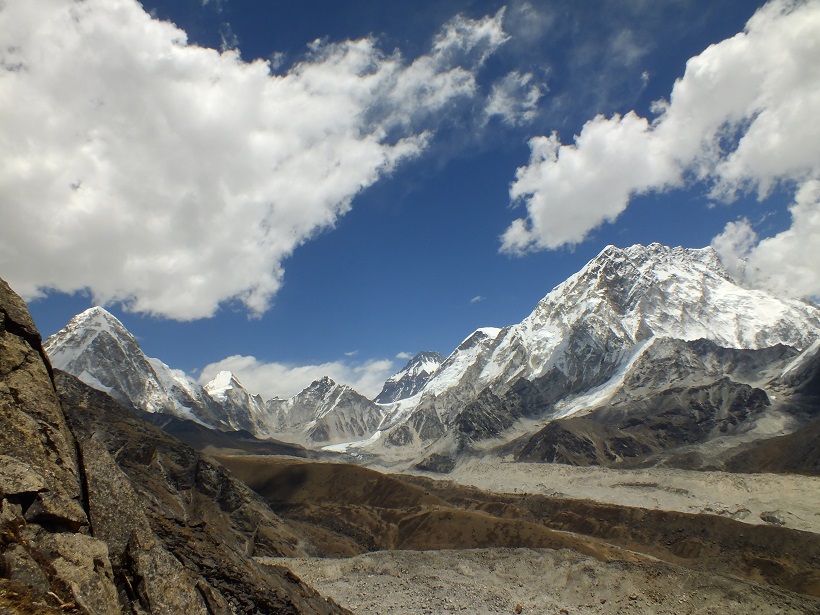
Competing Models of Mountain Formation Reconciled

by A. Parsons 8 May 201724 March 2023

The author of a prize-winning paper published in Geochemistry, Geophysics, Geosystems describes new insights into crustal mechanics and the formation of the Himalaya.

How Earth precesses and nutates gives clues to interior processes.
Posted inScience Updates

Earth's Wobbly Path Gives Clues to Its Core

by V. Dehant and R. Gross 11 April 20178 April 2022

Understanding the Earth Core and Nutation; Brussels, Belgium, 19–21 September 2016

Aerial view of the Udachnaya pipe deposit diamond mine in Sakha Republic, Russia
Posted inScience Updates

Synthesizing Our Understanding of Earth's Deep Carbon

by Marie Edmonds and C. Manning 21 February 201728 March 2023

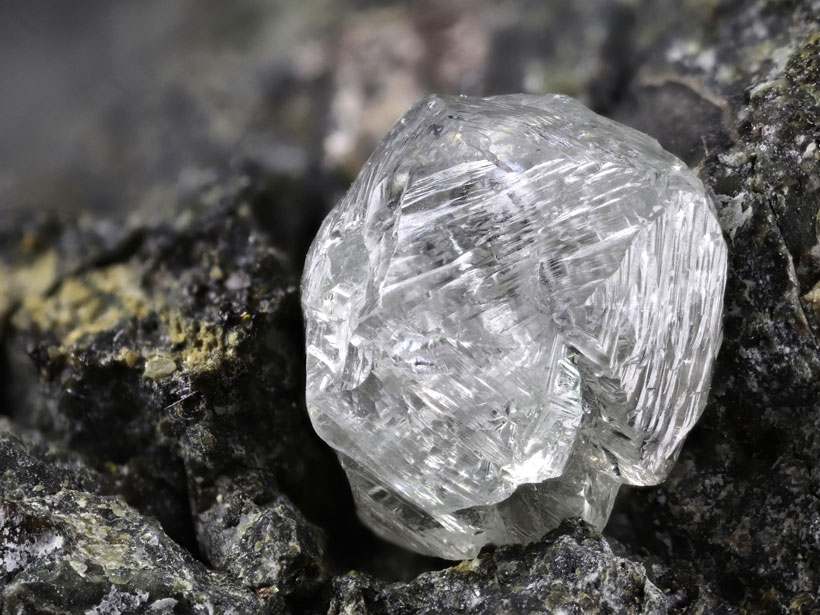
The Deep Carbon Observatory is entering a new phase, in which it will integrate 10 years of discoveries into an overarching model to benefit the scientific community and a wider public.

Posted inAGU News

Veronique Dehant Receives 2016 Charles A. Whitten Medal

by AGU 29 December 201621 April 2023

Veronique Dehant was awarded the 2016 Charles A. Whitten Medal at the American Geophysical Union Fall Meeting Honors Ceremony, held on 14 December 2016 in San Francisco, Calif. The medal is for "outstanding achievement in research on the form and dynamics of the Earth and planets."

Posts pagination

Newer posts 1 … 9 10 11 12 13 … 15 Older posts
Over a dark blue-green square appear the words Special Report: The State of the Science 1 Year On.

Features from AGU Publications

Research Spotlights

A Long-Term Look Beneath an Antarctic Ice Shelf

6 March 20269 March 2026
Editors' Highlights

The Fate of the Greenland Ice Sheet: Deep Learning from SkySat Images

9 March 20269 March 2026
Editors' Vox

How Radar Reveals the Hidden Fabric of Ice Sheets

9 March 20269 March 2026
Eos logo at left; AGU logo at right

About Eos
ENGAGE
Awards
Contact

Advertise
Submit
Career Center
Sitemap

© 2026 American Geophysical Union. All rights reserved Powered by Newspack