• About
  • Special Reports
  • Topics
    • Climate
    • Earth Science
    • Oceans
    • Space & Planets
    • Health & Ecosystems
    • Culture & Policy
    • Education & Careers
    • Opinions
  • Projects
    • Postcards From the Field
    • ENGAGE
    • Editors’ Highlights
    • Editors’ Vox
    • Eos en Español
    • Eos 简体中文版
    • Print Archive: 2015–2025
  • Policy Tracker
  • Blogs
    • Research & Developments
    • The Landslide Blog
  • Newsletter
  • Submit to Eos
  • AGU.org
  • Career Center
  • Join AGU
  • Give to AGU
  • About
  • Special Reports
  • Topics
    • Climate
    • Earth Science
    • Oceans
    • Space & Planets
    • Health & Ecosystems
    • Culture & Policy
    • Education & Careers
    • Opinions
  • Projects
    • Postcards From the Field
    • ENGAGE
    • Editors’ Highlights
    • Editors’ Vox
    • Eos en Español
    • Eos 简体中文版
    • Print Archive: 2015–2025
  • Policy Tracker
  • Blogs
    • Research & Developments
    • The Landslide Blog
  • Newsletter
  • Submit to Eos
Skip to content
  • AGU.org
  • Career Center
  • Join AGU
  • Give to AGU
Eos

Eos

Science News by AGU

Support Eos
Sign Up for Newsletter
  • About
  • Special Reports
  • Topics
    • Climate
    • Earth Science
    • Oceans
    • Space & Planets
    • Health & Ecosystems
    • Culture & Policy
    • Education & Careers
    • Opinions
  • Projects
    • Postcards From the Field
    • ENGAGE
    • Editors’ Highlights
    • Editors’ Vox
    • Eos en Español
    • Eos 简体中文版
    • Print Archive: 2015–2025
  • Policy Tracker
  • Blogs
    • Research & Developments
    • The Landslide Blog
  • Newsletter
  • Submit to Eos

Enceladus

Mystery shrouds the Enceladus plume, and researchers think a dust cloud might be the main culprit
Posted inResearch Spotlights

Where Are the Electrical Currents in the Enceladus Plume?

by Mark Zastrow 7 July 201715 March 2023

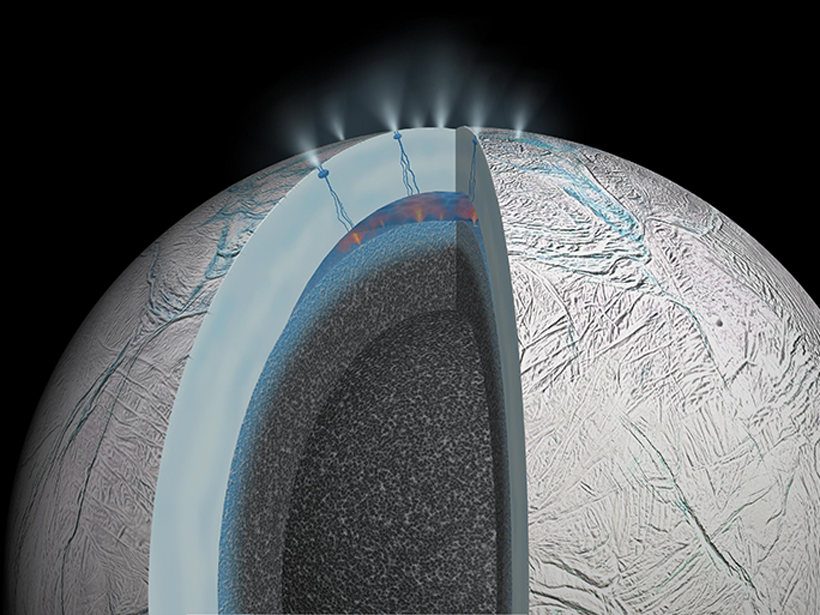
A plume of water ice that escapes Saturn’s moon Enceladus should be coursing with electrical currents, but data are mixed. Now simulations suggest that a sticky dust cloud may shield signals.

Plumes
Posted inNews

Hydrogen Molecules Hint at Habitability of Enceladus's Ocean

JoAnna Wendel, freelance science writer and illustrator by JoAnna Wendel 13 April 201711 January 2022

Scientists suggest that the hydrogen could be evidence of hydrothermal activity on the ocean floor of Saturn's sixth largest moon.
Posted inNews

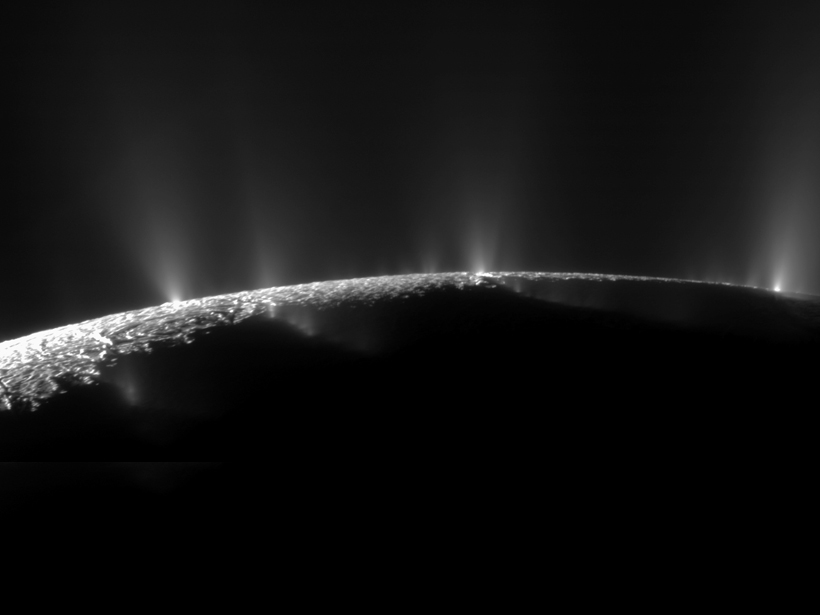
Cassini Probe Dives Through Enceladus Plume

JoAnna Wendel, freelance science writer and illustrator by JoAnna Wendel 28 October 201511 January 2022

NASA's Cassini probe takes a trip through a cosmic sprinkler to learn more about a subsurface ocean.

Posts pagination

Newer posts 1 2 3
Over a dark blue-green square appear the words Special Report: The State of the Science 1 Year On.

Features from AGU Publications

Research Spotlights

How Rising Air Plumes Help Spike Moist Heat

27 August 202627 August 2026
Editors' Highlights

Long-Term Datasets are Essential to Understanding Coastal Change

26 August 202618 August 2026
Editors' Vox

Climate Model Benchmarking: Building Trust and Advancing Science

24 August 202624 August 2026
Eos logo at left; AGU logo at right

About Eos
ENGAGE
Awards
Contact

Advertise
Submit
Career Center
Sitemap

© 2026 American Geophysical Union. All rights reserved Powered by Newspack