Source: Geophysical Research Letters
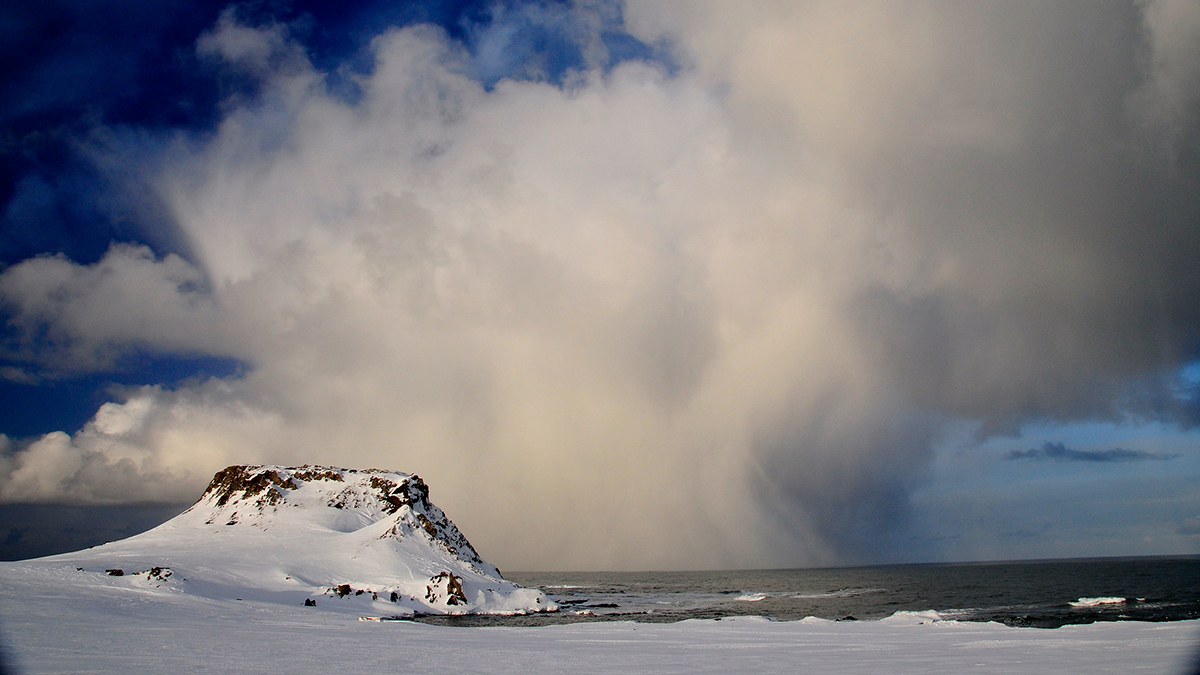
Atmospheric rivers act like “rivers in the sky,” shuttling intense bands of warm, heavy moisture from lower to higher latitudes. When an atmospheric river encounters cold air or mountainous terrain, the moisture it carries condenses and falls as heavy rain or snow. In Antarctica, the arrival of an atmospheric river can help build surface ice mass. Much of Antarctica is very dry; an atmospheric river can bring the moisture needed to potentially offset some ice loss.
Antarctica’s varied topography and dry conditions have made detecting atmospheric rivers over the continent challenging. Previous efforts to do so have suggested that atmospheric rivers contribute up to 30% of Antarctica’s total annual precipitation, but these methods may not be capturing the full picture of atmospheric river activity.
Takahashi et al. developed a new 3D atmospheric river detection algorithm to better capture how atmospheric rivers affect Antarctica’s complex terrain. Previous methods have mostly been 2D, meaning they do not accurately account for the vertical variations within an atmospheric river.
To evaluate the algorithm, the researchers applied it to two datasets: (1) daily snowfall totals measured during the 44th Japanese Antarctic Research Expedition (JARE44) at Dome Fuji from February 2003 to January 2004 and (2) the ERA5 (European Centre for Medium-Range Weather Forecasts atmospheric reanalysis) dataset of daily weather patterns and conditions in Antarctica from 1979 to 2023.
The results of the study’s new algorithm showed 16 significant snowfall events during the JARE44 expedition, all of which were not detected by the older 2D method. The new 3D method identified 17 days of atmospheric river activity, which corresponded with 10 heavy snowfall events and accounted for approximately 40% of the total precipitation. Between 1979 and 2023, atmospheric rivers occurred about 10% of the time yet contributed 30%–60% of total precipitation in the Antarctic interior.
The 3D method in the new study suggests that atmospheric river events contribute a greater proportion of total snowfall than previously thought—between 30% and 90%, depending on the Antarctic region. The researchers also suggest that long-term changes in Antarctic snowfall are closely linked with the changes in atmospheric river activity. This connection is especially apparent in East Antarctica, where the link between snowfall increases and atmospheric rivers had not yet been clearly identified in previous studies. (Geophysical Research Letters, https://doi.org/10.1029/2025GL120986, 2026)
—Rebecca Owen (@beccapox.bsky.social), Science Writer