Source: AGU Advances
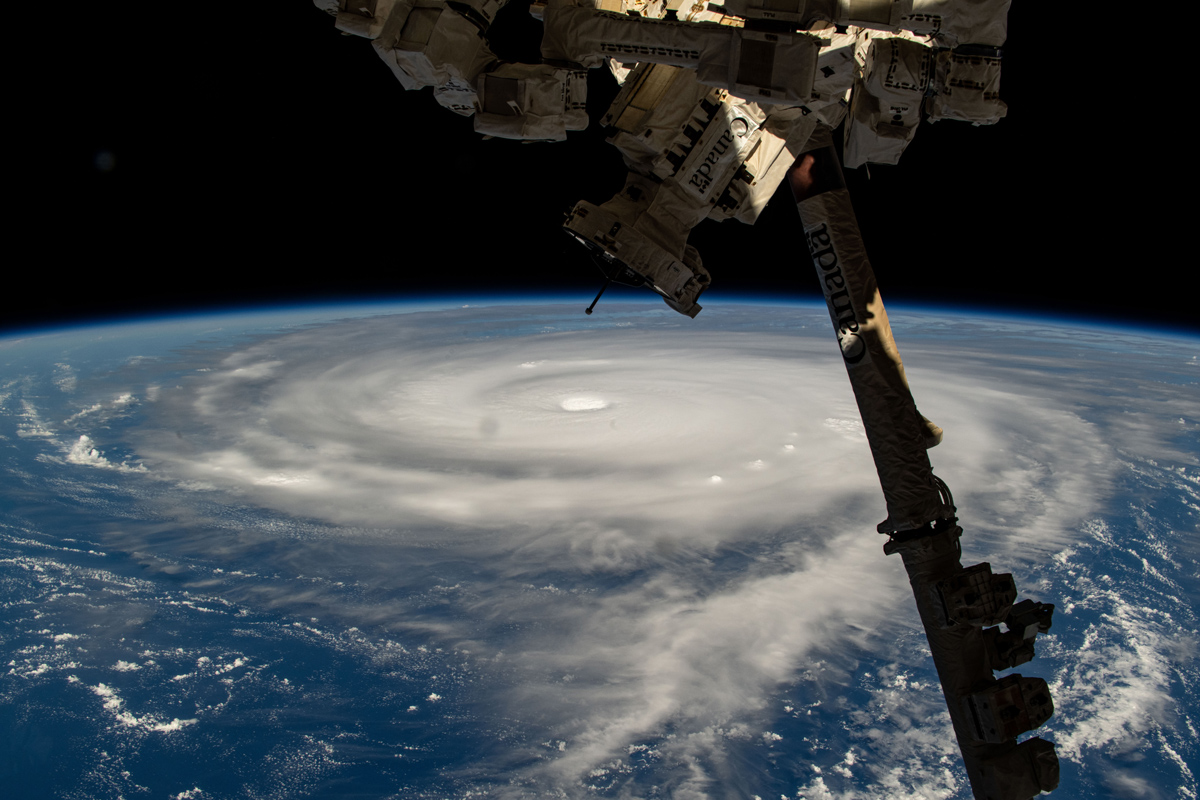
Between 1970 and 2019, tropical cyclones killed nearly 780,000 people worldwide and caused approximately $1.4 trillion in economic losses. As coastal populations continue to grow and climate continues to change, accurate forecasting is essential for saving lives and reducing economic damage.
Weather prediction models that chart the path, speed, and landfall location of tropical cyclones rely on weather data collected by satellites, fixed buoys, and other observation systems. Storm track forecasts have improved significantly, gaining roughly 1 day of lead time per decade. However, forecasts still struggle to accurately capture intensification, or how quickly a storm strengthens or weakens, which can result in false alarms or underplaying hazards.
To address this shortcoming, Xia et al. derived a wind rotation indicator using observations from the Fengyun-4B geostationary satellite and tested it in two statistical forecasting models. These satellite observations yield wind estimates at intervals as short as 1 minute, compared with typical 10- to 15-minute intervals offered by other satellite sources. The authors analyzed 12 typhoons from 2022 to 2025.
From these winds, the authors calculated area-mean upper-level vorticity (VORm), a measure of wind rotation within 100 kilometers of a typhoon’s center. VORm closely tracks the evolution of tropical cyclone intensity and can reveal rapid structural changes in a storm—details that are difficult to capture with less frequent observations.
On average, including VORm reduced 6-hour forecast errors, but improvements varied among storms. The gains were also smaller when recent intensity changes were already included. The authors concluded that VORm offers useful complementary information but should not replace the intensity and environmental predictors that are currently in use.
Nevertheless, data from the Fengyun-4B satellite showed the potential for improving short-term typhoon intensity prediction. The high-frequency wind observations offer a quick way to calculate vorticity and incorporate information about storm structure into short-term intensity models. (AGU Advances, https://doi.org/10.1029/2026AV002688, 2026)
—Aaron Sidder, Science Writer