
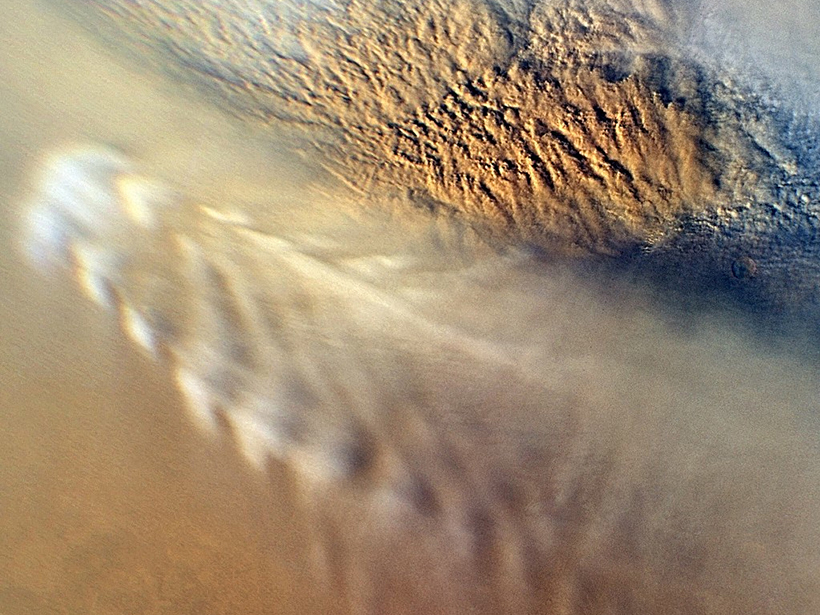
Mars is even more like Earth than we thought, according to a statistical analysis of the planet's swirling atmosphere.
everything atmospheric

Posted inResearch Spotlights
Clouds in Climate Models of a Simulated Water-Covered Earth

Researchers use aquaplanet experiments to zero in on the effects of small-scale processes in the tropics that cause discrepancies between climate models.
Posted inScience Updates
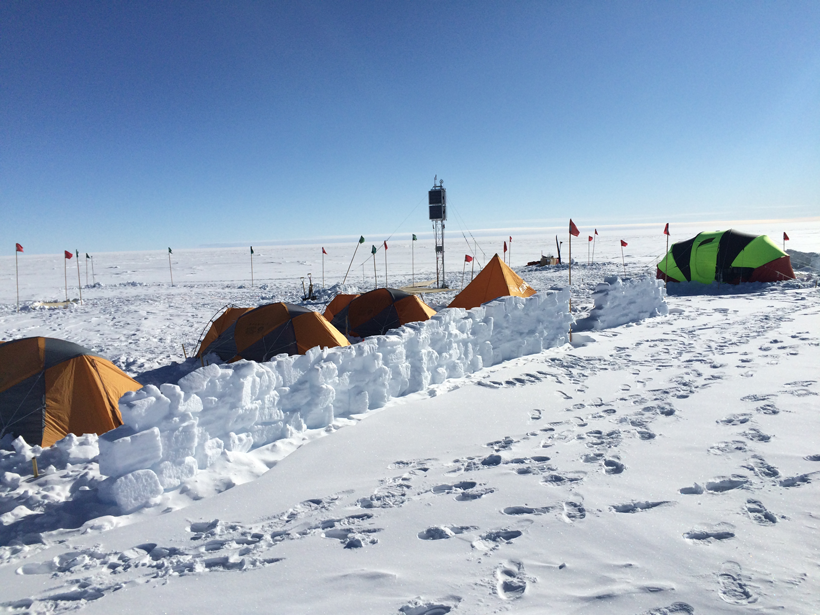
Space Weather from a Southern Point of View
A recently completed instrument array in Antarctica provides a more complete understanding of the near-Earth space environment.

Posted inResearch Spotlights
Volcanic Ash Contributes to Climate Cooling

A new study shows that atmospheric ash reflects solar radiation months after volcanic eruptions.

Posted inNews
Pluto Observers Find Possible Clouds, Remarkably Bright Surface

Smudges on images could be clouds that form at dawn and dusk, scientists report, and measurements of high reflectivity of Pluto’s “heart” add new evidence of a geologically young surface.
Posted inScience Updates
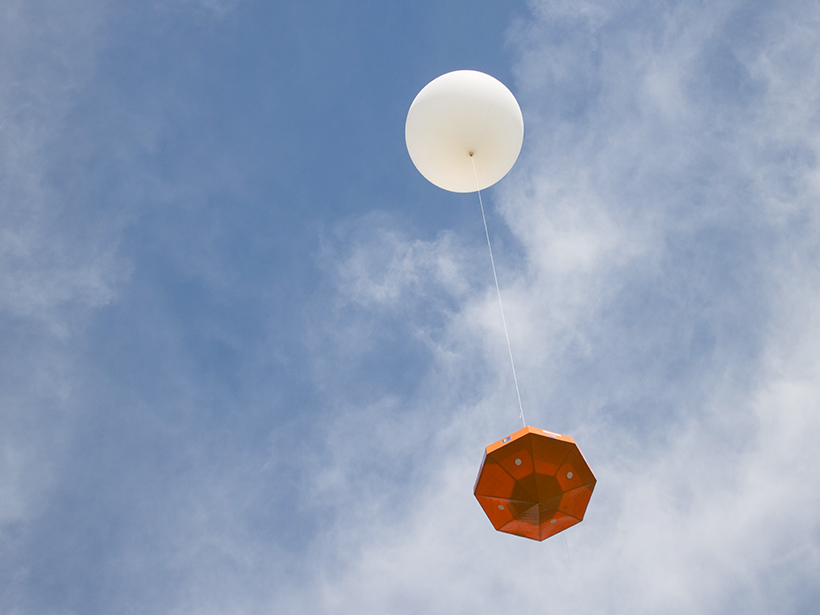
Balloon Launches Introduce Students to Space Science
High school students launch their own high-altitude payloads and learn from their successes and failures through a science research training program led by the University of New Hampshire.
Posted inAGU News
Hall, Jakob, Maloney, Scaife, and Van den Heever Receive 2016 Atmospheric Sciences Ascent Award
Alexander D. Hall, Christian Jakob, Eric Maloney, Adam Scaife, and Susan C. van den Heever will receive the 2016 Atmospheric Sciences Ascent Award at the 2016 American Geophysical Union Fall Meeting, to be held 12–16 December in San Francisco, Calif. The award recognizes "research contributions by exceptional mid-career scientists in the fields of atmospheric and climate sciences."
Posted inAGU News
Wang Receives 2016 James R. Holton Junior Scientist Award
Yuan Wang will receive the 2016 James R. Holton Junior Scientist Award at the 2016 American Geophysical Union Fall Meeting, to be held 12–16 December in San Francisco, Calif. The award recognizes "outstanding research contributions by a junior atmospheric scientist within three years of his or her Ph.D."
Posted inAGU News
Rosenlof Receives 2016 Yoram J. Kaufman Unselfish Cooperation in Research Award
Karen H. Rosenlof will receive the 2016 Yoram J. Kaufman Unselfish Cooperation in Research Award at the 2016 American Geophysical Union Fall Meeting, to be held 12–16 December in San Francisco, Calif. The award recognizes "broad influence in atmospheric science through exceptional creativity, inspiration of younger scientists, mentoring, international collaborations, and unselfish cooperation in research."
Posted inResearch Spotlights
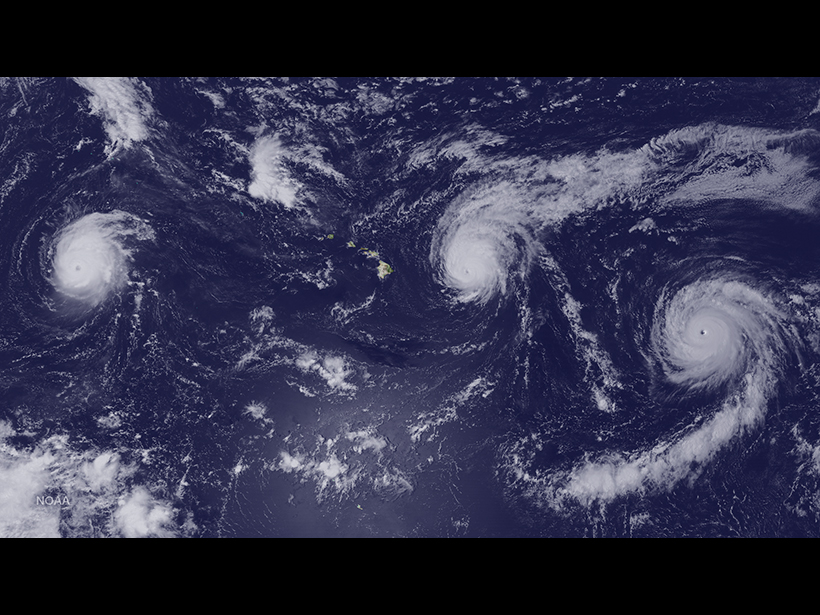
Why 2015 Was a Big Hurricane Year for the Eastern North Pacific

Record-breaking oceanic and atmospheric conditions led to a remarkable season in a key Pacific hurricane development region.