

Wetlands and their methane emissions require careful consideration for incorporation in Earth system models with many advances made over the past 30 years.
Health & Ecosystems

Posted inFeatures
¿Qué tan peligroso es el volcán Popocatépetl? Depende a quién le preguntes

El estratovolcán en el centro de México presenta un interesante caso de estudio sobre la percepción del riesgo, la comunicación de la ciencia y la preparación en torno a los peligros naturales.

Posted inENGAGE, News
The Crocodile Dundee Site Helping Rewrite the History of Australian Bushfires
A lake made famous by Hollywood has yielded powerful new evidence that humans have conducted controlled burns on the Red Continent for tens of thousands of years.

Posted inResearch Spotlights
Warming Experiment Explores Consequences of Diminished Snow

The SPRUCE ecosystem in northern Minnesota offered a setting to research exactly how a snowy environment responds to rising temperatures.
Posted inNews
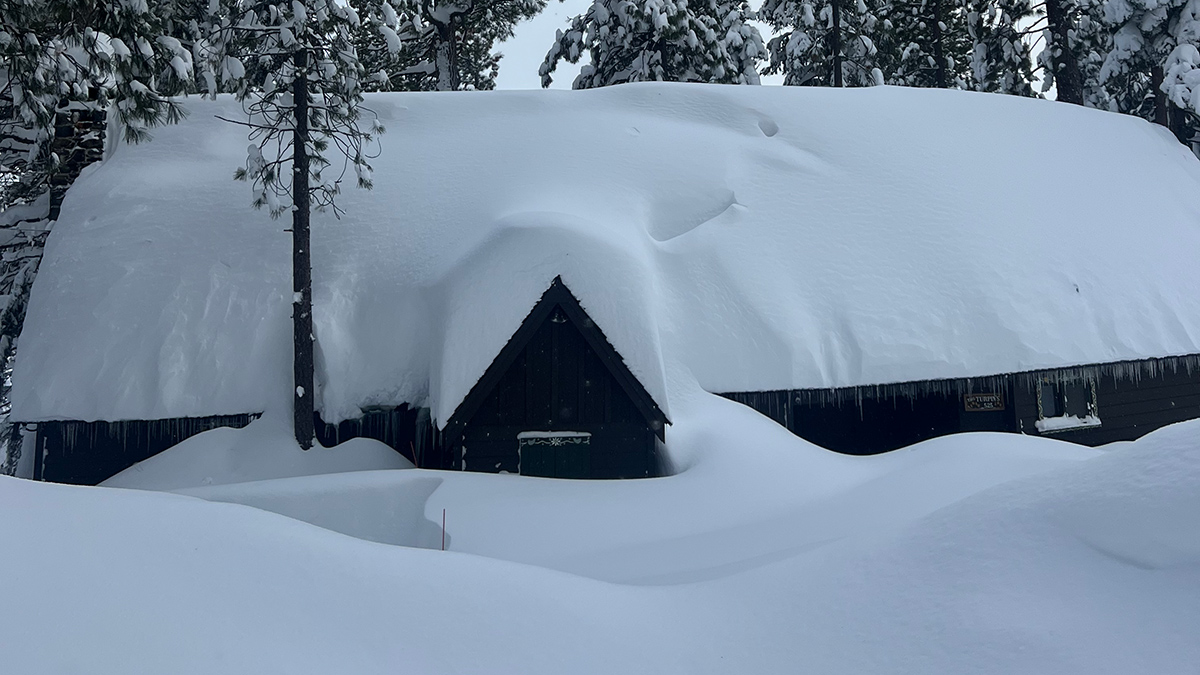
California Mountains Face Weather Whiplash
Last month’s massive snowstorm in the Sierra Nevada followed a dry start to winter. Such extremes in precipitation may become the norm.
Posted inEditors' Highlights
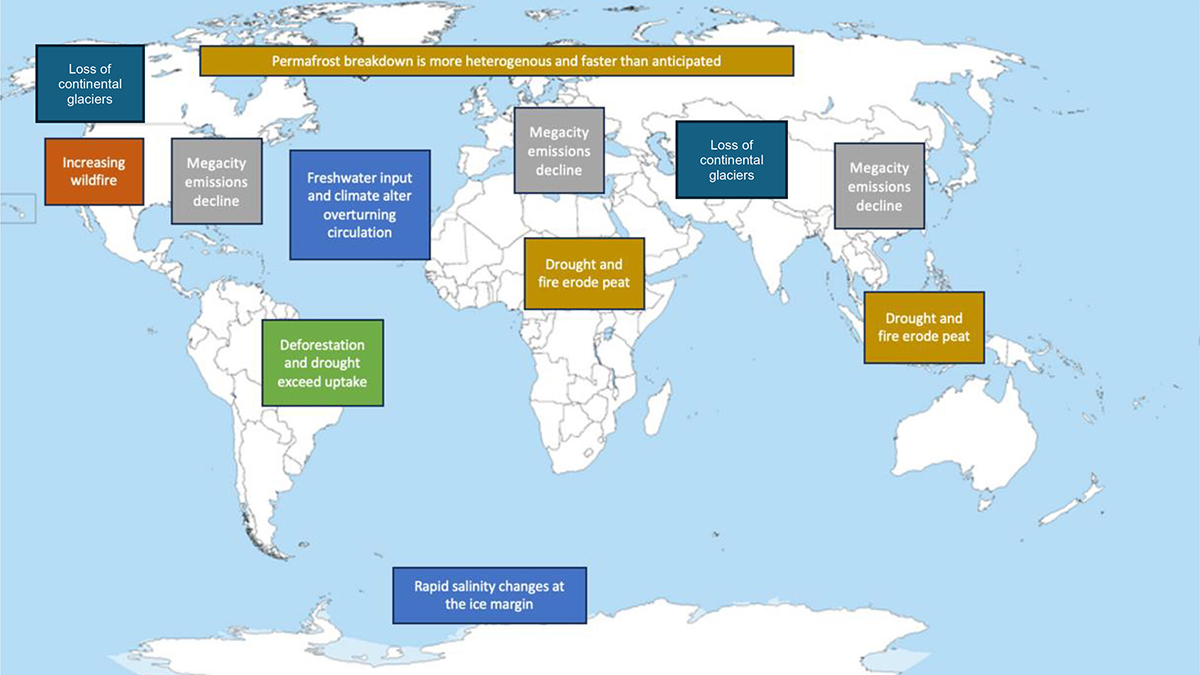
Framing the Next Decadal Survey for a Warming World
The next decadal survey (DS28) will be framed by a rapidly changing world, and will be critical to consider observational needs of the 2030s-2040s, a world increasingly dominated by climate extremes.

Posted inResearch Spotlights
Manila Confronts Its Plastic Problem
The Philippine capital is the latest city to address rampant plastic pollution through a community-guided protocol.

Posted inNews
Low-Level Clouds Disappear During a Solar Eclipse
Cumulus clouds rapidly dissipate as the land surface cools, a finding that has implications for Sun-obscuring geoengineering efforts.


Posted inNews
Planting Trees May Not Be as Good for the Climate as Previously Believed
The climate benefits of trees storing carbon dioxide is partially offset by dark forests’ absorption of more heat from the Sun, and compounds they release that slow the destruction of methane in the atmosphere.