

By tracing the evolutionary history of beneficial soil microbes, scientists hope to unearth a sustainable solution for producing food to feed a growing global population.
Health & Ecosystems


Posted inNews
Forever Chemicals Are Raining Down on the Great Lakes

PFAS levels are growing in some of the Great Lakes, and precipitation is a big contributor.
Posted inScience Updates
The Moana Project Braids Tradition and Science for a More Sustainable Ocean
Scientists and Māori communities in Aotearoa New Zealand are gathering knowledge on marine conditions and ecosystems to protect livelihoods and help ensure a sustainable future for the blue economy.

Posted inScience Updates
An Air Quality Model That Is Evolving with the Times
The pioneering Sulfur Transport and Deposition Model, initially designed to simulate atmospheric sulfur, continues to find new applications and value in environmental science and policymaking.

Posted inFeatures
Forests, Water, and Livelihoods in the Lesser Himalaya
Complex changes in land use, land cover, climate, and demographics are combining to stress water security for millions of people in the region.

Posted inOpinions
Global Change Research for a More Secure World
Orienting global change science so that it informs national security issues will help us develop interventions that promote social stability and ecological well-being.

Posted inNews
How Tungurahua Volcano Dropped Heavy Metals into Ecuador’s Food Supply
When Ecuador’s Tungurahua volcano erupted multiple times between 1999 and 2016, nearby farming communities were covered in ash, which left heavy metals in their crops.
Posted inResearch Spotlights
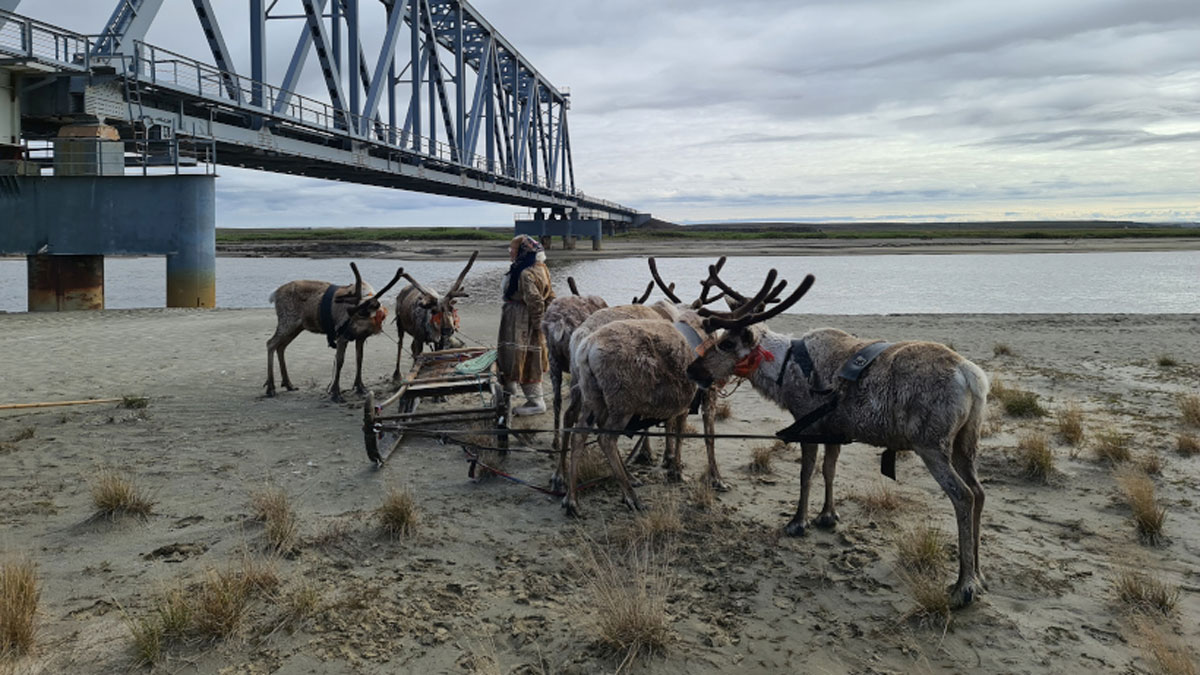
Convergence Science in the Arctic

Focusing on climate change and industrialization in Siberia’s Yamal Peninsula, researchers developed science questions that aim to reach far beyond any single discipline.

Posted inNews
Kansas Prairie Streams Are Getting Choked, Maybe for Good
A herculean effort to fight back woody plants in the Konza Prairie has largely failed. The outcome shows how difficult it can be to retore these ecosystems.