• About
  • Sections
  • Topics
    • Climate
    • Earth Science
    • Oceans
    • Space & Planets
    • Health & Ecosystems
    • Culture & Policy
    • Education & Careers
    • Opinions
  • Projects
    • Postcards From the Field
    • ENGAGE
    • Editors’ Highlights
    • Editors’ Vox
    • Eos en Español
    • Eos 简体中文版
    • Print Archive: 2015–2025
  • Science Policy Tracker
  • Blogs
    • Research & Developments
    • The Landslide Blog
  • Newsletter
  • Submit to Eos
  • AGU.org
  • Career Center
  • Join AGU
  • Give to AGU
  • About
  • Sections
  • Topics
    • Climate
    • Earth Science
    • Oceans
    • Space & Planets
    • Health & Ecosystems
    • Culture & Policy
    • Education & Careers
    • Opinions
  • Projects
    • Postcards From the Field
    • ENGAGE
    • Editors’ Highlights
    • Editors’ Vox
    • Eos en Español
    • Eos 简体中文版
    • Print Archive: 2015–2025
  • Science Policy Tracker
  • Blogs
    • Research & Developments
    • The Landslide Blog
  • Newsletter
  • Submit to Eos
Skip to content
  • AGU.org
  • Career Center
  • Join AGU
  • Give to AGU
Eos

Eos

Science News by AGU

Support Eos
Sign Up for Newsletter
  • About
  • Sections
  • Topics
    • Climate
    • Earth Science
    • Oceans
    • Space & Planets
    • Health & Ecosystems
    • Culture & Policy
    • Education & Careers
    • Opinions
  • Projects
    • Postcards From the Field
    • ENGAGE
    • Editors’ Highlights
    • Editors’ Vox
    • Eos en Español
    • Eos 简体中文版
    • Print Archive: 2015–2025
  • Science Policy Tracker
  • Blogs
    • Research & Developments
    • The Landslide Blog
  • Newsletter
  • Submit to Eos

muography

Muon detectors in a tunnel under Tokyo Bay
Posted inNews

Muography Array Under Tokyo Bay Spots Meteotsunami Waves

Tim Hornyak, Science Writer by Tim Hornyak 20 May 20227 March 2023

A new study shows how muons can be used to study tide and wave phenomena, helping secure coastal communities.

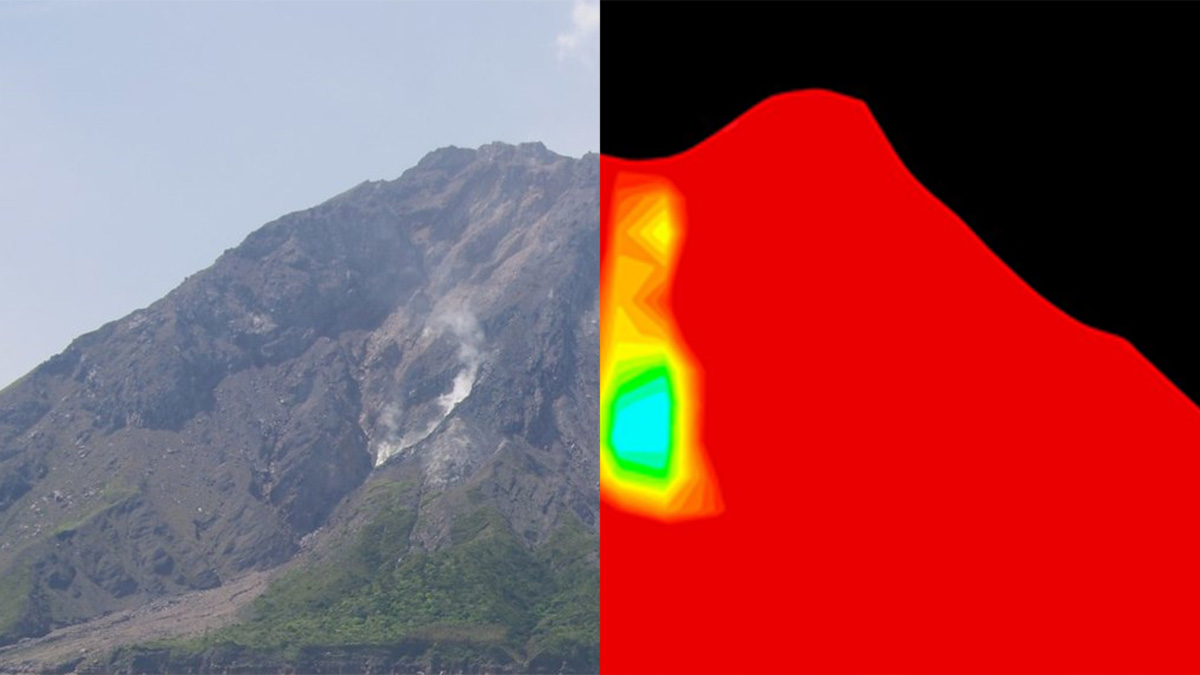
Photograph and muographic image of Satsuma-Iwo-jima volcanic island, Japan
Posted inEditors' Vox

High-Definition Imaging of the Subsurface with Cosmic Ray Muons

by László Oláh, Hiroyuki K. M. Tanaka and Dezső Varga 14 February 20223 January 2023

A new book describes muography, an imaging technique that can be used to visualize the internal density composition of geological structures.

Sakurajima volcano emits a cloud of ash
Posted inNews

Are Cosmic Rays a Key to Forecasting Volcanic Eruptions?

Mara Johnson-Groh, Science Writer by Mara Johnson-Groh 21 April 20203 January 2023

A combination of relativistic particles and artificial intelligence may provide a new way to forecast when a volcano could erupt.
Posted inNews

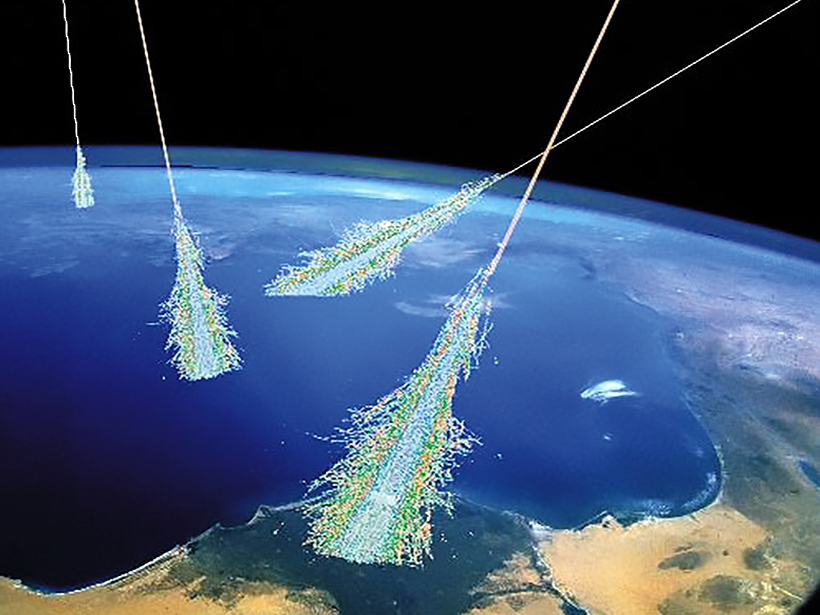
Trying Out Muons to Detect Carbon Leaks

Cody Sullivan by C. Sullivan 17 December 20153 January 2023

Scientists look into tracking carbon dioxide within a sequestration reservoir—and spotting possible leaks—by observing naturally generated, fast-moving muons that penetrate the underground storage area.

A view of a bridge, with the New Orleans skyline visible in the distance between the bridge and the water. A purple tint, a teal curved line representing a river, and the text “#AGU25 coverage from Eos” overlie the photo.

Features from AGU Publications

Research Spotlights

Denitrification Looks Different in Rivers Versus Streams

16 January 202616 January 2026
Editors' Highlights

Calibrating the Clocks: Reconciling Groundwater Age from Two Isotopes

26 January 202622 January 2026
Editors' Vox

Bridging the Gap: Transforming Reliable Climate Data into Climate Policy

16 January 202616 January 2026
Eos logo at left; AGU logo at right

About Eos
ENGAGE
Awards
Contact

Advertise
Submit
Career Center
Sitemap

© 2026 American Geophysical Union. All rights reserved Powered by Newspack