
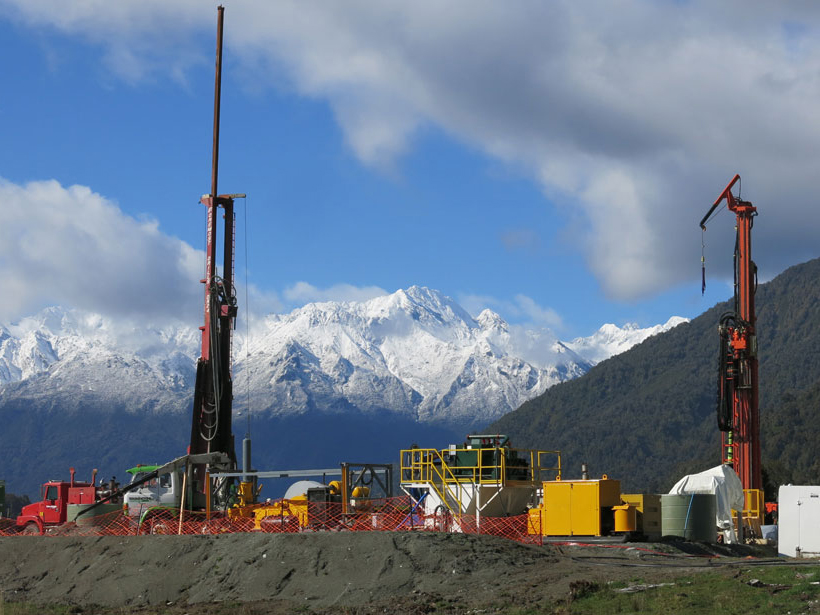

Researchers drill into a fault that is anticipated to rupture in coming decades to study fault structure and earthquake physics.
New Zealand
Posted inResearch Spotlights
Imaging the Underlying Mechanics of New Zealand Earthquakes
Researchers create a first-of-its-kind image to map electrical properties of rocks and minerals throughout the Hikurangi subduction zone.

Posted inScience Updates
Shifting Winds Write Their History on a New Zealand Lake Bed
A team of scientists finds a year-by-year record of climate history spanning the past 17,000 years at the bottom of a South Island lake.

Posted inResearch Spotlights
Alteration Along the Alpine Fault Helps Build Seismic Strain

Detailed analysis of cores drilled through New Zealand's most dangerous on-land fault indicates that its permeability and strength are altered by mineral precipitation between seismic events.
Posted inScience Updates
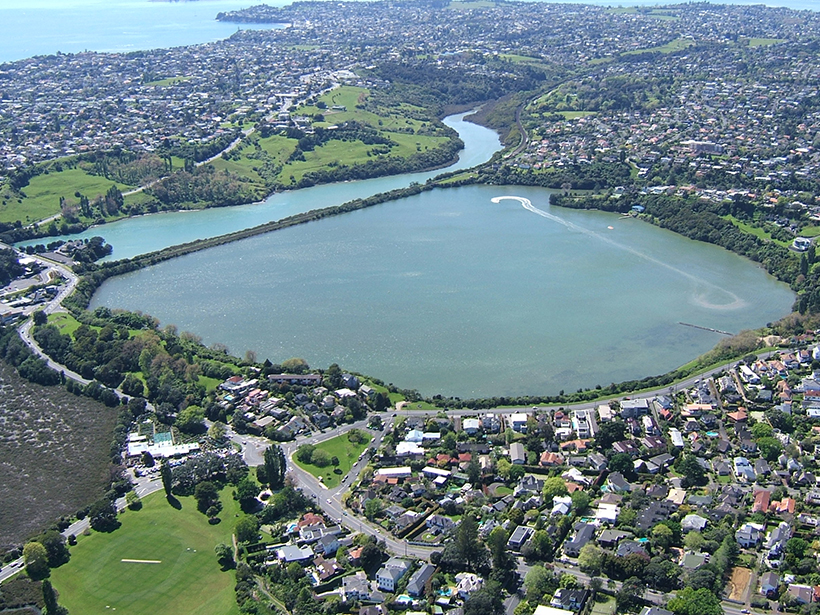
Probing the History of New Zealand's Orakei Maar
A team of scientists drilled into the bed within a northern New Zealand explosion crater lake to gain insights into volcanic hazards and past climates.

Posted inResearch Spotlights
Revising the Displacement History of New Zealand's Alpine Fault
A reinterpretation of structural and paleomagnetic data suggests that New Zealand's Alpine Fault accommodates a far greater percentage of geologically recent plate motion than previously thought.
Posted inNews
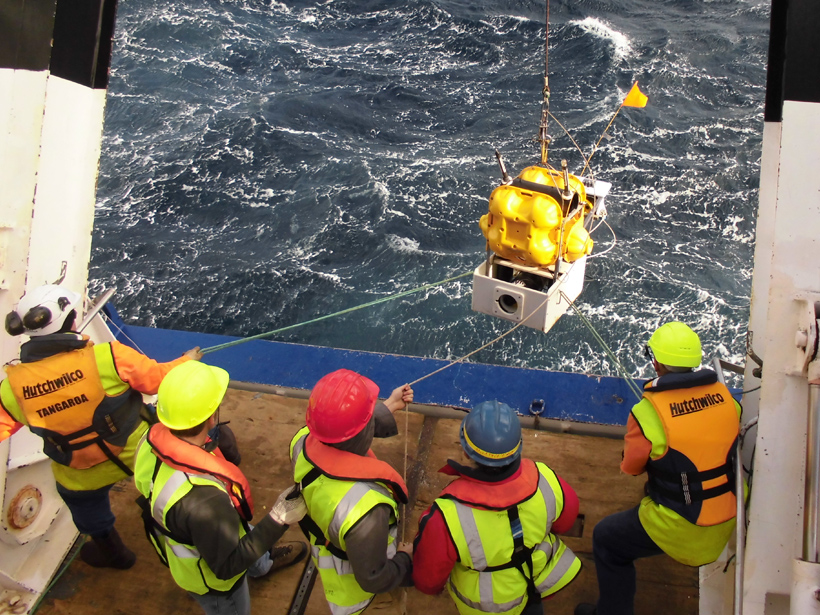
Undersea Data Tie Slow Fault Slip to Tsunami-Causing Quakes

Slow events might help scientists better understand when and why tsunami-generating earthquakes occur.

Posted inScience Updates
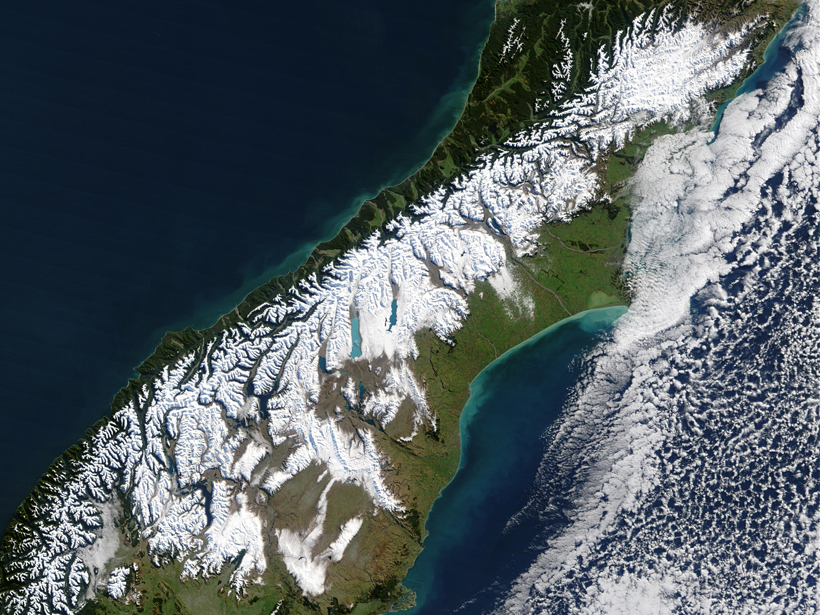
Investigations of Shallow Slow Slip Offshore of New Zealand
Recent and upcoming studies of the Hikurangi margin east of New Zealand shed light on previously undetectable tectonic movements.
Posted inResearch Spotlights
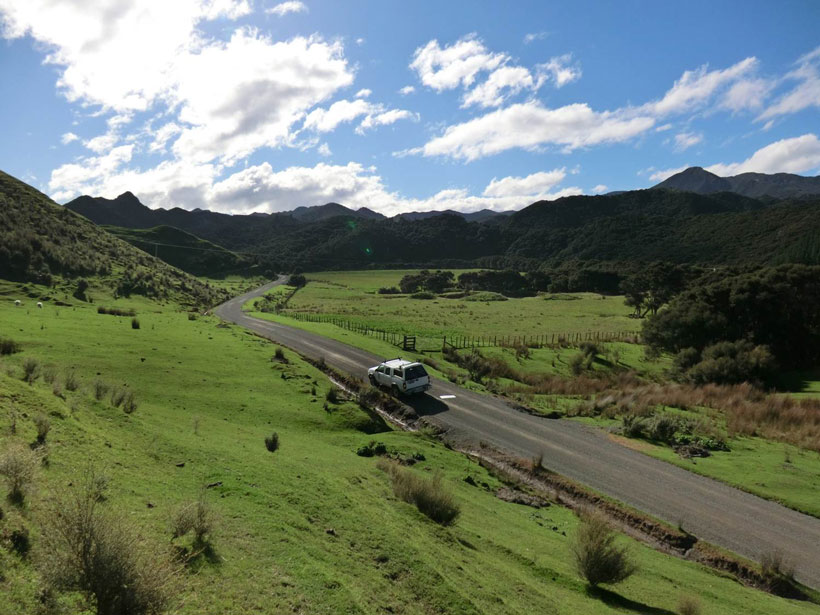
Probing for Earthquakes' Origins
To better understand how earthquakes nucleate, scientists spy on the Alpine Fault in New Zealand.
Posted inNews
Pacific Plate's Underbelly Revealed Through Explosive Means
Scientists produce their own seismic waves—via explosives—to image the bottom region of the plate subducting under the New Zealand.