
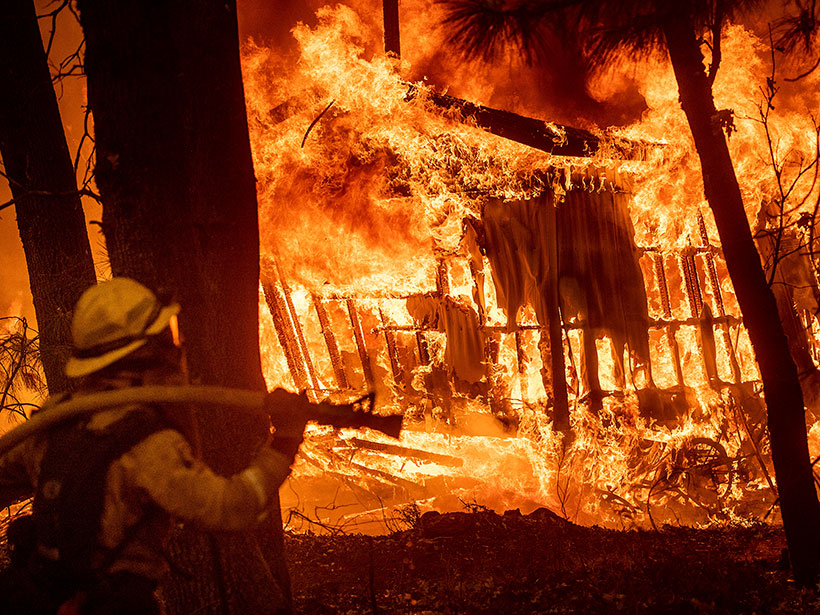

Affluent white people are more likely to live in fire-prone areas, but race and socioeconomic vulnerability can put minority communities at greater risk, a new study finds.
public health

Posted inEditors' Highlights
Dolphins in Florida Show Exposure to Phthalate Contaminants
Scientists have detected exposure to phthalates among a majority of bottlenose dolphins sampled in Sarasota Bay, Florida (2016–2017), including some with levels comparable to those observed in humans.

Posted inNews
Microplastics Found in Human Stool

Tiny slivers of plastic are making it all the way into humans’ guts and into their feces, a new study shows.

Posted inResearch Spotlights
Improving Air Quality Could Prevent Thousands of Deaths in India
More stringent emission controls are key to the country’s future health.

Posted inEditors' Vox
Microbes Meet Geoscientists
A new collaboration brings together the two worlds of microbiology and geoscience with the common goal of improving public health outcomes.
Posted inEditors' Vox
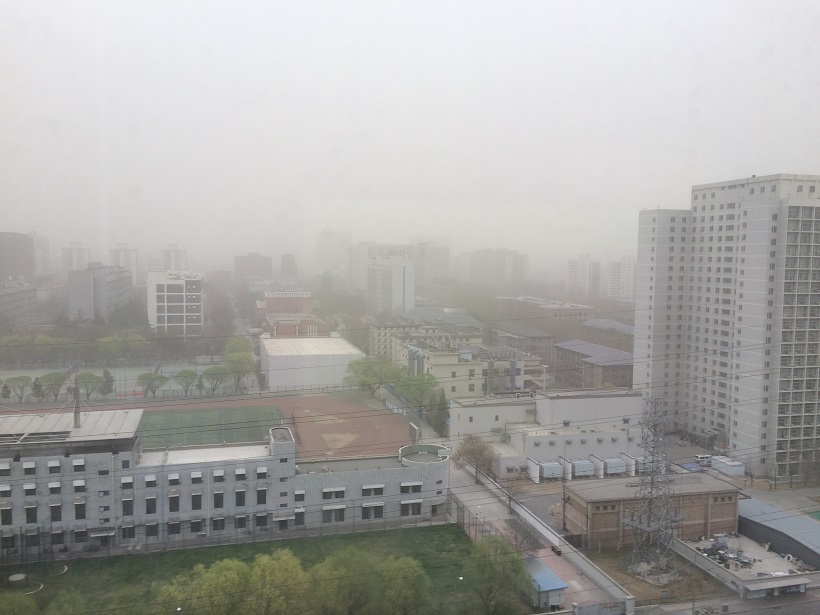
Aspiring Toward Healthy Cities in China
One of the authors of a new report on efforts to create healthy cities in China describes challenges and opportunities for urban health and healthcare.

Posted inScience Updates
Satellites and Cell Phones Form a Cholera Early-Warning System
A new initiative combines satellite data with ground observations to assess and predict the risk of cholera outbreaks in Bangladesh’s vulnerable populations.

Posted inResearch Spotlights
Solid-Fuel Use Puts Human Health at Risk
Data gaps obscure the full extent of deaths caused by heating homes with wood and other solid fuels.

Posted inEditors' Vox
Is Living Near a Farm Bad for Your Health?
A recent commentary in GeoHealth highlighted the health risks for people living close to large-scale livestock farms.

Posted inNews
White House R&D Priorities Differ from Its Budget Requests

The administration’s top R&D priority areas are American military superiority, security, prosperity, energy dominance, and health.