• About
  • Sections
  • Topics
    • Climate
    • Earth Science
    • Oceans
    • Space & Planets
    • Health & Ecosystems
    • Culture & Policy
    • Education & Careers
    • Opinions
  • Projects
    • Postcards From the Field
    • ENGAGE
    • Editors’ Highlights
    • Editors’ Vox
    • Eos en Español
    • Eos 简体中文版
    • Print Archive: 2015–2025
  • Science Policy Tracker
  • Blogs
    • Research & Developments
    • The Landslide Blog
  • Newsletter
  • Submit to Eos
  • AGU.org
  • Career Center
  • Join AGU
  • Give to AGU
  • About
  • Sections
  • Topics
    • Climate
    • Earth Science
    • Oceans
    • Space & Planets
    • Health & Ecosystems
    • Culture & Policy
    • Education & Careers
    • Opinions
  • Projects
    • Postcards From the Field
    • ENGAGE
    • Editors’ Highlights
    • Editors’ Vox
    • Eos en Español
    • Eos 简体中文版
    • Print Archive: 2015–2025
  • Science Policy Tracker
  • Blogs
    • Research & Developments
    • The Landslide Blog
  • Newsletter
  • Submit to Eos
Skip to content
  • AGU.org
  • Career Center
  • Join AGU
  • Give to AGU
Eos

Eos

Science News by AGU

Support Eos
Sign Up for Newsletter
  • About
  • Sections
  • Topics
    • Climate
    • Earth Science
    • Oceans
    • Space & Planets
    • Health & Ecosystems
    • Culture & Policy
    • Education & Careers
    • Opinions
  • Projects
    • Postcards From the Field
    • ENGAGE
    • Editors’ Highlights
    • Editors’ Vox
    • Eos en Español
    • Eos 简体中文版
    • Print Archive: 2015–2025
  • Science Policy Tracker
  • Blogs
    • Research & Developments
    • The Landslide Blog
  • Newsletter
  • Submit to Eos

public health

Plastic water bottles
Posted inNews

Microplastics Found in Human Stool

Jenessa Duncombe, Staff Writer by Jenessa Duncombe 23 October 20184 October 2021

Tiny slivers of plastic are making it all the way into humans’ guts and into their feces, a new study shows.

People walking a tree-lined street during extreme smog conditions in New Delhi, India.
Posted inResearch Spotlights

Improving Air Quality Could Prevent Thousands of Deaths in India

by E. Underwood 7 August 20189 September 2024

More stringent emission controls are key to the country’s future health.

Strain of the Vibrio cholerae bacterium that causes cholera outbreaks
Posted inEditors' Vox

Microbes Meet Geoscientists

by D. Ceccarelli, Antarpreet Jutla and Rita R. Colwell 23 July 20189 September 2024

A new collaboration brings together the two worlds of microbiology and geoscience with the common goal of improving public health outcomes.

Poor air quality in Beijing
Posted inEditors' Vox

Aspiring Toward Healthy Cities in China

by Gabriel Filippelli and P. Gong 15 May 201817 March 2023

One of the authors of a new report on efforts to create healthy cities in China describes challenges and opportunities for urban health and healthcare.

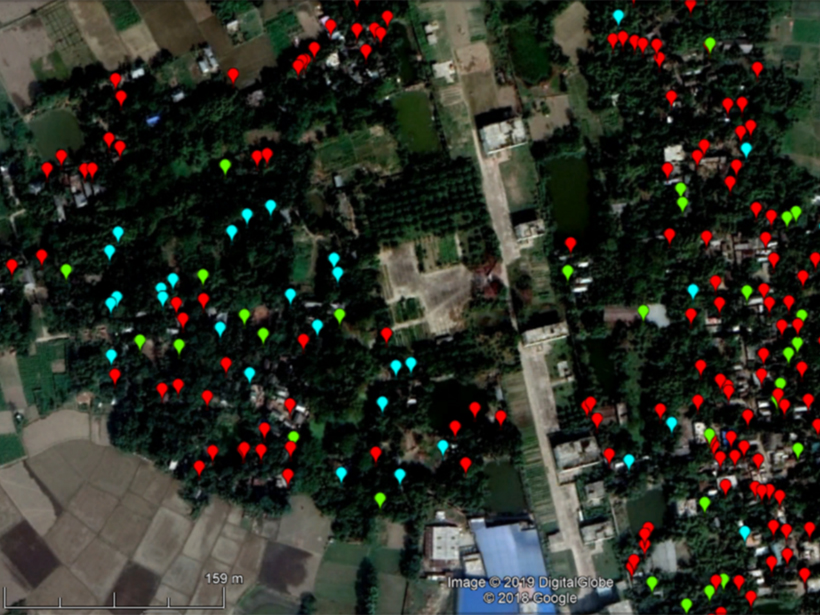
A new initiative uses satellite data, observations, and communication networks to warn Bangladeshis of cholera hazards.
Posted inScience Updates

Satellites and Cell Phones Form a Cholera Early-Warning System

by A. S. Akanda, S. Aziz, Antarpreet Jutla, A. Huq, M. Alam, G. U. Ahsan and Rita R. Colwell 27 March 201824 February 2023

A new initiative combines satellite data with ground observations to assess and predict the risk of cholera outbreaks in Bangladesh’s vulnerable populations.

Researchers assess the data gaps that obscure scientific understanding of how solid-fuel use can harm human health
Posted inResearch Spotlights

Solid-Fuel Use Puts Human Health at Risk

by S. Witman 15 March 201820 September 2022

Data gaps obscure the full extent of deaths caused by heating homes with wood and other solid fuels.

Posted inEditors' Vox

Is Living Near a Farm Bad for Your Health?

by D. Ceccarelli and L. Smit 28 September 20174 October 2021

A recent commentary in GeoHealth highlighted the health risks for people living close to large-scale livestock farms.

Posted inNews

White House R&D Priorities Differ from Its Budget Requests

by Randy Showstack 29 August 201719 April 2023

The administration’s top R&D priority areas are American military superiority, security, prosperity, energy dominance, and health.

Palm trees blow sideways in tropical storm.
Posted inNews

NOAA Officials Stress Hurricane Danger and Storm Safety

by Randy Showstack 12 May 201716 September 2022

Agency scientists on a Hurricane Awareness Tour showcase NOAA research capabilities and warn that although winds can cause severe damage, the biggest killers are storm surges and inland flooding.

Volunteers fumigate against Zika-transmitting mosquitoes along a street in Yangon, Myanmar.
Posted inNews

Revived Climate Change Forum Focuses on Threats to Human Health

by M. McKenna 17 February 20179 September 2024

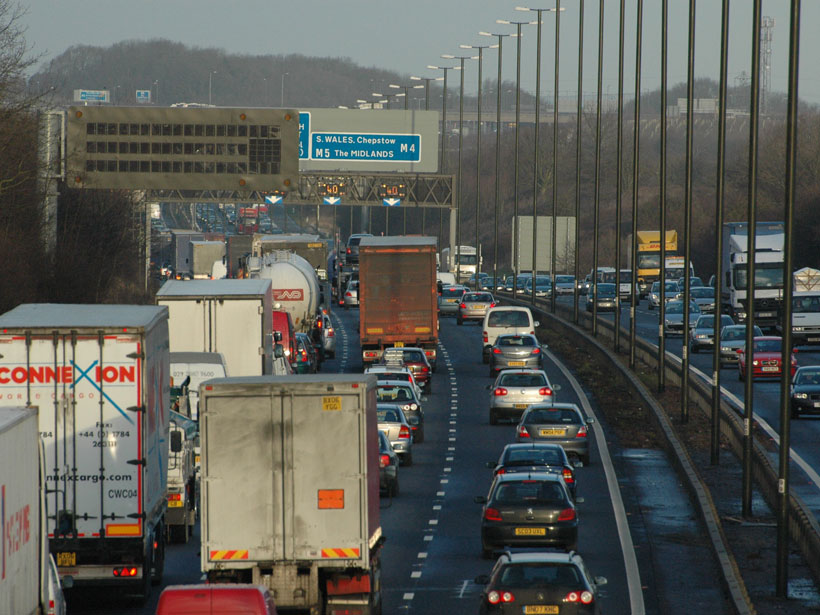
Public health and environmental organizations brought together by former vice president Al Gore held a pared-down meeting to replace a canceled one.

Posts pagination

Newer posts 1 … 15 16 17 18 Older posts
A view of a bridge, with the New Orleans skyline visible in the distance between the bridge and the water. A purple tint, a teal curved line representing a river, and the text “#AGU25 coverage from Eos” overlie the photo.

Features from AGU Publications

Research Spotlights

AI Sheds Light on Hard-to-Study Ocean Currents

14 January 202614 January 2026
Editors' Highlights

Where the Tianshan Will Break Next: Strain, Slip, and Seismic Hazard

14 January 20269 January 2026
Editors' Vox

Hydrothermal Circulation and Its Impact on the Earth System

3 December 20253 December 2025
Eos logo at left; AGU logo at right

About Eos
ENGAGE
Awards
Contact

Advertise
Submit
Career Center
Sitemap

© 2026 American Geophysical Union. All rights reserved Powered by Newspack