• About
  • Sections
  • Topics
    • Climate
    • Earth Science
    • Oceans
    • Space & Planets
    • Health & Ecosystems
    • Culture & Policy
    • Education & Careers
    • Opinions
  • Projects
    • Postcards From the Field
    • ENGAGE
    • Editors’ Highlights
    • Editors’ Vox
    • Eos en Español
    • Eos 简体中文版
    • Print Archive: 2015–2025
  • Science Policy Tracker
  • Blogs
    • Research & Developments
    • The Landslide Blog
  • Newsletter
  • Submit to Eos
  • AGU.org
  • Career Center
  • Join AGU
  • Give to AGU
  • About
  • Sections
  • Topics
    • Climate
    • Earth Science
    • Oceans
    • Space & Planets
    • Health & Ecosystems
    • Culture & Policy
    • Education & Careers
    • Opinions
  • Projects
    • Postcards From the Field
    • ENGAGE
    • Editors’ Highlights
    • Editors’ Vox
    • Eos en Español
    • Eos 简体中文版
    • Print Archive: 2015–2025
  • Science Policy Tracker
  • Blogs
    • Research & Developments
    • The Landslide Blog
  • Newsletter
  • Submit to Eos
Skip to content
  • AGU.org
  • Career Center
  • Join AGU
  • Give to AGU
Eos

Eos

Science News by AGU

Support Eos
Sign Up for Newsletter
  • About
  • Sections
  • Topics
    • Climate
    • Earth Science
    • Oceans
    • Space & Planets
    • Health & Ecosystems
    • Culture & Policy
    • Education & Careers
    • Opinions
  • Projects
    • Postcards From the Field
    • ENGAGE
    • Editors’ Highlights
    • Editors’ Vox
    • Eos en Español
    • Eos 简体中文版
    • Print Archive: 2015–2025
  • Science Policy Tracker
  • Blogs
    • Research & Developments
    • The Landslide Blog
  • Newsletter
  • Submit to Eos

research at sea

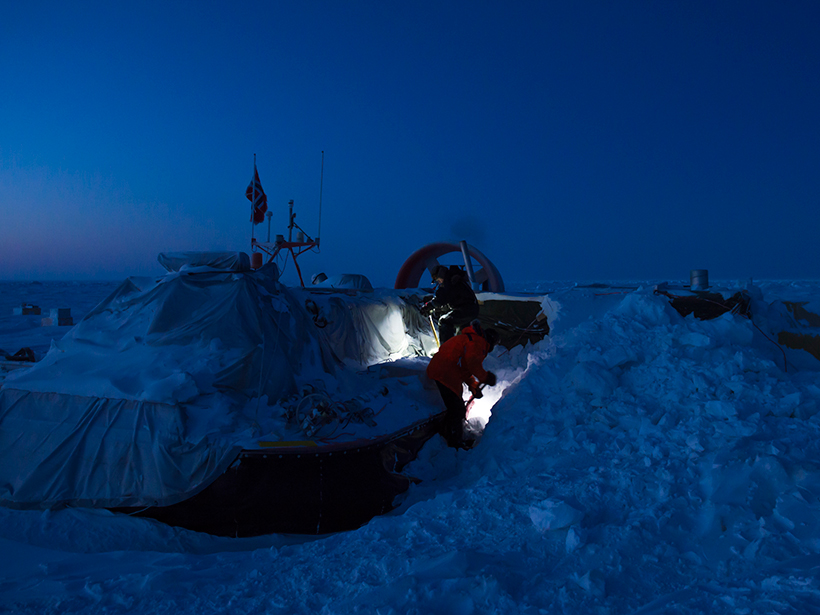
Hovercraft-based Arctic sea ice drift research station in February
Posted inScience Updates

Scientists Spend Arctic Winter Adrift on Sea Ice

by Y. Kristoffersen, A. Tholfsen, J. K. Hall and R. Stein 11 October 20169 August 2022

A hovercraft-based ice drift station gives researchers access to previously inaccessible regions of the changing Arctic sea ice cover off the coast of Greenland.
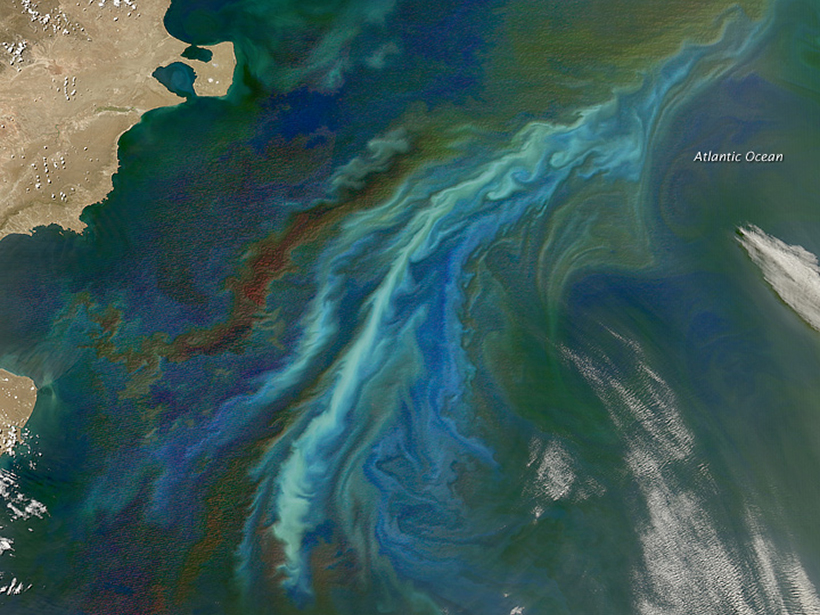
Phytoplankton blooms help to cycle nitrate in the Southern Ocean.
Posted inResearch Spotlights

A New Mechanism for Nitrogen Cycling in the Southern Ocean

Sarah Stanley, Science Writer by Sarah Stanley 29 July 201617 August 2022

A nitrite-oxidizing enzyme may work in reverse for some microbes in the Antarctic autumn.
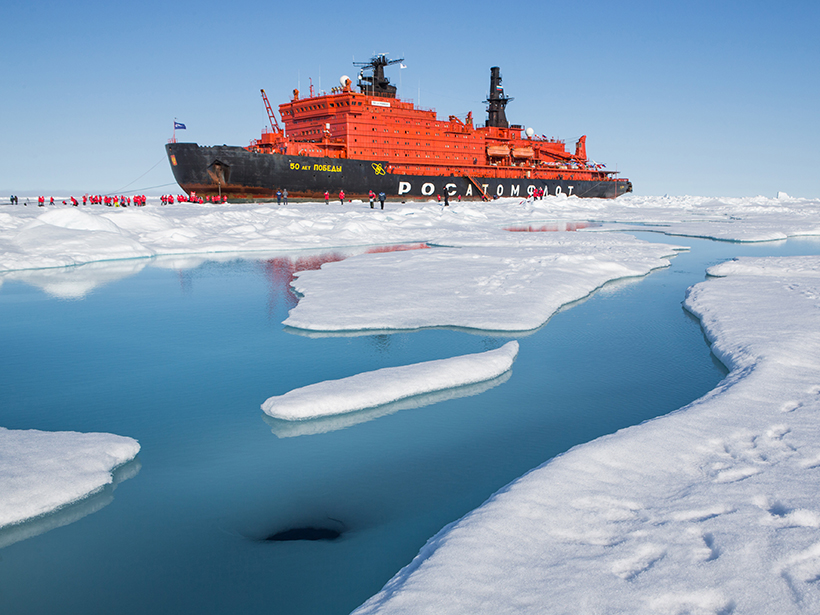
Citizen scientists examine melt pond at North Pole.
Posted inScience Updates

Citizen Scientists Train a Thousand Eyes on the North Pole

by L. Farmer, A. Cowan, J. K. Hutchings and D. Perovich 30 June 201631 March 2023

During expedition cruises, tourists participate in collecting scientific data and contribute to ongoing observations of sea ice conditions in the Arctic.

Posted inEditors' Vox

What Are Scientists Doing off the Oregon Coast in Winter?

by M. Goni 22 March 201630 August 2022

Social media and the value of communicating field experiences to the public

Posted inResearch Spotlights

An Unprecedented View of Biogeochemistry off India's West Coast

Sarah Stanley, Science Writer by Sarah Stanley 25 February 20162 March 2023

Yearlong study reveals seasonal changes in oxygen levels, nutrient availability, and plankton growth.

Posted inScience Updates

Arctic Research on Thin Ice: Consequences of Arctic Sea Ice Loss

by M. A. Granskog, P. Assmy, S. Gerland, G. Spreen, H. Steen and Lars H. Smedsrud 26 January 201616 September 2022

Scientists embarked on a 6-month expedition in the Arctic Ocean to study the thinning sea ice cover, improve our understanding of sea ice loss effects, and help predict future changes.

Posted inScience Updates

Scientific Ocean Drilling Charts a New Course

by S. E. Humphris and A. A. P. Koppers 15 December 201528 August 2023

The International Ocean Discovery Program plans drilling expeditions for 2016 and 2017 while increasing efficiencies in ship scheduling and operations.

Posted inNews

Active Mud Volcano Field Discovered off Southeast Alaska

by R. Berkowitz 30 November 20157 July 2025

A cruise to study landslide potential along an earthquake-prone fault found a surprising methane plume.

Posted inResearch Spotlights

Rapid Gas Hydrate Forms Pockmarks in Nigeria's Seafloor

by J. Orwig 12 February 201531 July 2023

The seafloor in deep water regions off the coast of Nigeria is speckled with pockmarks that scientists suggest were mainly made by the rapid formation of gas hydrate.

Posted inAGU News

Daniel J. Fornari Receives 2014 Edward A. Flinn III Award

by AGU 30 January 201522 May 2023

Daniel J. Fornari received the 2014 Edward A. Flinn III Award at the AGU Fall Meeting Honors Ceremony, held on 17 December 2014 in San Francisco, Calif. The award honors “individuals who personify the Union’s motto ‘unselfish cooperation in research’ through their facilitating, coordinating, and implementing activities.”

Posts pagination

Newer posts 1 … 7 8 9 10 Older posts
A view of a bridge, with the New Orleans skyline visible in the distance between the bridge and the water. A purple tint, a teal curved line representing a river, and the text “#AGU25 coverage from Eos” overlie the photo.

Features from AGU Publications

Research Spotlights

Denitrification Looks Different in Rivers Versus Streams

16 January 202616 January 2026
Editors' Highlights

Kyanite Exsolution Reveals Ultra-Deep Subduction of Continents

23 January 202622 January 2026
Editors' Vox

Bridging the Gap: Transforming Reliable Climate Data into Climate Policy

16 January 202616 January 2026
Eos logo at left; AGU logo at right

About Eos
ENGAGE
Awards
Contact

Advertise
Submit
Career Center
Sitemap

© 2026 American Geophysical Union. All rights reserved Powered by Newspack