• About
  • Sections
  • Topics
    • Climate
    • Earth Science
    • Oceans
    • Space & Planets
    • Health & Ecosystems
    • Culture & Policy
    • Education & Careers
    • Opinions
  • Projects
    • Postcards From the Field
    • ENGAGE
    • Editors’ Highlights
    • Editors’ Vox
    • Eos en Español
    • Eos 简体中文版
    • Print Archive: 2015–2025
  • Science Policy Tracker
  • Blogs
    • Research & Developments
    • The Landslide Blog
  • Newsletter
  • Submit to Eos
  • AGU.org
  • Career Center
  • Join AGU
  • Give to AGU
  • About
  • Sections
  • Topics
    • Climate
    • Earth Science
    • Oceans
    • Space & Planets
    • Health & Ecosystems
    • Culture & Policy
    • Education & Careers
    • Opinions
  • Projects
    • Postcards From the Field
    • ENGAGE
    • Editors’ Highlights
    • Editors’ Vox
    • Eos en Español
    • Eos 简体中文版
    • Print Archive: 2015–2025
  • Science Policy Tracker
  • Blogs
    • Research & Developments
    • The Landslide Blog
  • Newsletter
  • Submit to Eos
Skip to content
  • AGU.org
  • Career Center
  • Join AGU
  • Give to AGU
Eos

Eos

Science News by AGU

Support Eos
Sign Up for Newsletter
  • About
  • Sections
  • Topics
    • Climate
    • Earth Science
    • Oceans
    • Space & Planets
    • Health & Ecosystems
    • Culture & Policy
    • Education & Careers
    • Opinions
  • Projects
    • Postcards From the Field
    • ENGAGE
    • Editors’ Highlights
    • Editors’ Vox
    • Eos en Español
    • Eos 简体中文版
    • Print Archive: 2015–2025
  • Science Policy Tracker
  • Blogs
    • Research & Developments
    • The Landslide Blog
  • Newsletter
  • Submit to Eos

shipping

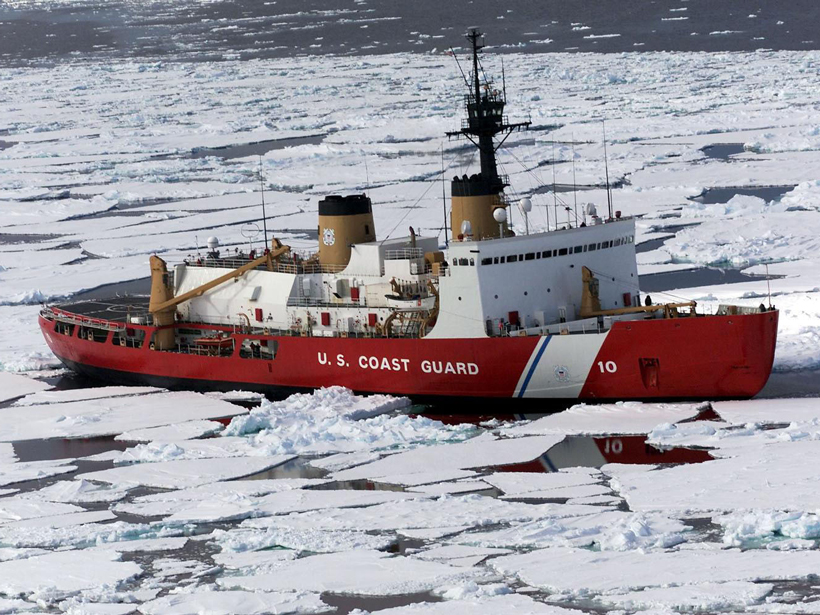
The Polar Starbreaks a path for ships that supply McMurdo Station.
Posted inNews

Build Four New U.S. Polar Icebreakers, Report Urges

by Randy Showstack 14 July 201711 April 2023

All of the ships should be “science ready,” whereas one should be “fully science capable,” according to new recommendations from the National Academies of Sciences, Engineering, and Medicine.
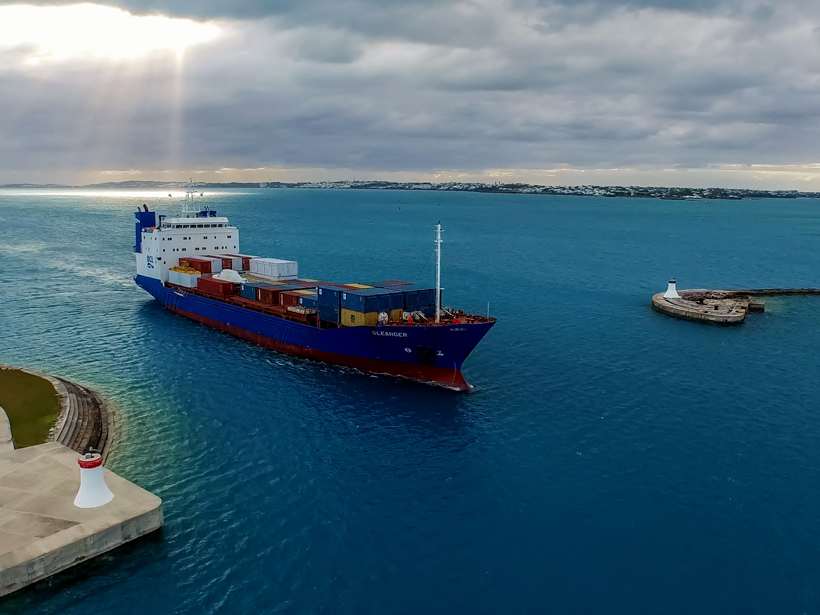
Instruments aboard the container ship Oleander have collected data on plankton since the 1970s.
Posted inScience Updates

Packing Science into a Shipping Vessel

by T. Rossby, R. Curry and J. Palter 28 April 201718 October 2022

Oleander Workshop II: 25 Years of Operations; Narragansett, Rhode Island, 26–27 October 2016

Posted inResearch Spotlights

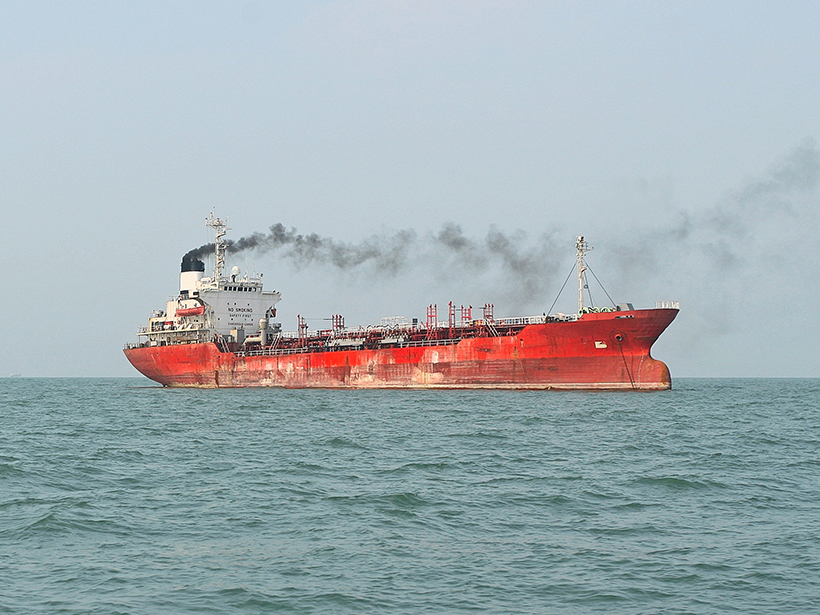
Climate Models Predict Diverse Arctic Ocean Shipping Routes

Sarah Stanley, Science Writer by Sarah Stanley 27 January 20168 November 2022

As ice melts, multiple models yield more detailed route predictions than any single model alone.

Posted inScience Updates

Scientific Ocean Drilling Charts a New Course

by S. E. Humphris and A. A. P. Koppers 15 December 201528 August 2023

The International Ocean Discovery Program plans drilling expeditions for 2016 and 2017 while increasing efficiencies in ship scheduling and operations.

Posted inNews

Ships Bring More Than Cargo to Arctic Waters

by R. Heisman 9 December 201523 January 2023

A probe of ballast water in ships at an Arctic port finds hitchhiking organisms that polar warming could allow to invade the region's ecosystems in less than 40 years.

Posts pagination

Newer posts 1 2 3
A view of a bridge, with the New Orleans skyline visible in the distance between the bridge and the water. A purple tint, a teal curved line representing a river, and the text “#AGU25 coverage from Eos” overlie the photo.

Features from AGU Publications

Research Spotlights

Denitrification Looks Different in Rivers Versus Streams

16 January 202616 January 2026
Editors' Highlights

ALMA’s New View of the Solar System

16 January 202616 January 2026
Editors' Vox

Bridging the Gap: Transforming Reliable Climate Data into Climate Policy

16 January 202616 January 2026
Eos logo at left; AGU logo at right

About Eos
ENGAGE
Awards
Contact

Advertise
Submit
Career Center
Sitemap

© 2026 American Geophysical Union. All rights reserved Powered by Newspack