• About
  • Special Reports
  • Topics
    • Climate
    • Earth Science
    • Oceans
    • Space & Planets
    • Health & Ecosystems
    • Culture & Policy
    • Education & Careers
    • Opinions
  • Projects
    • Postcards From the Field
    • ENGAGE
    • Editors’ Highlights
    • Editors’ Vox
    • Eos en Español
    • Eos 简体中文版
    • Print Archive: 2015–2025
  • Policy Tracker
  • Blogs
    • Research & Developments
    • The Landslide Blog
  • Newsletter
  • Submit to Eos
  • AGU.org
  • Career Center
  • Join AGU
  • Give to AGU
  • About
  • Special Reports
  • Topics
    • Climate
    • Earth Science
    • Oceans
    • Space & Planets
    • Health & Ecosystems
    • Culture & Policy
    • Education & Careers
    • Opinions
  • Projects
    • Postcards From the Field
    • ENGAGE
    • Editors’ Highlights
    • Editors’ Vox
    • Eos en Español
    • Eos 简体中文版
    • Print Archive: 2015–2025
  • Policy Tracker
  • Blogs
    • Research & Developments
    • The Landslide Blog
  • Newsletter
  • Submit to Eos
Skip to content
  • AGU.org
  • Career Center
  • Join AGU
  • Give to AGU
Eos

Eos

Science News by AGU

Support Eos
Sign Up for Newsletter
  • About
  • Special Reports
  • Topics
    • Climate
    • Earth Science
    • Oceans
    • Space & Planets
    • Health & Ecosystems
    • Culture & Policy
    • Education & Careers
    • Opinions
  • Projects
    • Postcards From the Field
    • ENGAGE
    • Editors’ Highlights
    • Editors’ Vox
    • Eos en Español
    • Eos 简体中文版
    • Print Archive: 2015–2025
  • Policy Tracker
  • Blogs
    • Research & Developments
    • The Landslide Blog
  • Newsletter
  • Submit to Eos

Space & Planets

Posted inResearch Spotlights

New Clues to Mysterious Hiss in Earth's Plasmasphere

by Mark Zastrow 26 October 201527 September 2022

An analysis of the electromagnetic "hiss" that surrounds Earth reveals it's not just static; there's a signal hidden within, which may help scientists uncover its source.

Posted inNews

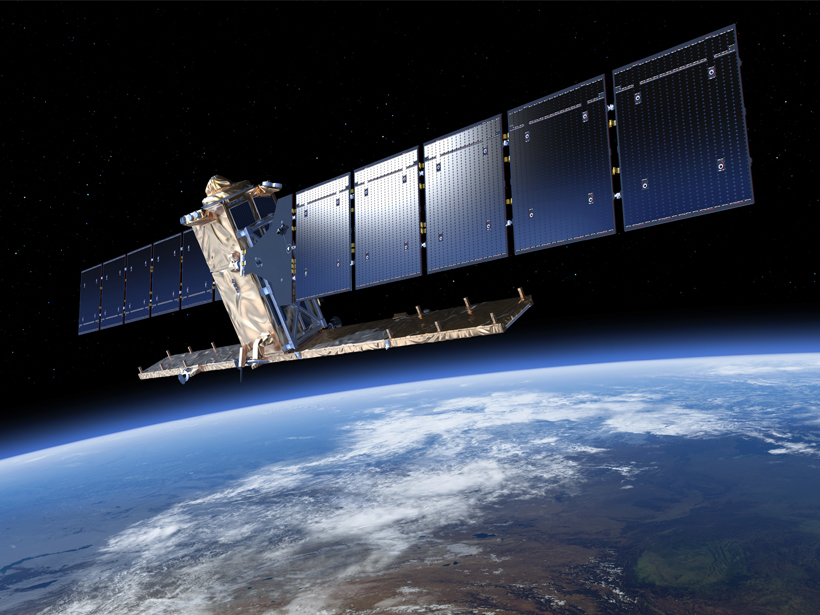
NASA Selects Launch Vehicles for Small Satellites

by Randy Showstack 22 October 20152 July 2025

Miniature satellites offer new opportunities for science, commerce, and education. With new launch vehicles, these satellites will fly as primary payloads rather than hitchhiking on bigger missions.

Posted inResearch Spotlights

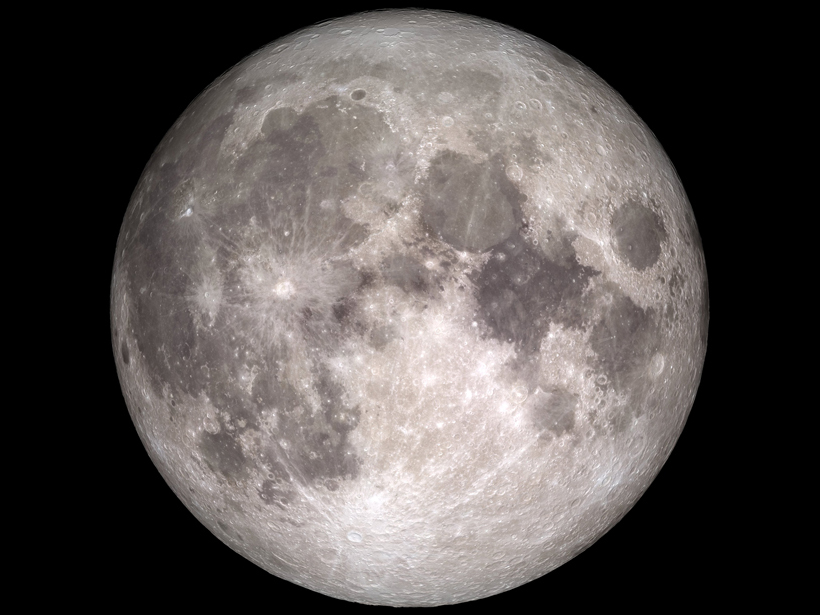
Subsurface Craters Expose the Moon's Dramatic Past

by L. Strelich 22 October 201528 October 2021

Scientists use the gravity signature of the lunar surface to trace the history of impact cratering and its role in the Moon's evolution.

Posted inResearch Spotlights

Cracks on Comets Most Likely Caused by Thermal Stress

by David Shultz 21 October 20156 October 2021

Networks of cracks in the surface of 67P/Churyumov-Gerasimenko may have originated from rapid heating and cooling of the comet's surface.

Posted inResearch Spotlights

Evidence for Volcanoes on Venus

by David Shultz 16 October 201517 February 2023

Infrared light from the planet's surface shows hot spots that might be caused by lava.

Posted inResearch Spotlights

New Atmospheric Wave May Shape Venus's Clouds

by J. Calderone 16 October 201523 January 2023

A novel model suggests that a new wave may be responsible for Venus's iconic Y pattern.

Posted inResearch Spotlights

"Fingers" of Plasma Invade Saturn's Magnetic Field

by Mark Zastrow 15 October 201511 January 2022

NASA's Cassini probe observed vast amounts of plasma on the fringes of Saturn's magnetic field being mysteriously injected hundreds of thousands of kilometers inward.

Posted inResearch Spotlights

Curiosity Rover Finds Organic Molecules on Martian Surface

by David Shultz 12 October 201524 April 2024

Scientists assess the present and past habitability of Mars from organic compounds detected at Gale Crater.

Posted inNews

Physics Nobel Winners Also Solved Solar Mystery

JoAnna Wendel, freelance science writer and illustrator by JoAnna Wendel 7 October 201523 January 2023

Although they won the prize for showing neutrinos have mass, the two Nobel-winning physicists also solved a long-standing mystery of solar neutrinos.

Posted inResearch Spotlights

Magnetized Collisionless Shock Waves Measured in the Lab

by C. Minnehan 6 October 201512 October 2022

Scientists create collisionless shock waves to better understand the phenomenon in nature.

Posts pagination

Newer posts 1 … 114 115 116 117 118 … 123 Older posts
Over a dark blue-green square appear the words Special Report: The State of the Science 1 Year On.

Features from AGU Publications

Research Spotlights

How Internal Waves Transport Energy Thousands of Miles Across the Ocean

26 March 202626 March 2026
Editors' Highlights

Revolutionizing Interference Detection to Protect the Silence of the Cosmos

1 April 202626 March 2026
Editors' Vox

The Future of Earth’s Future

24 March 202624 March 2026
Eos logo at left; AGU logo at right

About Eos
ENGAGE
Awards
Contact

Advertise
Submit
Career Center
Sitemap

© 2026 American Geophysical Union. All rights reserved Powered by Newspack