
A quartet of satellites flying through Earth's magnetic field measures its interaction with the Sun's and puts a theory about their reconnection to the test.
Space & Planets
Posted inResearch Spotlights
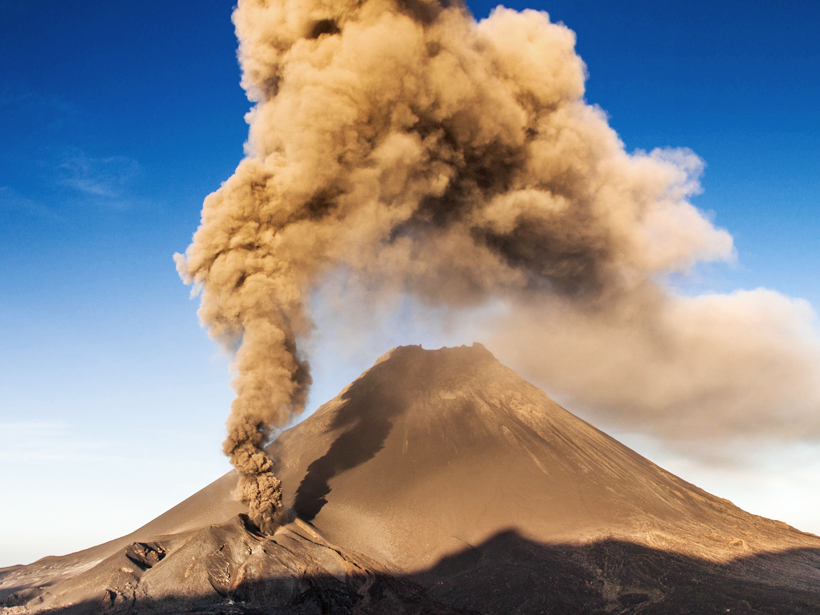
Radar Technique Shows Magma Flow in 2014 Cape Verde Eruption

The European Space Agency's Sentinel-1 satellite captures volcanic surface changes that reveal the flow below.
Posted inResearch Spotlights
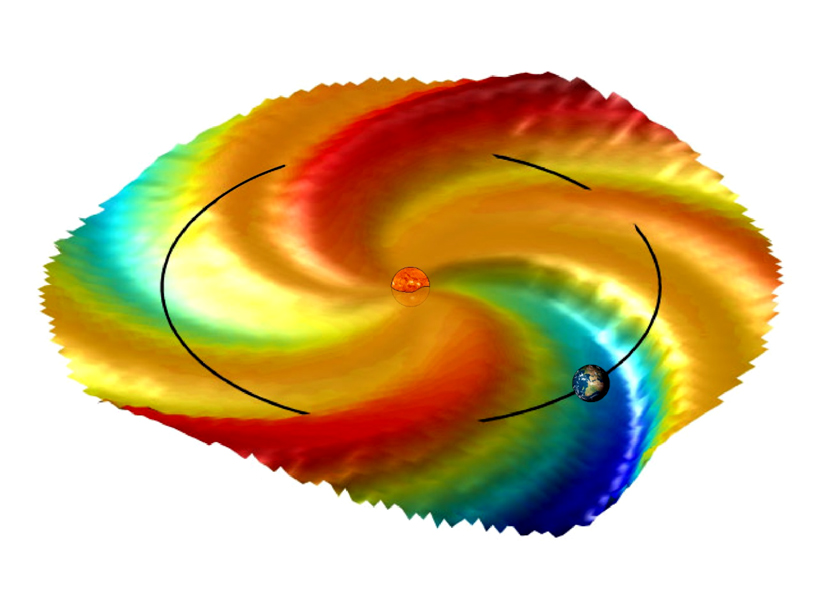
Sun's Magnetic Field Impacts Earth's Thunderstorms
Lightning strikes are more frequent when Earth encounters a polarity switch in the solar magnetic field.
Posted inResearch Spotlights
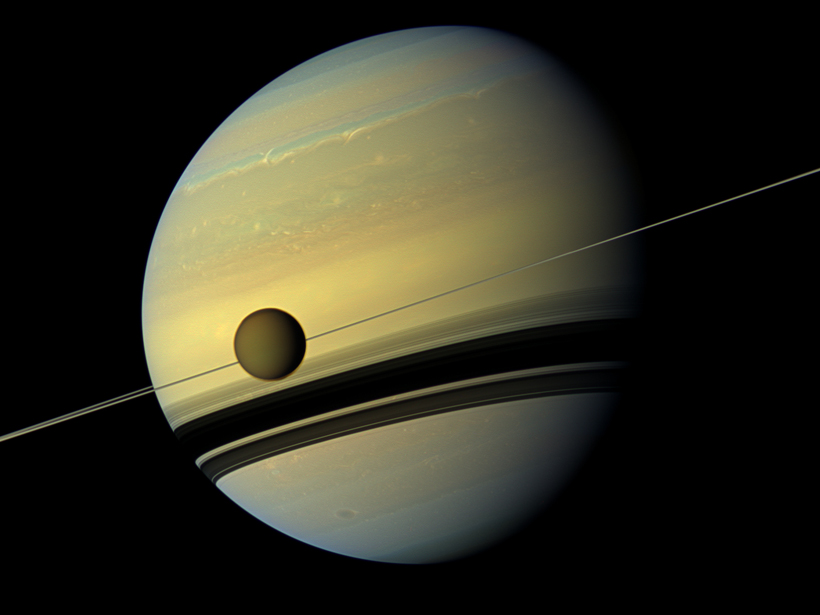
How Saturn Alters the Ionosphere of Titan
New research shows that Saturn's powerful magnetic field changes the atmospheric chemistry of its largest moon, Titan.

Posted inResearch Spotlights
Scientists Detect Wisps of Wind in Space
In the near vacuum of low-Earth orbit, there are still faint tendrils of air—but measuring them is very tricky. A new study comparing two methods will make it a little easier.

Posted inResearch Spotlights
Decoding the Radio Transmissions of Shooting Stars
Spectacular fireball meteors don't just light up the night sky—recent observations show they also emit mysterious high-frequency radio waves. Now scientists think they understand why.
Posted inResearch Spotlights
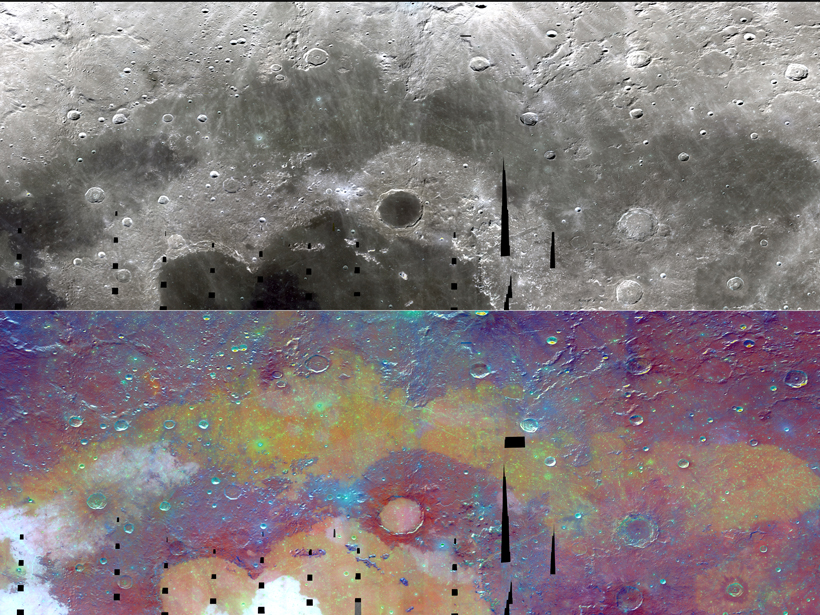
Satellites Reveal the History of the Moon's "Frigid Sea"

The history of aluminum-rich basalts in Mare Frigoris may help scientists better understand the evolution of the lunar mantle.

Posted inNews
What Caused the Sudden Heating of Uranus's Atmosphere?

A recently observed temperature reversal on Uranus may offer a clue to a long-standing mystery: Why are the upper atmospheres of gas giants so hot?
Posted inNews
Claudia Joan Alexander (1959–2015)
Alexander is remembered for her leading role in the Galileo and Rosetta missions and her efforts to encourage women scientists from underprivileged and underrepresented groups.
Posted inScience Updates
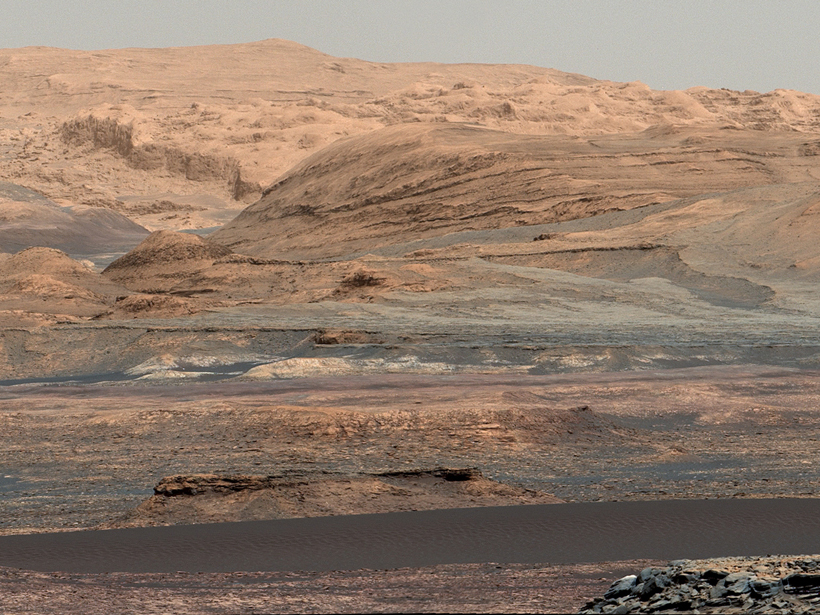
Where Curiosity Has Taken Us
The Curiosity rover, one of NASA's flagship missions, analyzes Martian geology, geochemistry, climatology, and radiation to assess whether Mars could have supported microbial life.