• About
  • Special Reports
  • Topics
    • Climate
    • Earth Science
    • Oceans
    • Space & Planets
    • Health & Ecosystems
    • Culture & Policy
    • Education & Careers
    • Opinions
  • Projects
    • Postcards From the Field
    • ENGAGE
    • Editors’ Highlights
    • Editors’ Vox
    • Eos en Español
    • Eos 简体中文版
    • Print Archive: 2015–2025
  • Policy Tracker
  • Blogs
    • Research & Developments
    • The Landslide Blog
  • Newsletter
  • Submit to Eos
  • AGU.org
  • Career Center
  • Join AGU
  • Give to AGU
  • About
  • Special Reports
  • Topics
    • Climate
    • Earth Science
    • Oceans
    • Space & Planets
    • Health & Ecosystems
    • Culture & Policy
    • Education & Careers
    • Opinions
  • Projects
    • Postcards From the Field
    • ENGAGE
    • Editors’ Highlights
    • Editors’ Vox
    • Eos en Español
    • Eos 简体中文版
    • Print Archive: 2015–2025
  • Policy Tracker
  • Blogs
    • Research & Developments
    • The Landslide Blog
  • Newsletter
  • Submit to Eos
Skip to content
  • AGU.org
  • Career Center
  • Join AGU
  • Give to AGU
Eos

Eos

Science News by AGU

Support Eos
Sign Up for Newsletter
  • About
  • Special Reports
  • Topics
    • Climate
    • Earth Science
    • Oceans
    • Space & Planets
    • Health & Ecosystems
    • Culture & Policy
    • Education & Careers
    • Opinions
  • Projects
    • Postcards From the Field
    • ENGAGE
    • Editors’ Highlights
    • Editors’ Vox
    • Eos en Español
    • Eos 简体中文版
    • Print Archive: 2015–2025
  • Policy Tracker
  • Blogs
    • Research & Developments
    • The Landslide Blog
  • Newsletter
  • Submit to Eos

Space & Planets

Color image of the planet Mars
Posted inResearch Spotlights

First Detection of a Built-In Wobble on Another Planet

by Jack Lee 4 January 202128 October 2021

Spacecraft find that Mars oscillates 10 centimeters off its axis of rotation.

Worried African American woman using cell phone while working at home
Posted inNews

The Best of Eos in 2020

by AGU 24 December 20205 October 2021

What Earth and space science stories stood out this year, and what are we looking forward to in 2021?
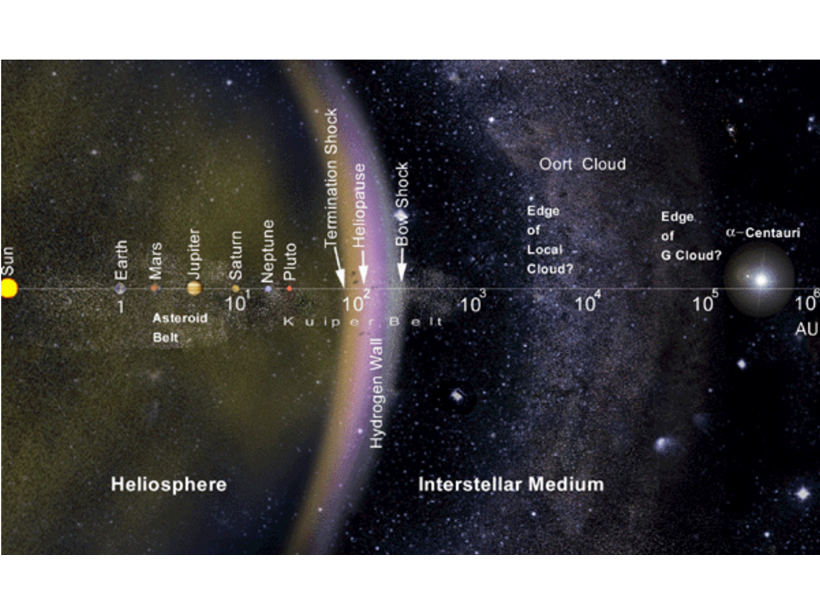
Illustration showing the Heliosphere and its surroundings
Posted inEditors' Highlights

The Cosmic Timeline of Heliophysics

by W. K. Peterson 23 December 202029 September 2021

Thom Moore began his career after the start of the space age. This is the story of how he converted his interests in evolution, philosophy, and psychology and writing into the study of heliophysics.
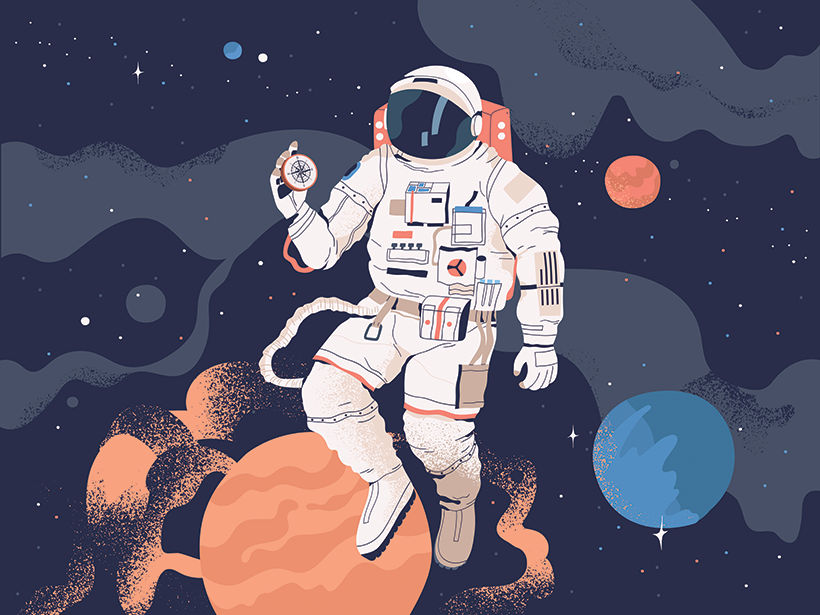
An illustration of an astronaut in space holding a compass.
Posted inFeatures

A Field Guide to the Magnetic Solar System

Bas den Hond, Science Writer by Bas den Hond 21 December 20203 November 2021

Not all planets move the needle. But whatever planet you take a magnetic compass to, it’s sure to point out clues to secrets underfoot.
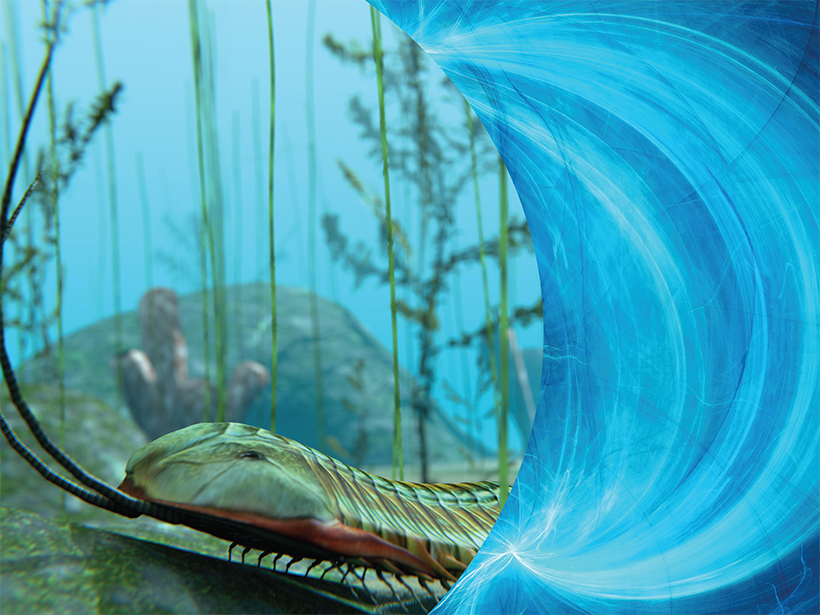
Closeup of an illustration of a trilobite (left) beside blue swirls representing Earth’s magnetic field
Posted inScience Updates

Habitability and the Evolution of Life Under Our Magnetic Shield

by M. Lingam 21 December 202030 January 2023

Earth’s global magnetic field likely dates back billions of years and is a barrier against cosmic radiation. What roles has it played in the planet’s biosphere?
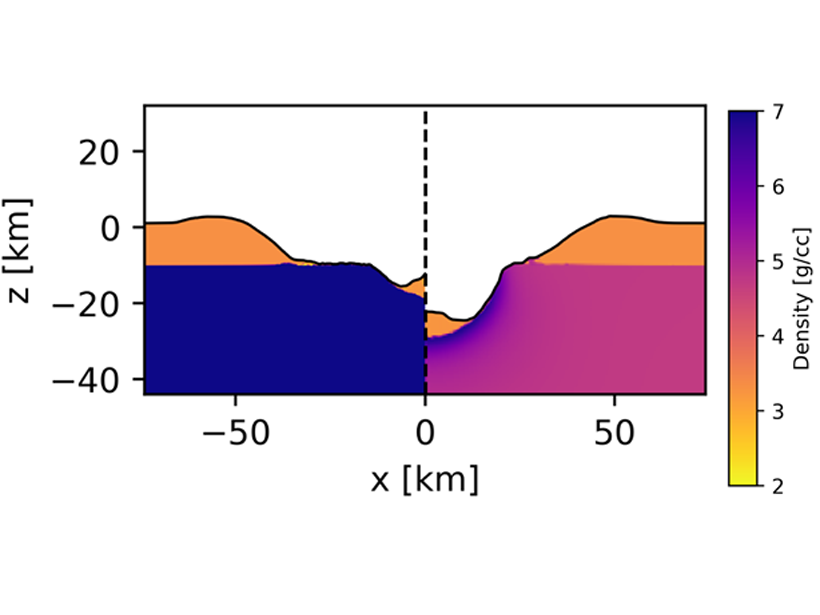
Plot showing a crater produced by the impact of a 10 km diameter bolide impacting a model of (16) Psyche
Posted inEditors' Highlights

Predicting the Unique Shape of Craters on Asteroid (16) Psyche

by Laurent G. J. Montési 21 December 202015 February 2022

Models link the variety of crater shapes expected on (16) Psyche with the interior structure of this unique asteroid, in preparation for the arrival of the Psyche probe in 2026.
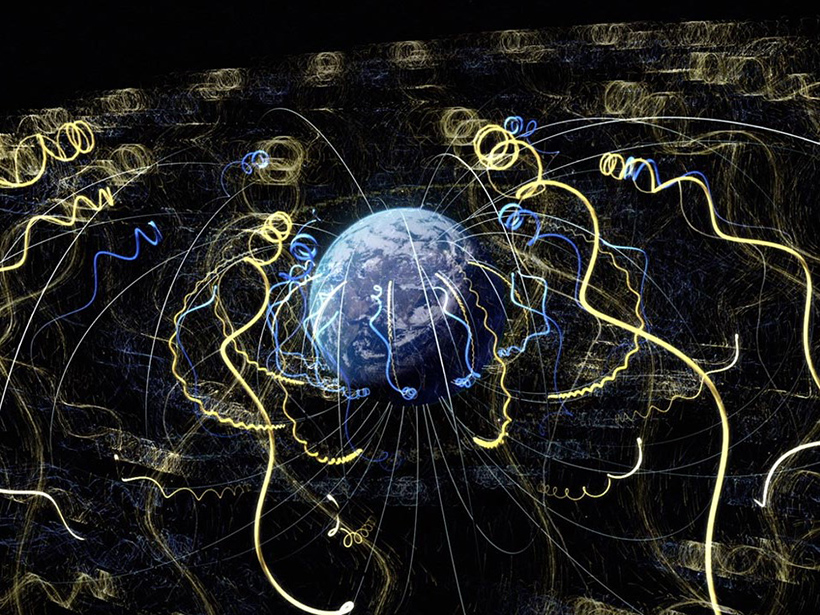
Artist’s conception of the motion of charged particles in Earth’s magnetosphere
Posted inResearch Spotlights

A New Approach to Characterizing Space Plasmas

by Morgan Rehnberg 16 December 202013 October 2022

When plasma particle velocity distributions have multiple, distinct parts, treating each as a separate beam may yield more intuitive results.
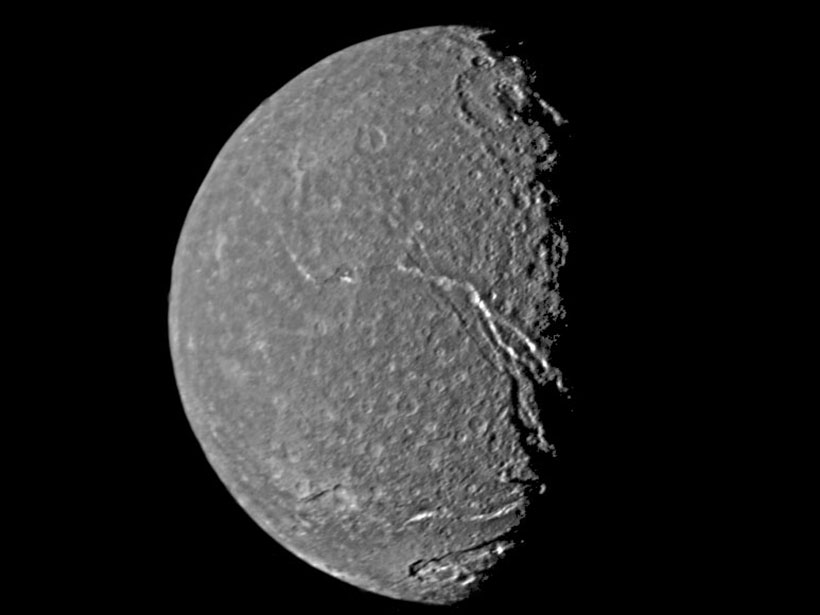
Grayscale image of Uranus’s moon, Titania
Posted inNews

Do Uranus’s Moons Have Subsurface Oceans?

Kimberly M. S. Cartier, News Writing and Production Intern for Eos.org by Kimberly M. S. Cartier 14 December 20203 November 2021

Scientists tested whether a classic technique could detect subsurface oceans on the moons of Uranus. In this scenario, the planet’s oddball magnetic field offers a big advantage.
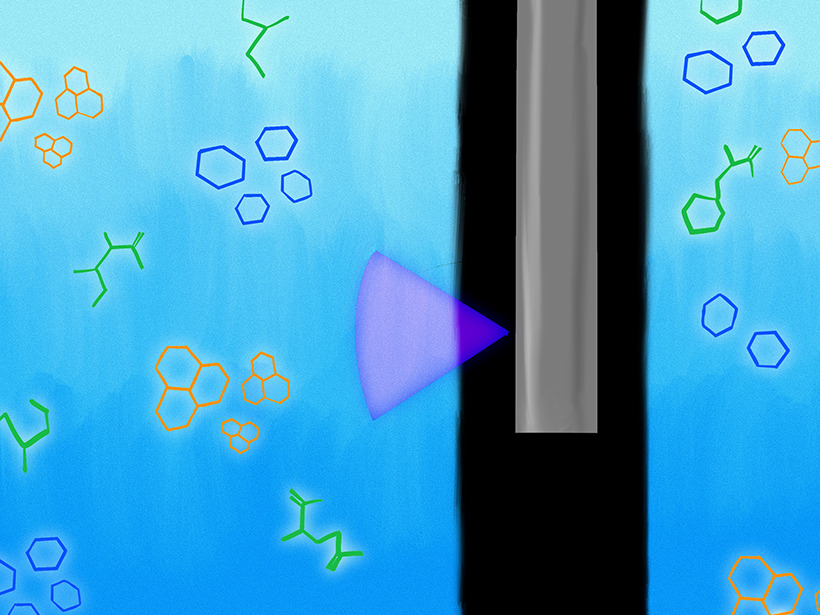
Artist’s conception of WATSON instrument surrounded by life-related molecules
Posted inNews

An Ice Probe on Earth Could Help Us Find Life in Space

JoAnna Wendel, freelance science writer and illustrator by JoAnna Wendel 10 December 20205 March 2026

An instrument called WATSON can help find biosignatures on icy ocean worlds.
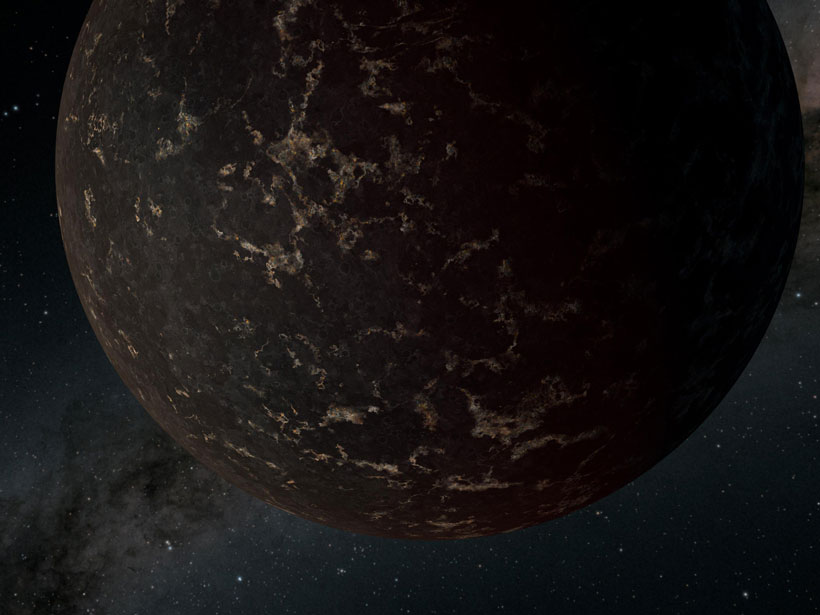
A dark, rocky exoplanet in front of a starry background
Posted inNews

Airless Exoplanet’s Mantle Could Flow in Halves

Kimberly M. S. Cartier, News Writing and Production Intern for Eos.org by Kimberly M. S. Cartier 7 December 20204 August 2023

With no atmosphere in the way, measurements of the planet’s surface temperature are the first observational constraints on mantle convection models for an exoplanet.

Posts pagination

Newer posts 1 … 58 59 60 61 62 … 126 Older posts
Over a dark blue-green square appear the words Special Report: The State of the Science 1 Year On.

Features from AGU Publications

Research Spotlights

Solar Storms Can Affect Earth’s Weather. A New Study Examines How.

23 June 202623 June 2026
Editors' Highlights

Where Methane is Emitted Matters for Global Burden

18 June 202616 June 2026
Editors' Vox

Small-Scale Indian Ocean Dynamics Underpin Marine Ecology and Climate

4 June 20263 June 2026
Eos logo at left; AGU logo at right

About Eos
ENGAGE
Awards
Contact

Advertise
Submit
Career Center
Sitemap

© 2026 American Geophysical Union. All rights reserved Powered by Newspack