
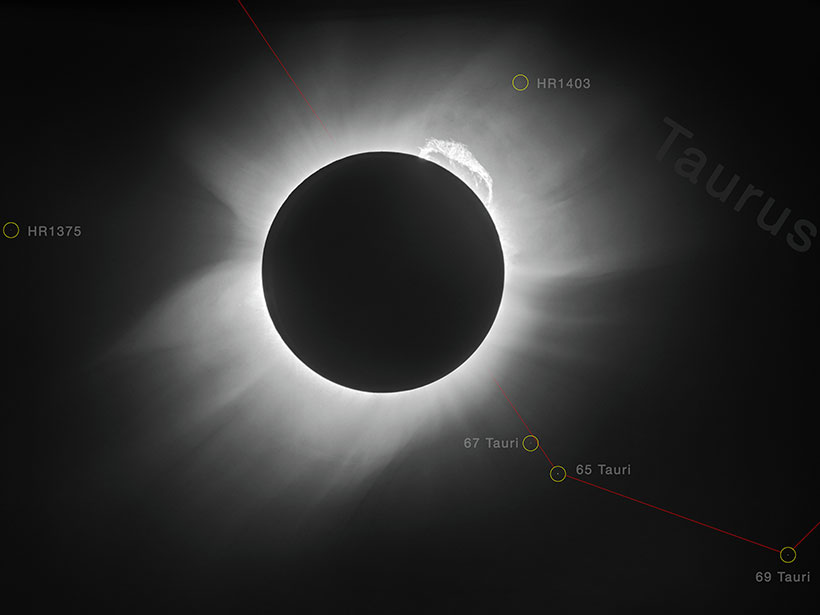

Incorporating the refractive index of the Sun into models of gravitational lensing effects improves agreement with measurements of the phenomenon.
Space & Planets
Posted inScience Updates
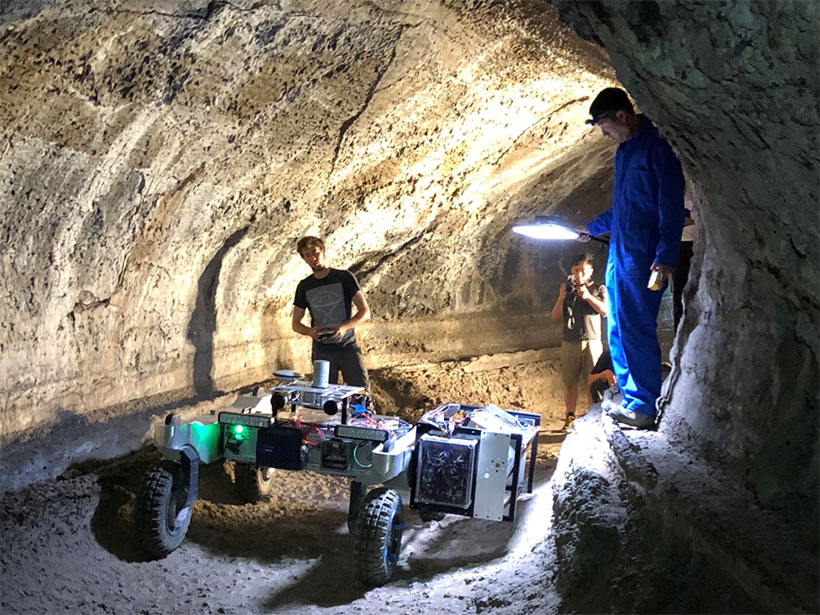
Planetary Cave Exploration Progresses
Terrestrial caves offer scientific and engineering insights and serve as testing grounds for future forays by humans and robots into caves on other worlds.

Posted inNews
Exoplanet Earth: An Ultimate Selfie to Find Habitable Worlds
Aliens spying on us from afar is a common science fiction trope. Soon we might know what E.T. would see through a telescope. And that information could help identify other Earth-like planets.

Posted inNews
Bringing Clarity to Magnetic Reconnection
A particle-level process appears to play a key role in planet-sized events throughout the universe.

Posted inResearch Spotlights
Moon May Hold Billions of Tons of Subterranean Ice at Its Poles
By modeling over 4 billion years of the Moon’s impact history, scientists estimate that the lunar poles may harbor billions of metric tons of subsurface ice.

Posted inResearch Spotlights
Gravity Waves Leave Ripples Across a Glowing Night Sky
A thunderstorm made waves on a rare “bright night.”

Posted inNews
On Thin Ice: Tiger Stripes on Enceladus

Saturn’s moon Enceladus boasts fierce tiger stripes around its south pole, a mystery that has long puzzled scientists. New research explores the stripes by examining how the moon’s ice breaks.
Posted inResearch Spotlights
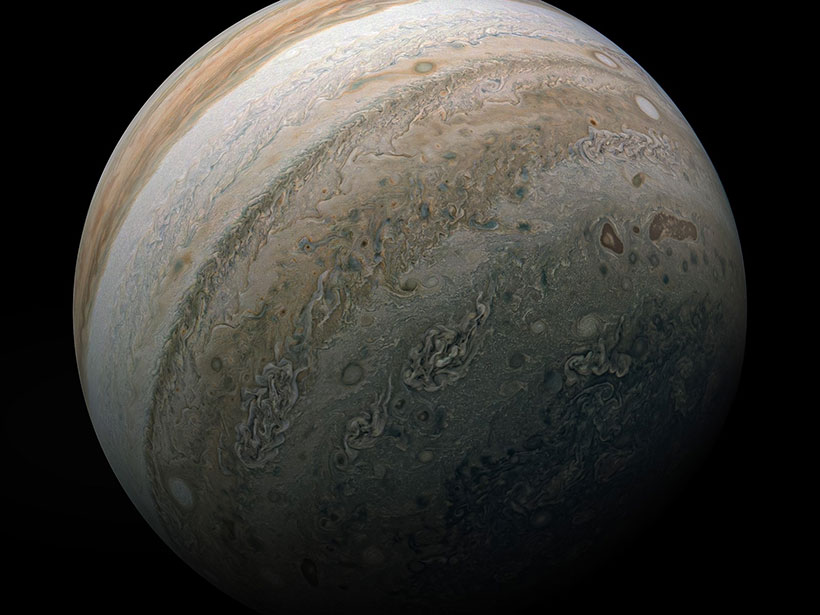
A Juno Era Model of the Jovian Magnetosphere
Updating a model developed during the Voyager flybys will enable better mission planning and a deeper understanding of Juno data.
Posted inNews
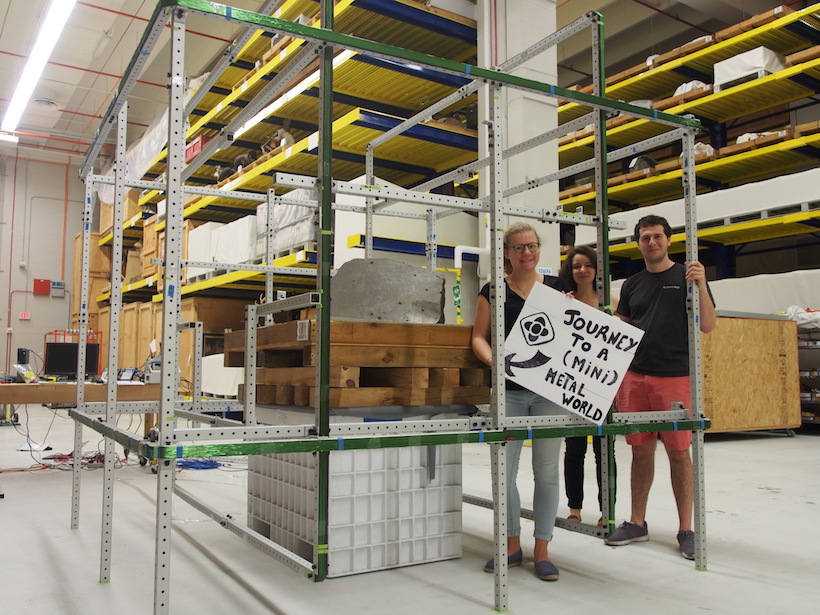
Measuring Massive Magnetic Meteorites
A new tool to measure the magnetic signatures of big meteorites could not only aid NASA’s mission to Psyche; it could also help solve mysteries about how magnetic fields formed in our early solar system.
Posted inResearch Spotlights
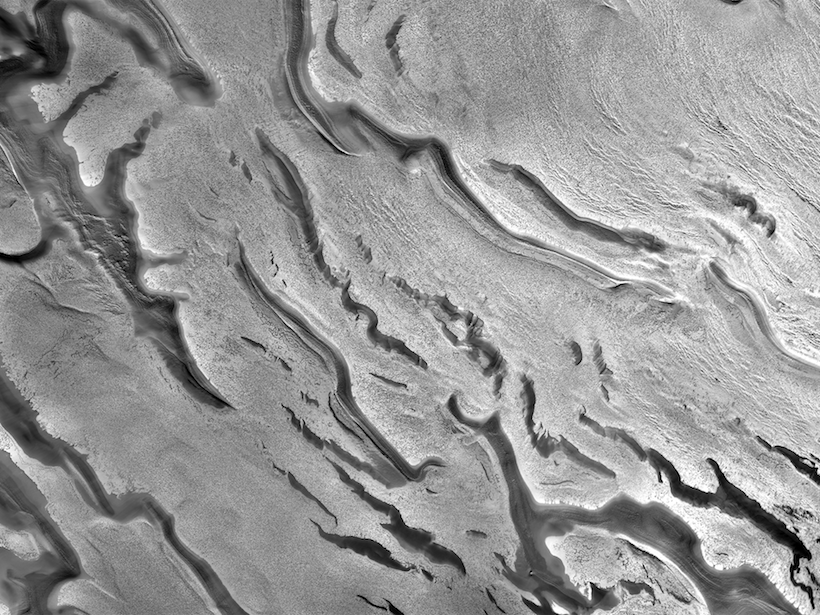
A Precise Mosaic View of Mars’s South Pole

A new workflow improves the process of creating massive, accurate mosaics from spacecraft-captured images of a planet’s surface.