• About
  • Special Reports
  • Topics
    • Climate
    • Earth Science
    • Oceans
    • Space & Planets
    • Health & Ecosystems
    • Culture & Policy
    • Education & Careers
    • Opinions
  • Projects
    • Postcards From the Field
    • ENGAGE
    • Editors’ Highlights
    • Editors’ Vox
    • Eos en Español
    • Eos 简体中文版
    • Print Archive: 2015–2025
  • Policy Tracker
  • Blogs
    • Research & Developments
    • The Landslide Blog
  • Newsletter
  • Submit to Eos
  • AGU.org
  • Career Center
  • Join AGU
  • Give to AGU
  • About
  • Special Reports
  • Topics
    • Climate
    • Earth Science
    • Oceans
    • Space & Planets
    • Health & Ecosystems
    • Culture & Policy
    • Education & Careers
    • Opinions
  • Projects
    • Postcards From the Field
    • ENGAGE
    • Editors’ Highlights
    • Editors’ Vox
    • Eos en Español
    • Eos 简体中文版
    • Print Archive: 2015–2025
  • Policy Tracker
  • Blogs
    • Research & Developments
    • The Landslide Blog
  • Newsletter
  • Submit to Eos
Skip to content
  • AGU.org
  • Career Center
  • Join AGU
  • Give to AGU
Eos

Eos

Science News by AGU

Support Eos
Sign Up for Newsletter
  • About
  • Special Reports
  • Topics
    • Climate
    • Earth Science
    • Oceans
    • Space & Planets
    • Health & Ecosystems
    • Culture & Policy
    • Education & Careers
    • Opinions
  • Projects
    • Postcards From the Field
    • ENGAGE
    • Editors’ Highlights
    • Editors’ Vox
    • Eos en Español
    • Eos 简体中文版
    • Print Archive: 2015–2025
  • Policy Tracker
  • Blogs
    • Research & Developments
    • The Landslide Blog
  • Newsletter
  • Submit to Eos

Space & Planets

Time-of-flight (TOF) spectra of observed ions on the Arase satellite on 4 April 2017
Posted inEditors' Highlights

Molecular Ions Unexpectedly Frequent in Earth’s Magnetosphere

by Andrew Yau 11 September 201913 April 2022

A Japanese satellite reveals rapid and surprisingly frequent transport of molecular ions from the ionosphere to the magnetosphere, under not only extreme but also moderate geomagnetic conditions.

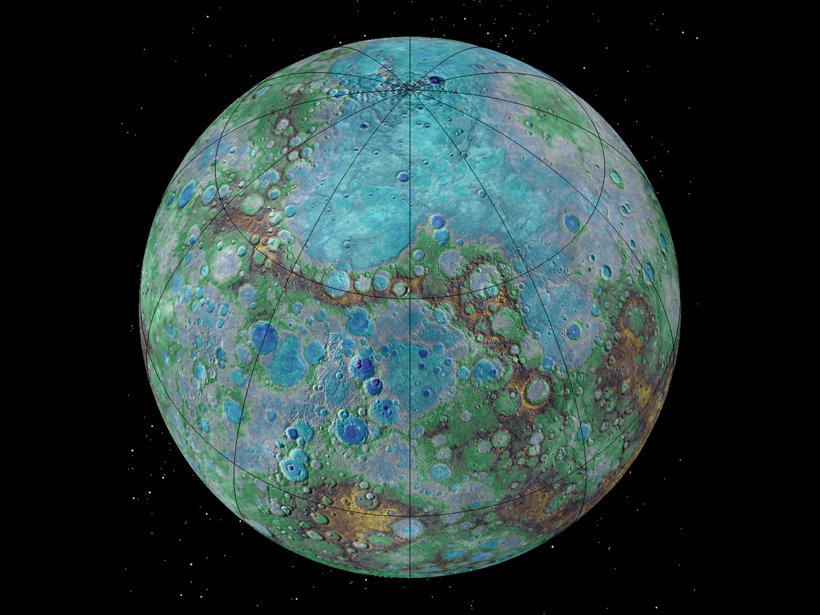
Cratered planet in blues and browns
Posted inNews

Our Seismic Solar System

Kimberly M. S. Cartier, News Writing and Production Intern for Eos.org by Kimberly M. S. Cartier 10 September 201917 June 2022

Earth’s not the only thing that shakes and quakes and goes around the Sun. Not by a long shot.
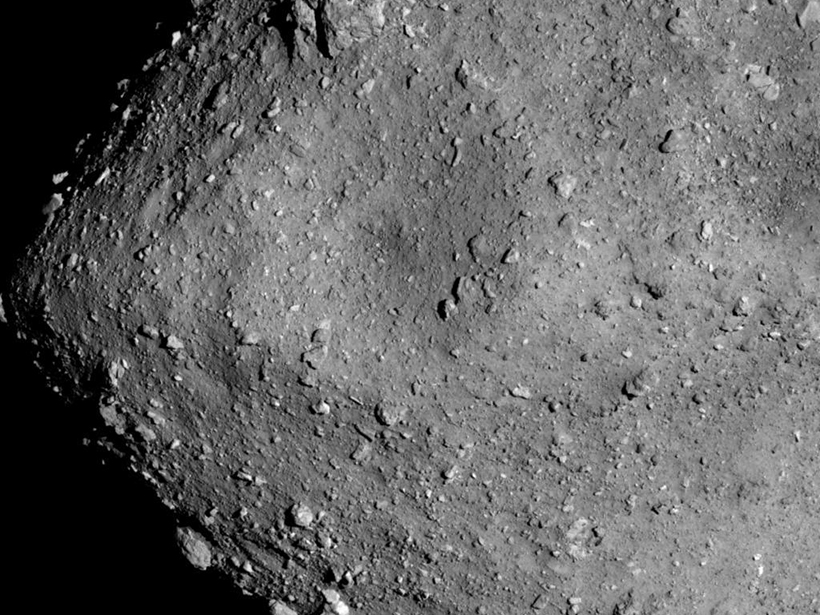
Black-and-white satellite image of the rocky surface of the asteroid Ryugu
Posted inNews

Nearby Asteroid Is Mysteriously Devoid of Dust, Lander Reveals

Katherine Kornei, Science Writer by Katherine Kornei 5 September 201915 February 2022

Close-up images of Ryugu, a near-Earth asteroid and the target of the Hayabusa2 sample return mission, reveal a rocky, dustless world that may have formed from a giant collision.
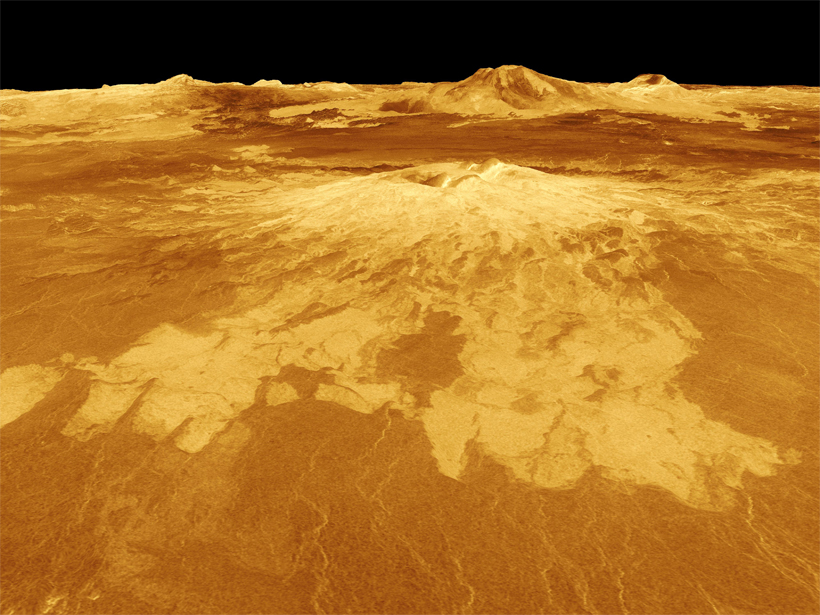
volcano Sapas Mons on Venus
Posted inAGU News

A New Approach to New Worlds

Heather Goss, AGU Publisher by Heather Goss 30 August 20197 March 2022

This month we look around our solar system—and much farther—as we celebrate AGU’s Centennial.

A red-orange star with dark circles in front
Posted inNews

Hunting for Planets Around Old, Anemic Stars

Kimberly M. S. Cartier, News Writing and Production Intern for Eos.org by Kimberly M. S. Cartier 28 August 20193 April 2023

Can a star make planets with 10% of what the Sun had to work with? A synergy between two powerhouse survey telescopes is helping astronomers find that answer.
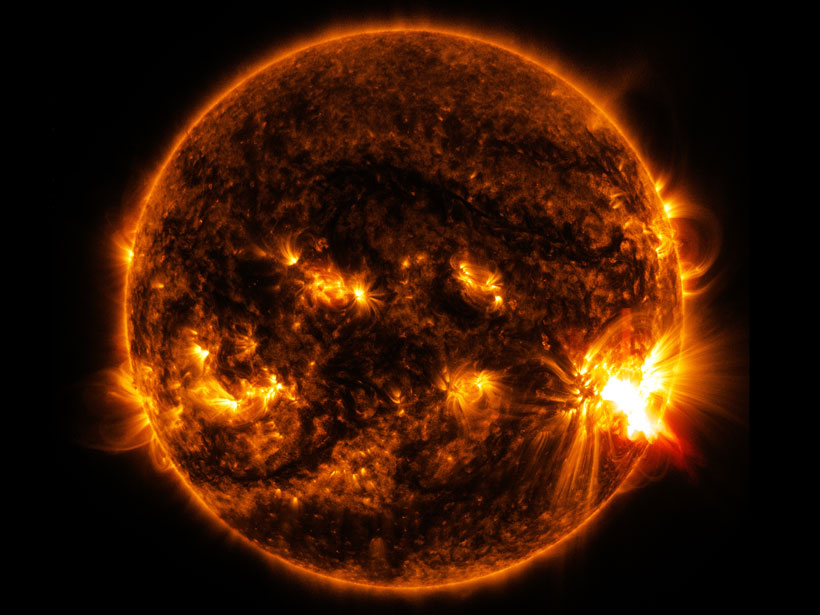
Image of the Sun with bright solar flares
Posted inNews

Researchers Reproduce Processes Behind Astrophysical Shocks

Rachel Crowell, Science Writer by Rachel Crowell 26 August 201913 October 2021

Studying shock precursors in a laboratory setting enables researchers to take a different look at the precursors’ properties and the physics behind them.
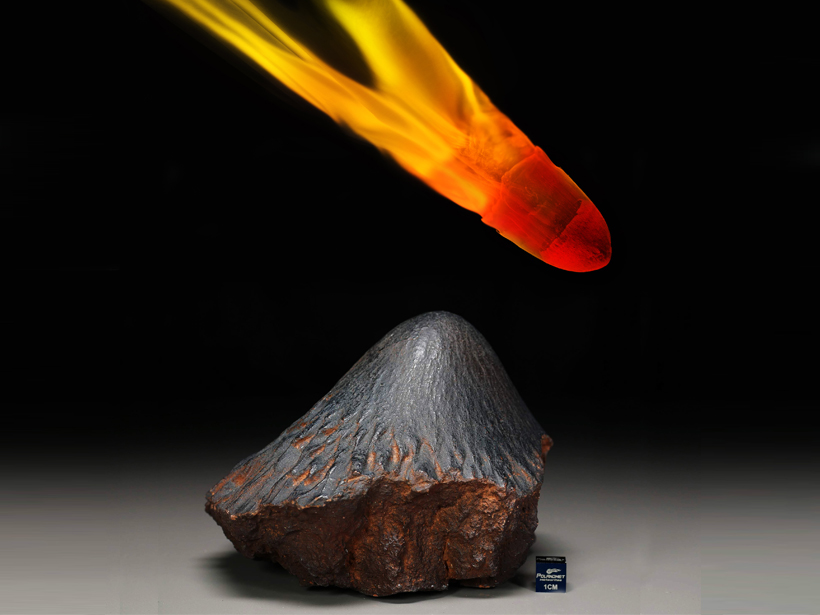
cone-shaped meteorite
Posted inNews

Goldilocks Meteors Carved into Cones

Mary Caperton Morton, Science Writer by Mary Caperton Morton 21 August 20198 March 2022

Their “just right” shape lends some shooting stars flight stability and symmetry.

Diagram of two Cassini spacecraft orbit trajectories during the “Grand Finale”
Posted inEditors' Highlights

Newly Discovered Electric Current System Very Close to Saturn

by Michael W. Liemohn 20 August 201916 November 2021

In the tightly confined region between the innermost ring and the planet’s upper atmosphere, the Cassini spacecraft observed signatures of a previously undetected current system.
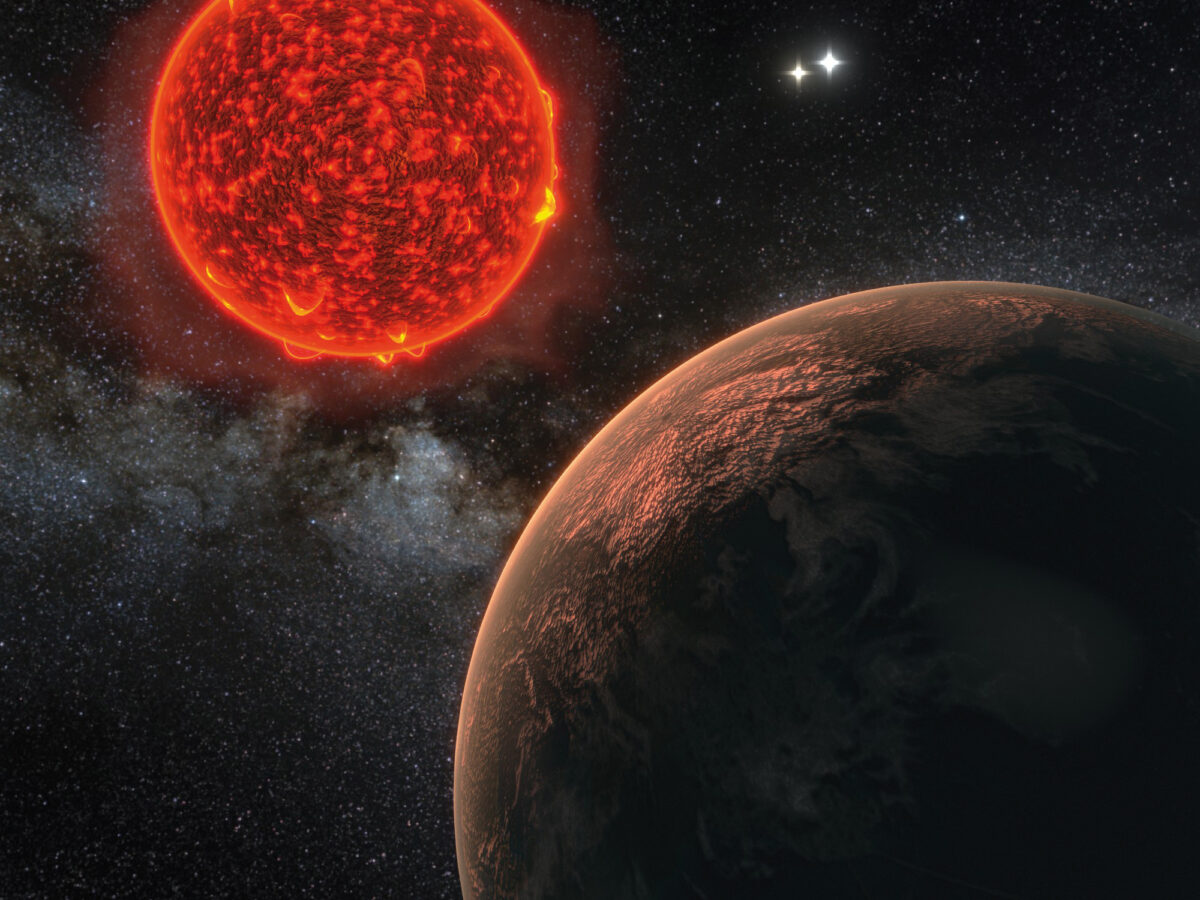
A rocky planet near a red star with two stars in the background
Posted inNews

Nearest Star System May Have a Second Planet

Kimberly M. S. Cartier, News Writing and Production Intern for Eos.org by Kimberly M. S. Cartier 19 August 20193 April 2023

The exoplanet candidate, tentatively named Proxima c, would be a frozen snowball.
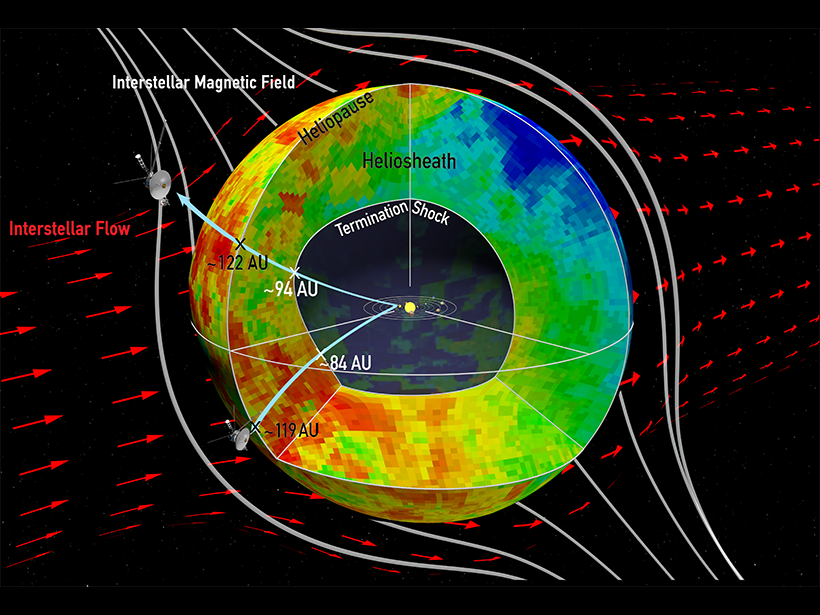
Schematic showing the basic shape and properties of the heliosphere, the protective magnetic bubble created by the solar wind
Posted inResearch Spotlights

Sampling the Space Between the Stars

by Mark Zastrow 19 August 201916 November 2021

Data from the Cassini and Voyager spacecraft reveal new information about the Sun’s magnetic bubble.

Posts pagination

Newer posts 1 … 72 73 74 75 76 … 126 Older posts
Over a dark blue-green square appear the words Special Report: The State of the Science 1 Year On.

Features from AGU Publications

Research Spotlights

The Speedy Particles That Could Help Us Learn More About Uranus

18 June 202618 June 2026
Editors' Highlights

Where Methane is Emitted Matters for Global Burden

18 June 202616 June 2026
Editors' Vox

Small-Scale Indian Ocean Dynamics Underpin Marine Ecology and Climate

4 June 20263 June 2026
Eos logo at left; AGU logo at right

About Eos
ENGAGE
Awards
Contact

Advertise
Submit
Career Center
Sitemap

© 2026 American Geophysical Union. All rights reserved Powered by Newspack