• About
  • Special Reports
  • Topics
    • Climate
    • Earth Science
    • Oceans
    • Space & Planets
    • Health & Ecosystems
    • Culture & Policy
    • Education & Careers
    • Opinions
  • Projects
    • Postcards From the Field
    • ENGAGE
    • Editors’ Highlights
    • Editors’ Vox
    • Eos en Español
    • Eos 简体中文版
    • Print Archive: 2015–2025
  • Policy Tracker
  • Blogs
    • Research & Developments
    • The Landslide Blog
  • Newsletter
  • Submit to Eos
  • AGU.org
  • Career Center
  • Join AGU
  • Give to AGU
  • About
  • Special Reports
  • Topics
    • Climate
    • Earth Science
    • Oceans
    • Space & Planets
    • Health & Ecosystems
    • Culture & Policy
    • Education & Careers
    • Opinions
  • Projects
    • Postcards From the Field
    • ENGAGE
    • Editors’ Highlights
    • Editors’ Vox
    • Eos en Español
    • Eos 简体中文版
    • Print Archive: 2015–2025
  • Policy Tracker
  • Blogs
    • Research & Developments
    • The Landslide Blog
  • Newsletter
  • Submit to Eos
Skip to content
  • AGU.org
  • Career Center
  • Join AGU
  • Give to AGU
Eos

Eos

Science News by AGU

Support Eos
Sign Up for Newsletter
  • About
  • Special Reports
  • Topics
    • Climate
    • Earth Science
    • Oceans
    • Space & Planets
    • Health & Ecosystems
    • Culture & Policy
    • Education & Careers
    • Opinions
  • Projects
    • Postcards From the Field
    • ENGAGE
    • Editors’ Highlights
    • Editors’ Vox
    • Eos en Español
    • Eos 简体中文版
    • Print Archive: 2015–2025
  • Policy Tracker
  • Blogs
    • Research & Developments
    • The Landslide Blog
  • Newsletter
  • Submit to Eos

Space & Planets

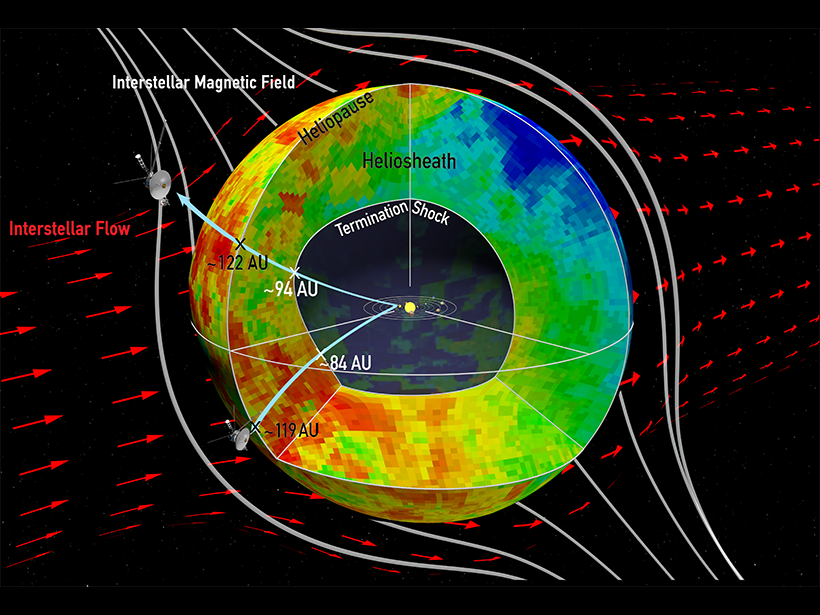
Schematic showing the basic shape and properties of the heliosphere, the protective magnetic bubble created by the solar wind
Posted inResearch Spotlights

Sampling the Space Between the Stars

by Mark Zastrow 19 August 201916 November 2021

Data from the Cassini and Voyager spacecraft reveal new information about the Sun’s magnetic bubble.

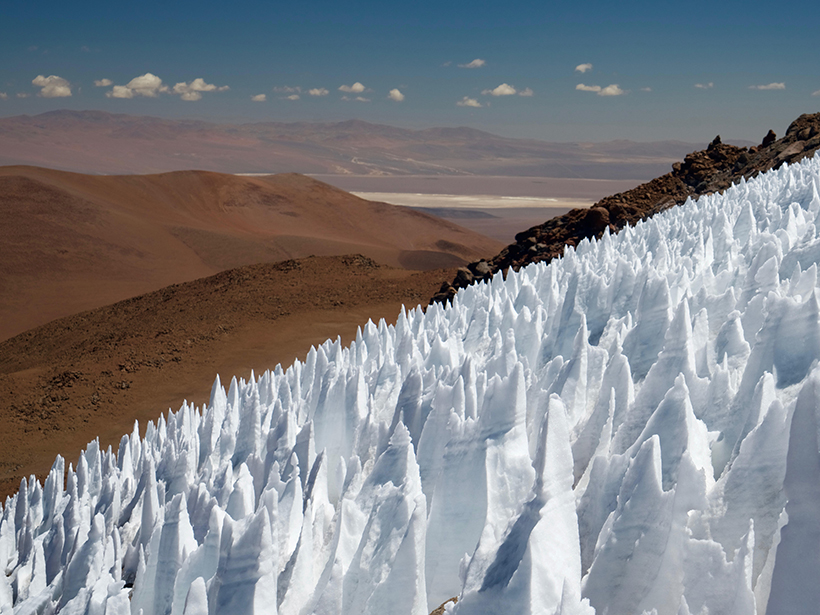
A field of penitentes
Posted inNews

Microbes Spotted on Blades of Ice High in the Andes

Katherine Kornei, Science Writer by Katherine Kornei 15 August 201912 April 2022

Researchers discover microbial life on ice spires known as penitentes on the arid, sunlight-blasted upper reaches of Llullaillaco, one of the best earthly analogues for Mars.
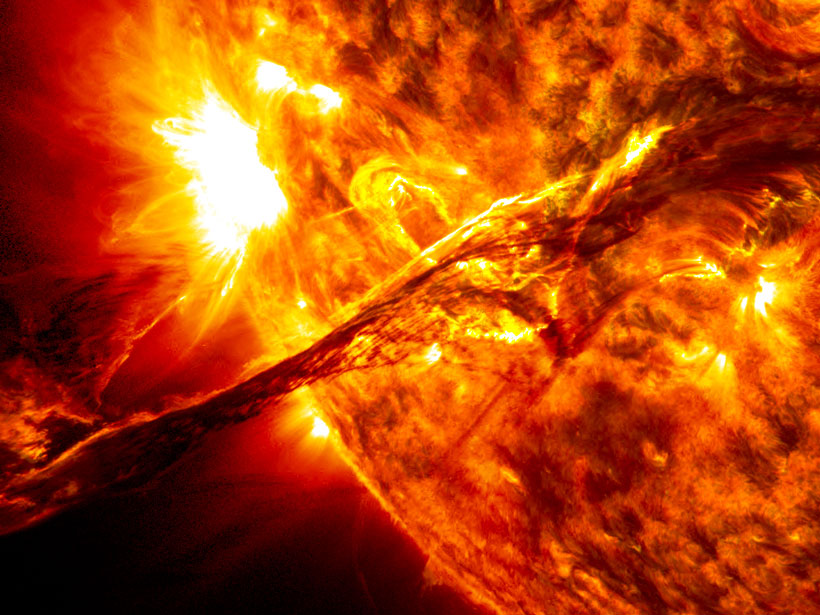
Image of a solar prominence
Posted inNews

Moon Sheds Light on Early Solar Spin

Nola Taylor Redd, Science Writer by Nola Taylor Tillman 13 August 20197 March 2022

Lunar samples reveal that the Sun spun relatively slowly in its first billion years and blasted the Earth and Moon with coronal mass ejections.
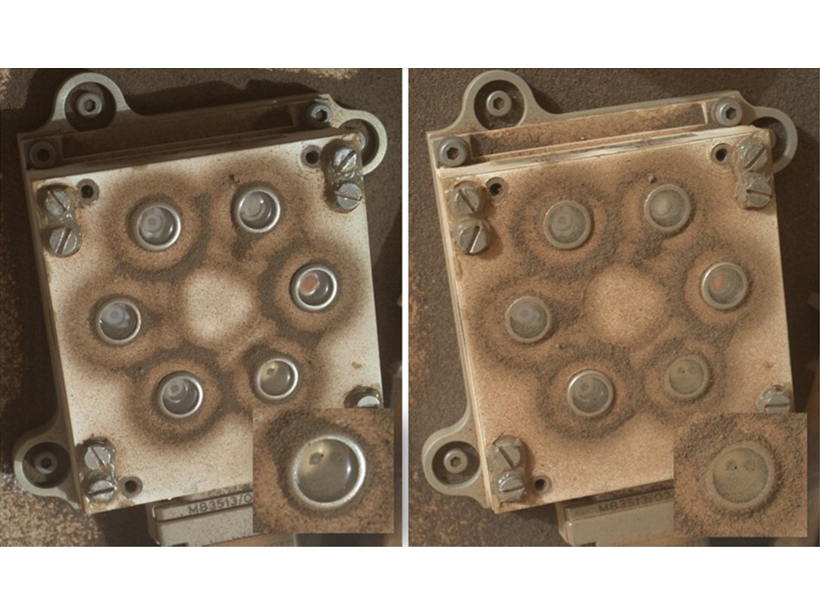
Photos of a sensor on board the Curiosity rover before and after a dust storm
Posted inEditors' Highlights

Curiosity Monitors Rare Global Dust Storm From Mars’s Surface

by Anni Määttänen 12 August 201924 April 2024

Since the 1970s, no surface platform had made meteorological measurements of a global dust storm on Mars, but last summer NASA’s Curiosity rover witnessed one of these rare events.
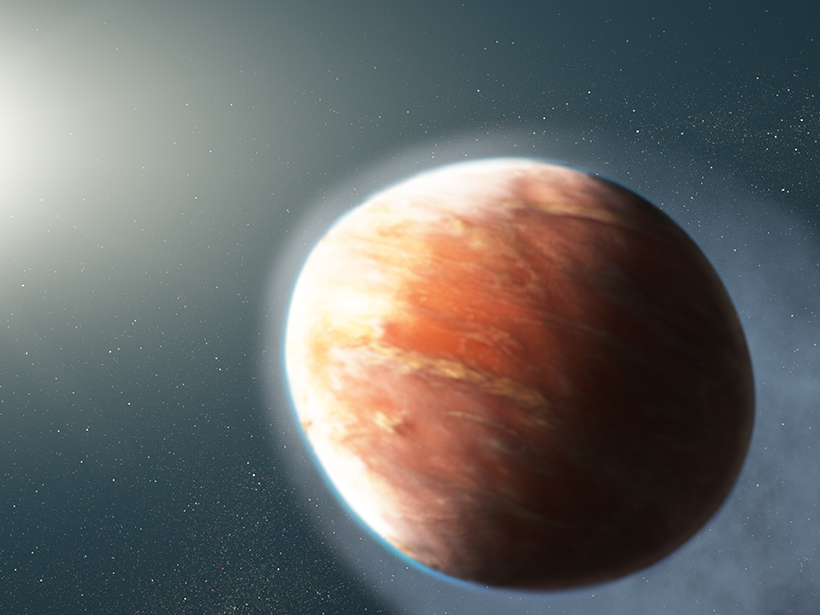
Illustration of oblong planet in front of bright star
Posted inNews

Ultrahot Exoplanet Bleeds Heavy Metals into Space

Kimberly M. S. Cartier, News Writing and Production Intern for Eos.org by Kimberly M. S. Cartier 5 August 201931 October 2022

The planet is also shaped like a football (the American kind).
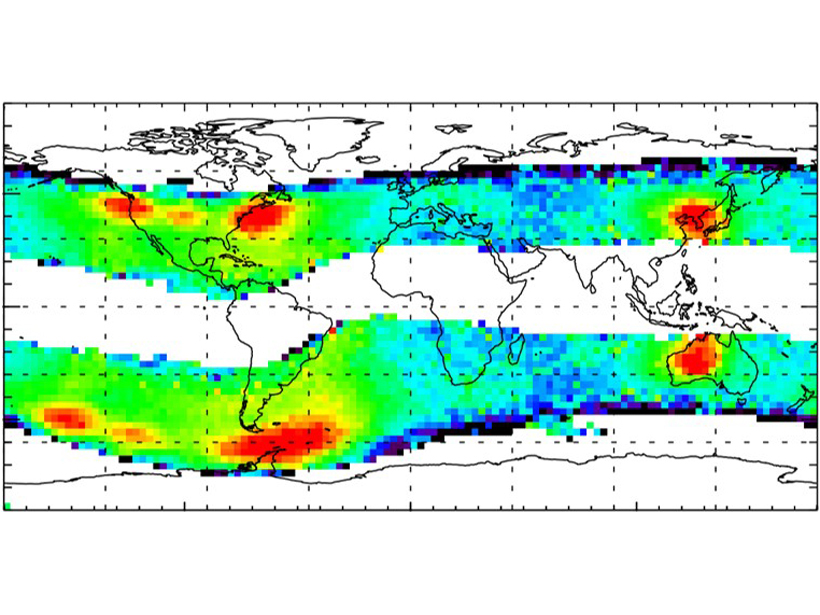
Plots of average wave electric field power spectral densities on the nightside
Posted inEditors' Highlights

Human-made Emissions Modify Electron Space Environment

by Viviane Pierrard 2 August 20198 August 2022

Very Low Frequency transmitters used for communications with submarines modify the dynamics of energetic electrons in the inner radiation belt and the slot region.

An X1.6 class solar flare imaged by NASA’s Solar Dynamics Observatory in 2014.
Posted inAGU News

Here Comes the Sun

Heather Goss, AGU Publisher by Heather Goss 1 August 201914 January 2022

This August, we look at the relationship we have to our closest star for AGU’s Centennial.

Four stages of development of the Lomonosov crater on Mars
Posted inEditors' Highlights

Lomonosov: The Crater That Started a Martian Mega Tsunami

by Laurent G. J. Montési 31 July 201923 February 2023

Three billion years ago, on Mars, the shores of an ocean may have been flooded by a mega-tsunami. Now the crater left by the bolide impact that probably triggered the tsunami has been identified.
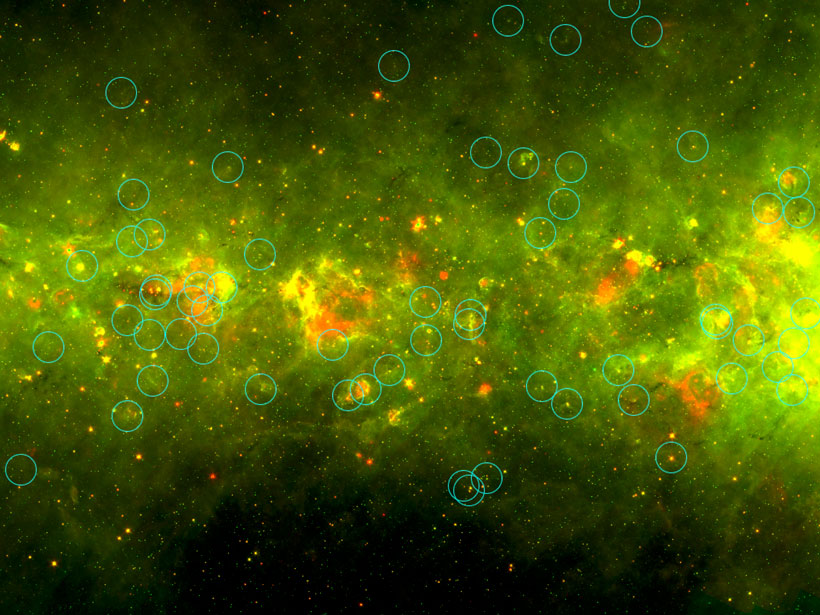
Images of blue circles around the yellowballs
Posted inNews

The “Yellowball” Catalog and the Citizen Science That Helped Define It

Rachel Crowell, Science Writer by Rachel Crowell 26 July 20195 January 2023

The online community of the Milky Way Project citizen scientists helped scientists identify compact star-forming regions now known as yellowballs.
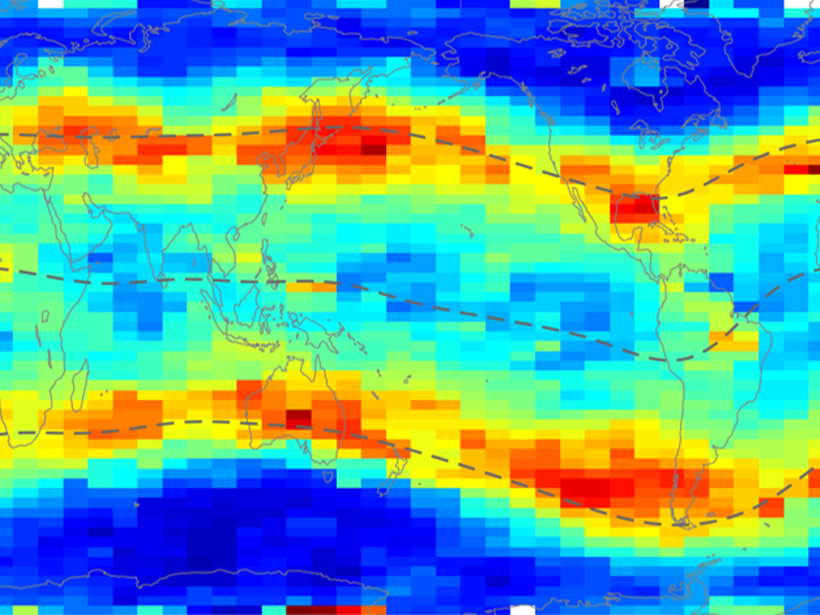
Measurements of electron density from the COSMIC satellite
Posted inEditors' Highlights

Holistic Views of the Nighttime Ionosphere

by Michael W. Liemohn 22 July 201922 March 2023

The nightside ionosphere, at latitudes away from the auroral zone, should have very little charged particle density, but it doesn’t. A new comprehensive study of satellite data explains why.

Posts pagination

Newer posts 1 … 73 74 75 76 77 … 126 Older posts
Over a dark blue-green square appear the words Special Report: The State of the Science 1 Year On.

Features from AGU Publications

Research Spotlights

Solar Storms Can Affect Earth’s Weather. A New Study Examines How.

23 June 202623 June 2026
Editors' Highlights

Where Methane is Emitted Matters for Global Burden

18 June 202616 June 2026
Editors' Vox

Small-Scale Indian Ocean Dynamics Underpin Marine Ecology and Climate

4 June 20263 June 2026
Eos logo at left; AGU logo at right

About Eos
ENGAGE
Awards
Contact

Advertise
Submit
Career Center
Sitemap

© 2026 American Geophysical Union. All rights reserved Powered by Newspack