• About
  • Special Reports
  • Topics
    • Climate
    • Earth Science
    • Oceans
    • Space & Planets
    • Health & Ecosystems
    • Culture & Policy
    • Education & Careers
    • Opinions
  • Projects
    • Postcards From the Field
    • ENGAGE
    • Editors’ Highlights
    • Editors’ Vox
    • Eos en Español
    • Eos 简体中文版
    • Print Archive: 2015–2025
  • Policy Tracker
  • Blogs
    • Research & Developments
    • The Landslide Blog
  • Newsletter
  • Submit to Eos
  • AGU.org
  • Career Center
  • Join AGU
  • Give to AGU
  • About
  • Special Reports
  • Topics
    • Climate
    • Earth Science
    • Oceans
    • Space & Planets
    • Health & Ecosystems
    • Culture & Policy
    • Education & Careers
    • Opinions
  • Projects
    • Postcards From the Field
    • ENGAGE
    • Editors’ Highlights
    • Editors’ Vox
    • Eos en Español
    • Eos 简体中文版
    • Print Archive: 2015–2025
  • Policy Tracker
  • Blogs
    • Research & Developments
    • The Landslide Blog
  • Newsletter
  • Submit to Eos
Skip to content
  • AGU.org
  • Career Center
  • Join AGU
  • Give to AGU
Eos

Eos

Science News by AGU

Support Eos
Sign Up for Newsletter
  • About
  • Special Reports
  • Topics
    • Climate
    • Earth Science
    • Oceans
    • Space & Planets
    • Health & Ecosystems
    • Culture & Policy
    • Education & Careers
    • Opinions
  • Projects
    • Postcards From the Field
    • ENGAGE
    • Editors’ Highlights
    • Editors’ Vox
    • Eos en Español
    • Eos 简体中文版
    • Print Archive: 2015–2025
  • Policy Tracker
  • Blogs
    • Research & Developments
    • The Landslide Blog
  • Newsletter
  • Submit to Eos

Space & Planets

Exoplanet climate
Posted inENGAGE, News

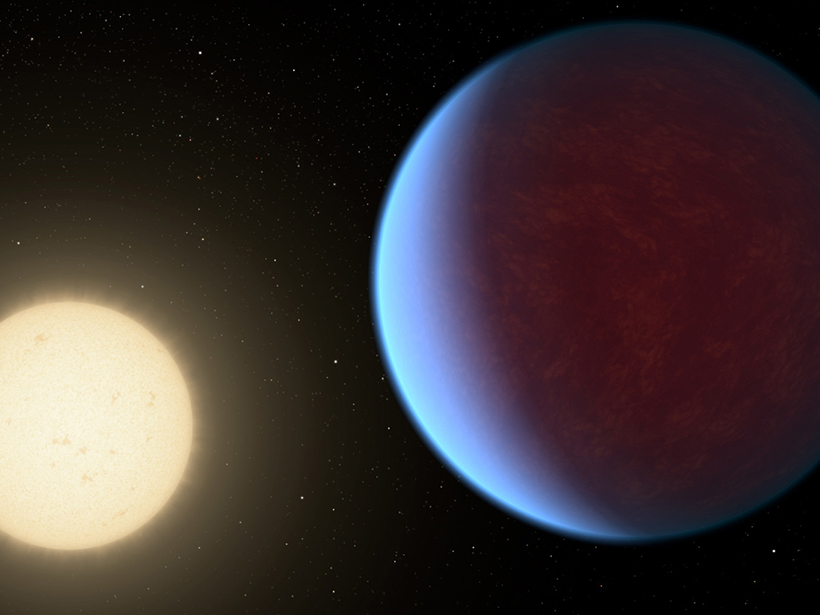
Modeling the Climates of Worlds Beyond Earth

Katherine Kornei, Science Writer by Katherine Kornei 14 January 201930 March 2023

Scientists are applying climate models to distant planets to determine their habitability.

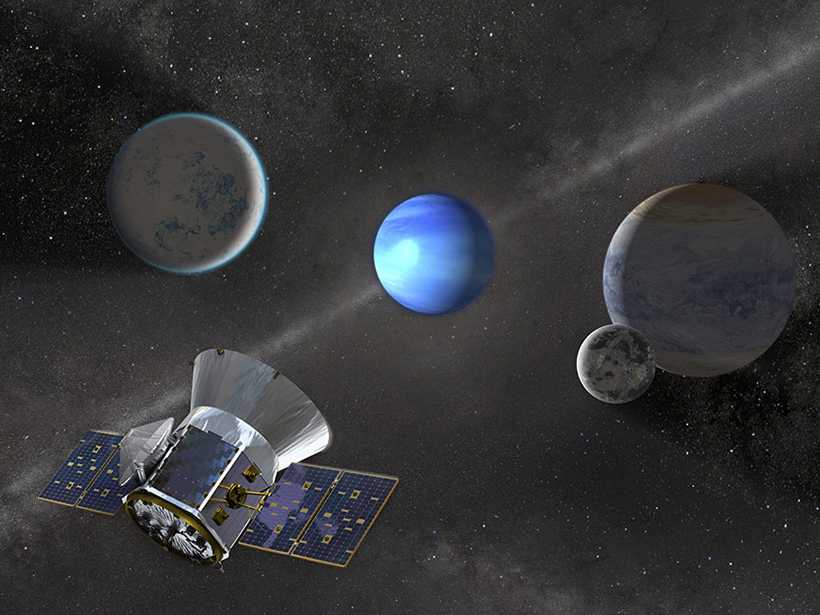
NASA’s TESS mission discovers third exoplanet
Posted inNews

NASA Space Telescope Spots Its Third Planet

Katherine Kornei, Science Writer by Katherine Kornei 9 January 201929 September 2021

A planet 3 times as large as the Earth was detected by the Transiting Exoplanet Survey Satellite in a relatively leisurely orbit—the longest yet detected by this telescope—of 36 days.

Chang’e-4’s Yutu-2 rover exploring Von Kármán crater on 3 January 2019
Posted inNews

Lander Gives First Look at Moon’s Farside

Kimberly M. S. Cartier, News Writing and Production Intern for Eos.org by Kimberly M. S. Cartier 4 January 201917 January 2023

The mission aims to explore this relatively unstudied hemisphere and learn about its age, composition, and geologic history.

2014 MU69 as imaged by the New Horizons spacecraft
Posted inNews

New Horizons Sends First Looks of 2014 MU69

Kimberly M. S. Cartier, News Writing and Production Intern for Eos.org by Kimberly M. S. Cartier 4 January 20196 January 2023

Explore 10 things scientists have already learned about the most distant object visited by a spacecraft from Earth.
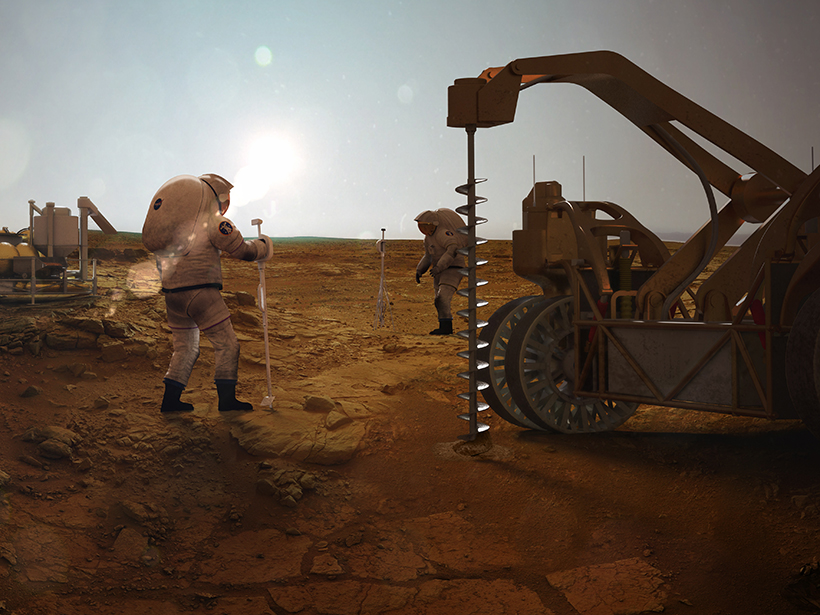
Artist's rendering of explorers on Mars extracting water from subsurface ice deposits.
Posted inOpinions

The Mars Anthropocene

by A. G. Fairén 4 January 20192 November 2021

The idea of sending people to Mars has captured the public imagination, but have we fully considered how our presence will alter the planet?
Posted inEditors' Highlights

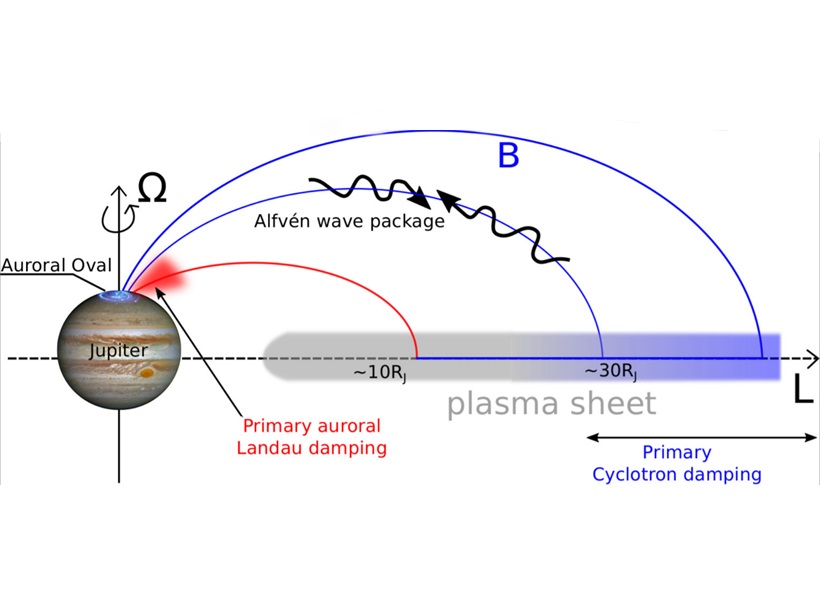
Jupiter’s Stressed Out Magnetosphere Causes Aurora and Heating

by Michael W. Liemohn 2 January 201918 January 2023

Force imbalance between Jupiter’s ionosphere and magnetosphere leads to wave generation to release this stress, but the waves also accelerate particles, causing aurora and heating.

Artist’s conception of Ultima Thule
Posted inNews

New Horizons Spacecraft to Reach Farthest Body in Solar System Yet

Jenessa Duncombe, Staff Writer by Jenessa Duncombe 28 December 20186 January 2023

The flyby of Ultima Thule on New Year’s Day will give us our first glimpse of a mysterious Kuiper Belt object.
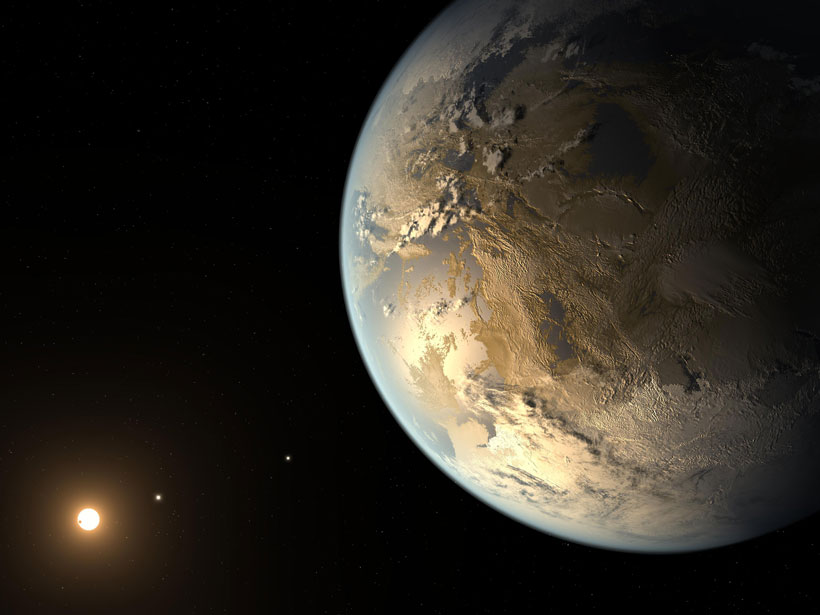
Artist’s rendering of the Earth-sized habitable zone planet Kepler-186f
Posted inNews

Exoplanet Strategy Promotes Big Missions, Individual Science

Kimberly M. S. Cartier, News Writing and Production Intern for Eos.org by Kimberly M. S. Cartier 21 December 201826 January 2022

Collaborative and interdisciplinary research will be key to realizing the missions’ full potential, according to the exoplanet strategy report.

Posted inEditors' Highlights

First Multi-Decade Simulation of the Earth’s Radiation Belt

by P. O’Brien 19 December 201827 March 2023

A new simulation of the Earth’s electron radiation belts captures large-scale variations over nearly three solar cycles, and replicates primary cyclical features and extreme behaviors.

Neptune crescent from Voyager 2
Posted inNews

Uranus and Neptune Should Be Top Priority, Says Report

Kimberly M. S. Cartier, News Writing and Production Intern for Eos.org by Kimberly M. S. Cartier 14 December 201817 November 2021

Voyager 2 visited the ice giants in the 1980s, the only craft ever to do so. Planetary scientists argue that new missions to each planet would also benefit heliophysics and exoplanet research.

Posts pagination

Newer posts 1 … 83 84 85 86 87 … 126 Older posts
Over a dark blue-green square appear the words Special Report: The State of the Science 1 Year On.

Features from AGU Publications

Research Spotlights

The Speedy Particles That Could Help Us Learn More About Uranus

18 June 202618 June 2026
Editors' Highlights

Where Methane is Emitted Matters for Global Burden

18 June 202616 June 2026
Editors' Vox

Small-Scale Indian Ocean Dynamics Underpin Marine Ecology and Climate

4 June 20263 June 2026
Eos logo at left; AGU logo at right

About Eos
ENGAGE
Awards
Contact

Advertise
Submit
Career Center
Sitemap

© 2026 American Geophysical Union. All rights reserved Powered by Newspack