• About
  • Sections
  • Topics
    • Climate
    • Earth Science
    • Oceans
    • Space & Planets
    • Health & Ecosystems
    • Culture & Policy
    • Education & Careers
    • Opinions
  • Projects
    • ENGAGE
    • Editors’ Highlights
    • Editors’ Vox
    • Eos en Español
    • Eos 简体中文版
    • Print Archive
  • Science Policy Tracker
  • Blogs
    • Research & Developments
    • The Landslide Blog
  • Newsletter
  • Submit to Eos
  • AGU.org
  • Career Center
  • Join AGU
  • Give to AGU
  • About
  • Sections
  • Topics
    • Climate
    • Earth Science
    • Oceans
    • Space & Planets
    • Health & Ecosystems
    • Culture & Policy
    • Education & Careers
    • Opinions
  • Projects
    • ENGAGE
    • Editors’ Highlights
    • Editors’ Vox
    • Eos en Español
    • Eos 简体中文版
    • Print Archive
  • Science Policy Tracker
  • Blogs
    • Research & Developments
    • The Landslide Blog
  • Newsletter
  • Submit to Eos
Skip to content
  • AGU.org
  • Career Center
  • Join AGU
  • Give to AGU
Eos

Eos

Science News by AGU

Support Eos
Sign Up for Newsletter
  • About
  • Sections
  • Topics
    • Climate
    • Earth Science
    • Oceans
    • Space & Planets
    • Health & Ecosystems
    • Culture & Policy
    • Education & Careers
    • Opinions
  • Projects
    • ENGAGE
    • Editors’ Highlights
    • Editors’ Vox
    • Eos en Español
    • Eos 简体中文版
    • Print Archive
  • Science Policy Tracker
  • Blogs
    • Research & Developments
    • The Landslide Blog
  • Newsletter
  • Submit to Eos

trees

Forest edge
Posted inNews

Forest Edges Are More, Not Less, Productive Than Interior Forest

Jenessa Duncombe, Staff Writer by Jenessa Duncombe 3 March 20223 March 2022

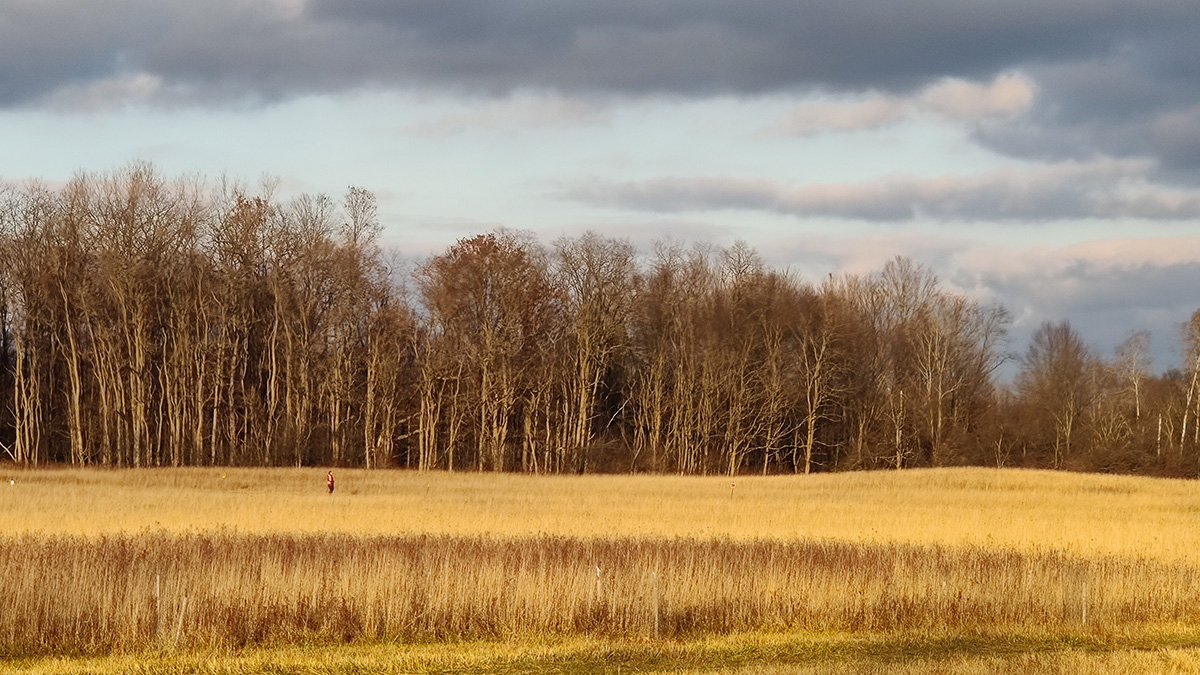
The boundaries of northeastern U.S. forests suck in more carbon dioxide than previously thought.

People walk around the urban park near the Osman Sagar reservoir in Hyderabad, India.
Posted inNews

Weighing the Benefits of Urban Greening

Rishika Pardikar, Science Writer by Rishika Pardikar 2 March 202217 April 2024

City communities may need to consider whether water absorption or cooling benefits are more important when designing urban greening.

Diagram showing how thousands of years of evolution links three characteristics: the maximum lengths of tree roots, how close these roots are to a groundwater source, and whether or not trees use groundwater.
Posted inEditors' Highlights

Evolution is More Important than Environment for Water Uptake

by Valeriy Ivanov 8 February 20223 May 2022

Despite conventional assumptions, a new study shows that evolutionary proximity of species defines root water uptake strategies, not their position in landscape or ambient environment.

Five people planting young trees in Houston field
Posted inNews

Native Super Trees Could Provide Climate Solutions to Houston

by Graycen Wheeler 15 December 20211 June 2023

A Houston nonprofit identified 14 native “super tree” species that are particularly promising for mitigating climate change and public health concerns.

Smog hangs over Salt Lake City, Utah.
Posted inNews

Tracking Pollution in the Breeze, with Trees

by Nathaniel Scharping 15 December 202127 March 2023

New research outlines how pine needles offer a simple, low-cost means of assessing particulate matter pollution.

Trees with a view of Italy’s Mount Etna behind.
Posted inNews

Supergreen Trees Can Signal Sites of Eruptions

by J. Besl 8 November 202126 April 2022

Tree core chemistry can explain what happened before Mount Etna’s 2002 eruption and suggests that trees could play a role in rebuilding past eruptions.

View of the Brahmaputra River with the sun low on the horizon
Posted inScience Updates

Tree Rings Reveal a 700-Year Record of Flooding in Bangladesh

by Mukund Palat Rao and Benjamin I. Cook 15 October 202115 October 2021

Trees tell of a wetter past along the Brahmaputra River and, combined with climate modeling, suggest heightened future flood risks in one of the world’s most densely populated areas.

Patch of forest close to the Tambopata River, Peru
Posted inNews

Forest Recovery in the Amazon Is a Slow Process

by Meghie Rodrigues 14 September 202129 April 2022

For the first time, a study analyzes Amazon forest loss and recovery at national and subnational levels. One finding shows that new plantings offset less than 10% of emissions associated with deforestation.

Facade of 1000 Trees building facing the river
Posted inNews

Sowing 1,000 Trees into Shanghai’s Urban Fabric

by Jackie Rocheleau 8 July 202114 April 2022

A new development blends riverside nature with commercial construction.

A person’s gloved hand holds part of an ice core in which air bubbles can be seen, with the Antarctic landscape in the background. The ice in the core is up to 24,000 years old.
Posted inAGU News

Cutting to the Core

Heather Goss, AGU Publisher by Heather Goss 24 June 202114 April 2022

In our July issue, Eos looks at the collection, study, and storage of cores—from sediment drilled up from the age of the dinosaurs to tree rings as big as a house.

Posts pagination

Newer posts 1 … 7 8 9 10 11 … 13 Older posts
A view of a bridge, with the New Orleans skyline visible in the distance between the bridge and the water. A purple tint, a teal curved line representing a river, and the text “#AGU25 coverage from Eos” overlie the photo.

Features from AGU Publications

Research Spotlights

An Ecosystem Never Forgets

19 December 202519 December 2025
Editors' Highlights

Frictional Properties of the Nankai Accretionary Prism

11 December 20259 December 2025
Editors' Vox

Hydrothermal Circulation and Its Impact on the Earth System

3 December 20253 December 2025
Eos logo at left; AGU logo at right

About Eos
ENGAGE
Awards
Contact

Advertise
Submit
Career Center
Sitemap

© 2025 American Geophysical Union. All rights reserved Powered by Newspack