• About
  • Special Reports
  • Topics
    • Climate
    • Earth Science
    • Oceans
    • Space & Planets
    • Health & Ecosystems
    • Culture & Policy
    • Education & Careers
    • Opinions
  • Projects
    • Postcards From the Field
    • ENGAGE
    • Editors’ Highlights
    • Editors’ Vox
    • Eos en Español
    • Eos 简体中文版
    • Print Archive: 2015–2025
  • Policy Tracker
  • Blogs
    • Research & Developments
    • The Landslide Blog
  • Newsletter
  • Submit to Eos
  • AGU.org
  • Career Center
  • Join AGU
  • Give to AGU
  • About
  • Special Reports
  • Topics
    • Climate
    • Earth Science
    • Oceans
    • Space & Planets
    • Health & Ecosystems
    • Culture & Policy
    • Education & Careers
    • Opinions
  • Projects
    • Postcards From the Field
    • ENGAGE
    • Editors’ Highlights
    • Editors’ Vox
    • Eos en Español
    • Eos 简体中文版
    • Print Archive: 2015–2025
  • Policy Tracker
  • Blogs
    • Research & Developments
    • The Landslide Blog
  • Newsletter
  • Submit to Eos
Skip to content
  • AGU.org
  • Career Center
  • Join AGU
  • Give to AGU
Eos

Eos

Science News by AGU

Support Eos
Sign Up for Newsletter
  • About
  • Special Reports
  • Topics
    • Climate
    • Earth Science
    • Oceans
    • Space & Planets
    • Health & Ecosystems
    • Culture & Policy
    • Education & Careers
    • Opinions
  • Projects
    • Postcards From the Field
    • ENGAGE
    • Editors’ Highlights
    • Editors’ Vox
    • Eos en Español
    • Eos 简体中文版
    • Print Archive: 2015–2025
  • Policy Tracker
  • Blogs
    • Research & Developments
    • The Landslide Blog
  • Newsletter
  • Submit to Eos

volcanoes

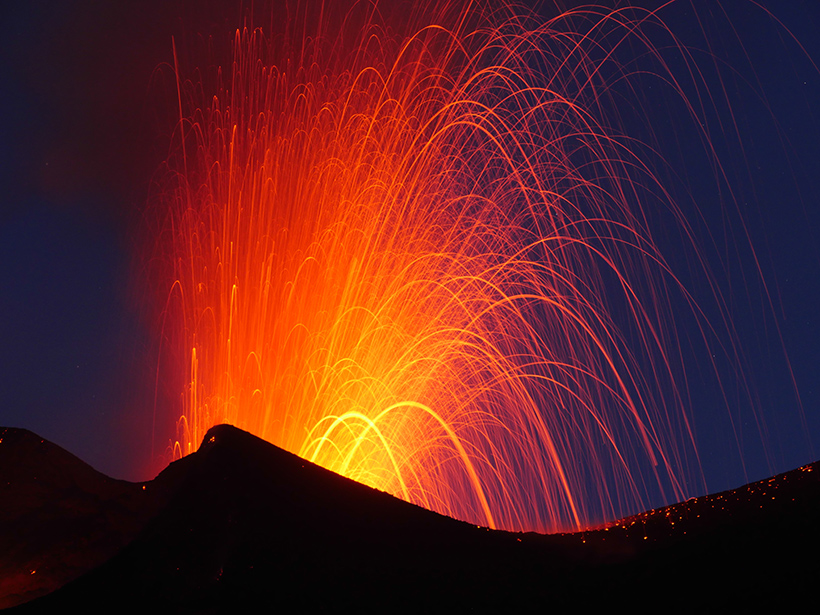
Lava spewing from the vent on the side of the Fogo volcano during the 2014 eruption.
Posted inNews

As Lava Flows, Refined Model Predicts a Path

by E. Deatrick 4 May 201627 October 2021

Simulations that melded volcano topography, satellite observations, and virtual lava accurately anticipated the destruction of villages 18 months ago by Cape Verde's Fogo volcano.

View of typical Santiaguito explosion as seen from the summit of Santa Maria.
Posted inScience Updates

Visiting the Volcano

by Jeffrey B. Johnson, B. Andrews and R. Escobar-Wolf 2 May 20165 June 2023

Workshops on Volcanoes; Santiaguito, Guatemala, 4–12 January 2016

A volcanic ash plume dwarfs the city of Puerto Montt in southern Chile just after the start of the eruption of Calbuco volcano on 22 April 2015.
Posted inResearch Spotlights

Volcanic Lightning Could Aid Hazard Response During Eruptions

Sarah Stanley, Science Writer by Sarah Stanley 15 April 201627 February 2024

Lightning and ash plume dynamics reflected eruption behavior and signaled the onset of fast-moving rock and gas flows during the 2015 eruption of Chile's Calbuco volcano.
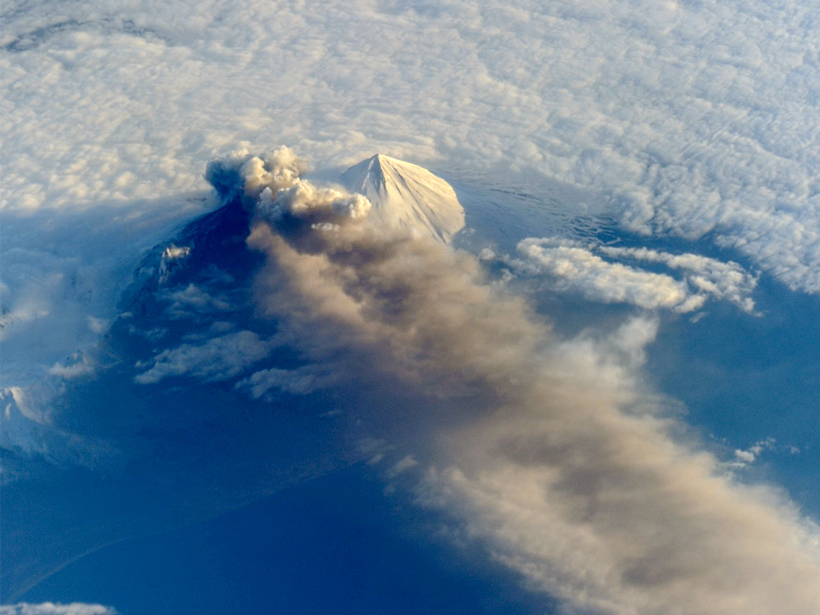
pavlof-volcano-eruption
Posted inNews

Sound Waves Help Scientists Track Volcanic Eruptions

JoAnna Wendel, freelance science writer and illustrator by JoAnna Wendel 5 April 20162 May 2022

When sound waves hit the ground, they shake seismometers like earthquake waves. Scientists can now use these sound-induced seismic waves to investigate volcanic activity.

Diverse chemosynthetic communities thrive on undersea asphalt volcanoes that form above natural oil reservoirs deep below the seabed.
Posted inNews

Asphalt Volcanoes Erupt in Slow Motion

by Lauren Lipuma 15 March 201625 March 2024

Natural asphalt seeps on the ocean floor provide a stable home for diverse marine life that sequesters greenhouse gases.
Posted inResearch Spotlights

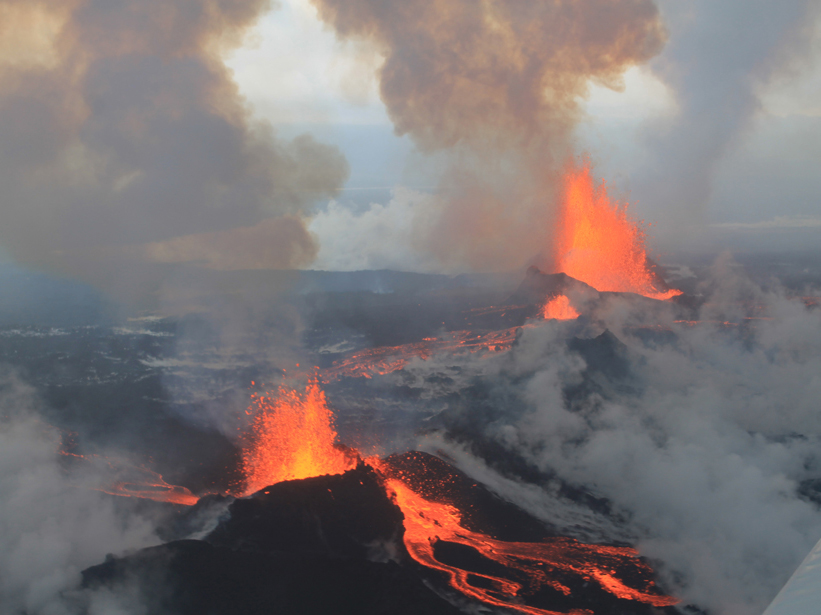
Icelandic Eruption Caused Record-Breaking Sulfur Dioxide Release

Sarah Stanley, Science Writer by Sarah Stanley 14 March 20168 October 2021

Satellite and ground-based data reveal sulfur dioxide flux, trace element release, and preeruption magma movement.
Posted inResearch Spotlights

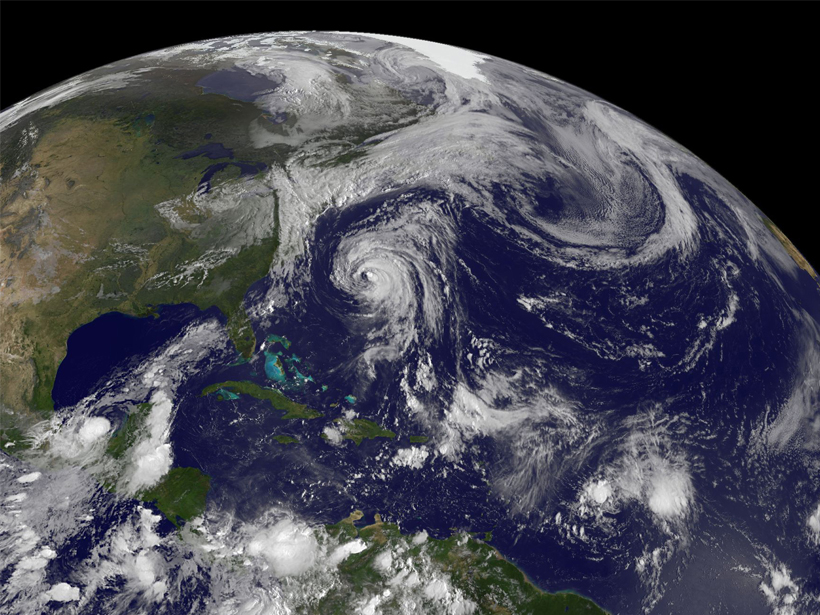
Fewer Tropical Cyclones Form After Volcanic Eruptions

Cody Sullivan by C. Sullivan 24 February 201617 November 2022

Volcanic eruptions aren't all bad—in some cases, they can lower the frequency of tropical cyclones in the North Atlantic by emitting sulfate aerosols.
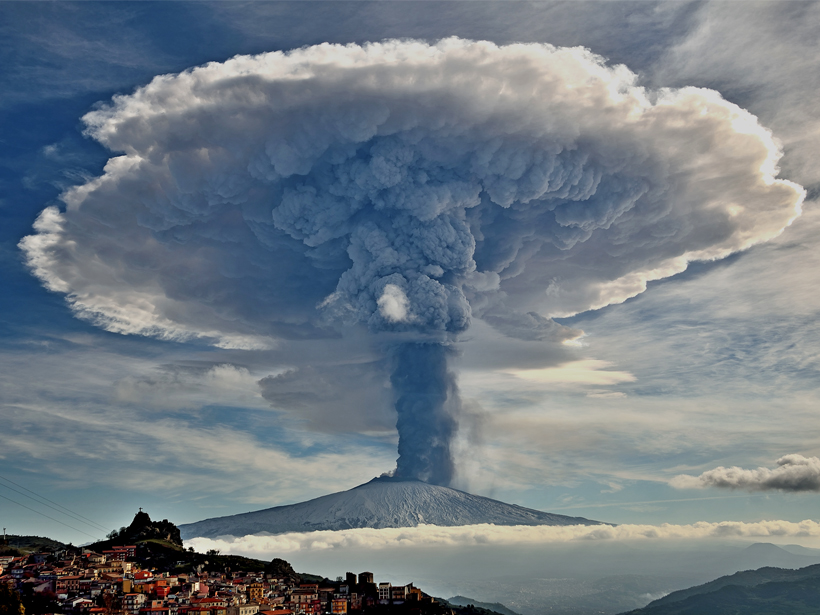
Posted inResearch Spotlights

Can We Predict How Volcanic Ash Disperses After an Eruption?

by W. Yan 23 February 201615 March 2022

Researchers investigate what factors influence how particles from a plume spread following a volcanic eruption.

Posted inResearch Spotlights

Massive Carbon Dioxide Stores Beneath Mammoth Mountain

Sarah Stanley, Science Writer by Sarah Stanley 2 February 201611 May 2022

Gas in rocky pores beneath the surface of California's Mammoth Mountain could fuel dangerous carbon dioxide emissions for the next 28 to 1100 years.
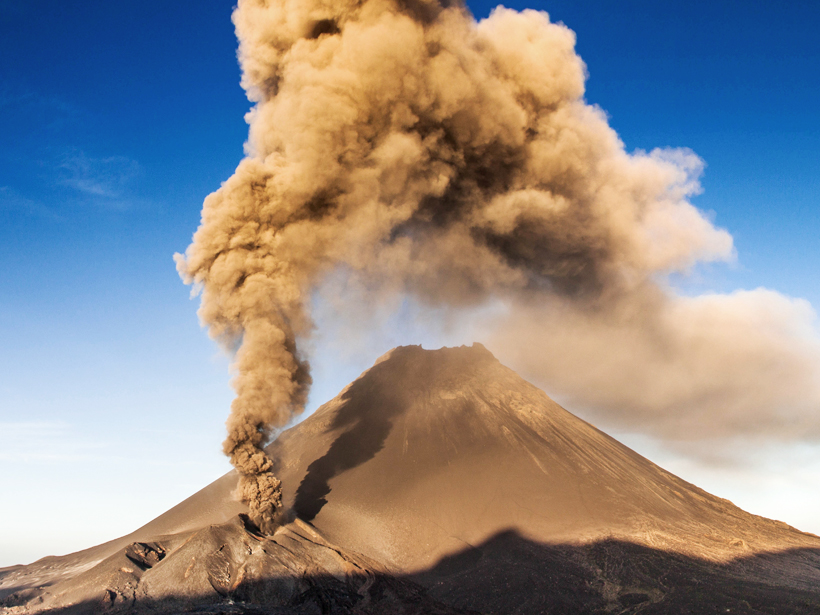
Posted inResearch Spotlights

Radar Technique Shows Magma Flow in 2014 Cape Verde Eruption

Sarah Stanley, Science Writer by Sarah Stanley 1 February 201612 December 2025

The European Space Agency's Sentinel-1 satellite captures volcanic surface changes that reveal the flow below.

Posts pagination

Newer posts 1 … 37 38 39 40 41 … 43 Older posts
Over a dark blue-green square appear the words Special Report: The State of the Science 1 Year On.

Features from AGU Publications

Research Spotlights

Rapid-Scan Satellite Data Offer Clues to Typhoon Intensity

17 November 202617 November 2026
Editors' Highlights

Rethinking Where Rivers Begin

18 November 202616 November 2026
Editors' Vox

Bringing Python Solutions to Earth Science Challenges

19 November 202619 November 2026
Eos logo at left; AGU logo at right

About Eos
ENGAGE
Awards
Contact

Advertise
Submit
Career Center
Sitemap

© 2026 American Geophysical Union. All rights reserved Powered by Newspack