• About
  • Special Reports
  • Topics
    • Climate
    • Earth Science
    • Oceans
    • Space & Planets
    • Health & Ecosystems
    • Culture & Policy
    • Education & Careers
    • Opinions
  • Projects
    • Postcards From the Field
    • ENGAGE
    • Editors’ Highlights
    • Editors’ Vox
    • Eos en Español
    • Eos 简体中文版
    • Print Archive: 2015–2025
  • Policy Tracker
  • Blogs
    • Research & Developments
    • The Landslide Blog
  • Newsletter
  • Submit to Eos
  • AGU.org
  • Career Center
  • Join AGU
  • Give to AGU
  • About
  • Special Reports
  • Topics
    • Climate
    • Earth Science
    • Oceans
    • Space & Planets
    • Health & Ecosystems
    • Culture & Policy
    • Education & Careers
    • Opinions
  • Projects
    • Postcards From the Field
    • ENGAGE
    • Editors’ Highlights
    • Editors’ Vox
    • Eos en Español
    • Eos 简体中文版
    • Print Archive: 2015–2025
  • Policy Tracker
  • Blogs
    • Research & Developments
    • The Landslide Blog
  • Newsletter
  • Submit to Eos
Skip to content
  • AGU.org
  • Career Center
  • Join AGU
  • Give to AGU
Eos

Eos

Science News by AGU

Support Eos
Sign Up for Newsletter
  • About
  • Special Reports
  • Topics
    • Climate
    • Earth Science
    • Oceans
    • Space & Planets
    • Health & Ecosystems
    • Culture & Policy
    • Education & Careers
    • Opinions
  • Projects
    • Postcards From the Field
    • ENGAGE
    • Editors’ Highlights
    • Editors’ Vox
    • Eos en Español
    • Eos 简体中文版
    • Print Archive: 2015–2025
  • Policy Tracker
  • Blogs
    • Research & Developments
    • The Landslide Blog
  • Newsletter
  • Submit to Eos

animals

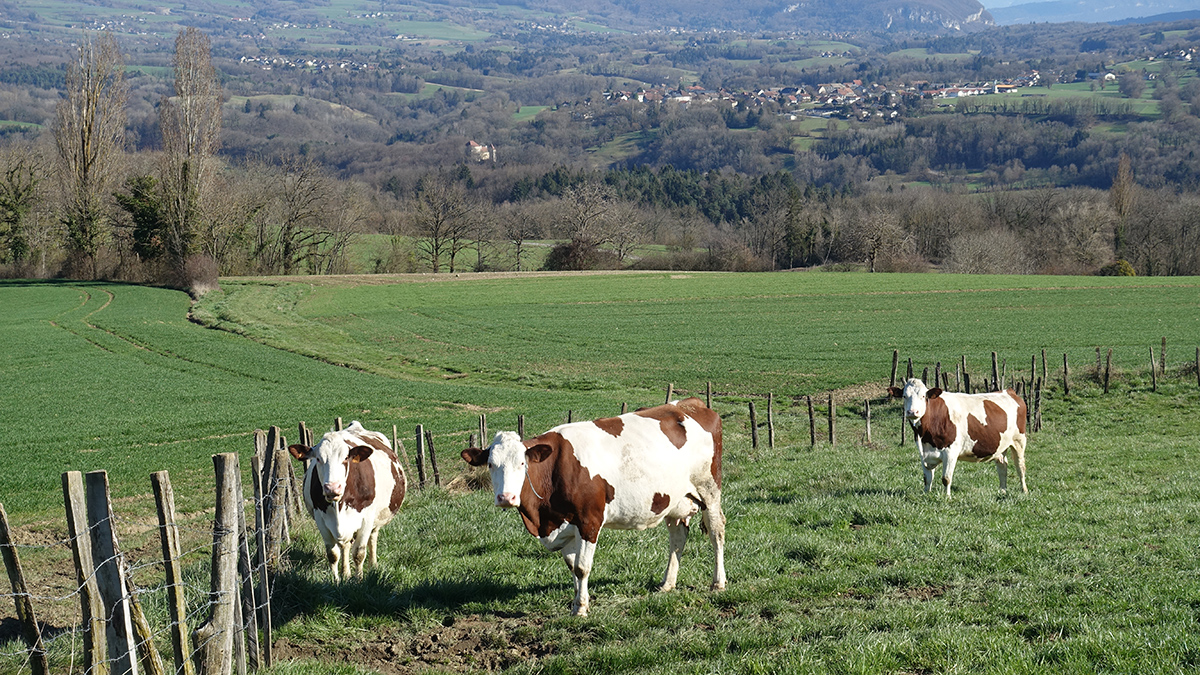
Brown and white cows stand in a pasture.
Posted inNews

Cheese in the Time of Industrial Farming and Climate Change

Katherine Kornei, Science Writer by Katherine Kornei 23 May 202519 August 2025

Grasslands and cows’ diets are shifting as the climate warms, but an agricultural experiment in France reveals the importance of providing cows with pasture.

Pilares de tierra marrón que sobresalen de una llanura cubierta de hierba con árboles y arbustos.
Posted inNews

Investigadores cuantifican el impacto de los animales en la transformación de la Tierra

by Carolyn Wilke 21 April 202521 April 2025

Los animales salvajes utilizan 76,000 gigajulios de energía—el equivalente a cientos de miles de monzones o inundaciones—moldeando los ecosistemas terrestres y de agua dulce de nuestro planeta.
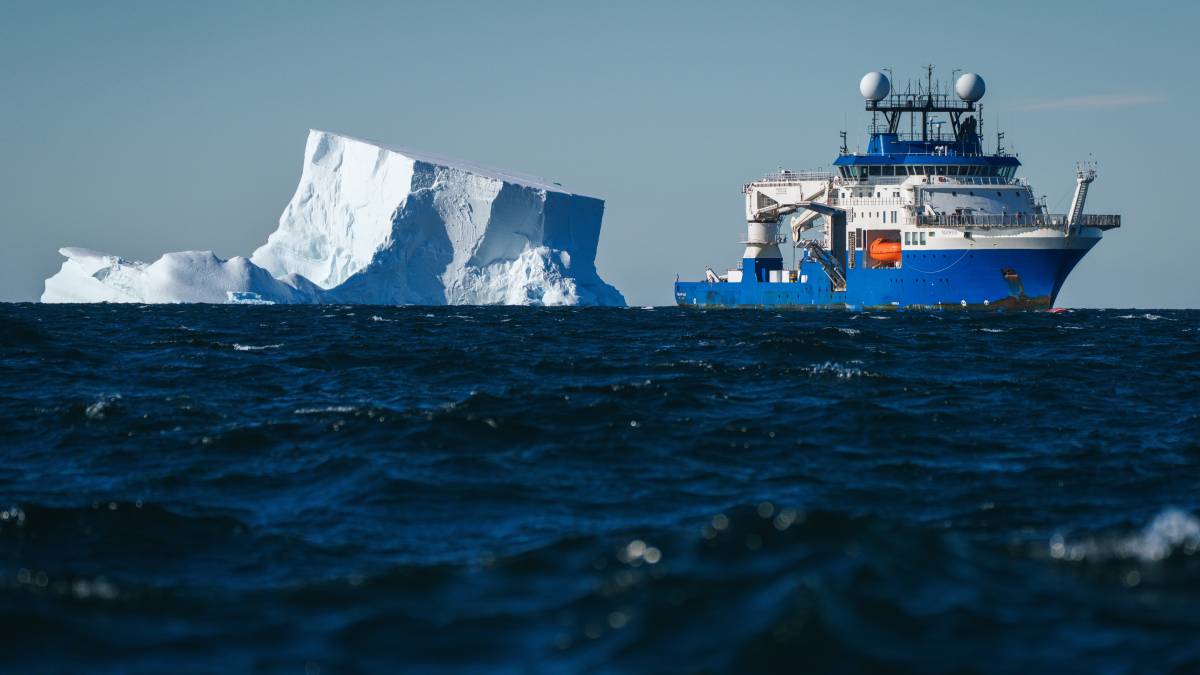
View from afar of a blue and white research vessel next to an iceberg.
Posted inNews

Thriving Antarctic Ecosystem Revealed by a Departing Iceberg

Kimberly M. S. Cartier, News Writing and Production Intern for Eos.org by Kimberly M. S. Cartier 31 March 202523 June 2025

A quick-calving iceberg gave scientists a rare glimpse into what hides beneath Antarctic ice.

Brown dirt pillars sticking up from a grassy plain with trees and bushes.
Posted inNews

Researchers Put a Number on Animals’ Earth-Shaping Effects

by Carolyn Wilke 27 March 202521 April 2025

Wild animals expend 76,000 gigajoules of energy—the equivalent of hundreds of thousands of monsoons or floods—shaping our planet’s terrestrial and freshwater ecosystems.

Earthmoving machinery works on a dusty portion at kilometer 667 of Highway BR-319 in the state of Amazonas.
Posted inNews

Road Development May Put Habitats at Risk

by Meghie Rodrigues 24 January 202528 January 2025

New research links road construction with increased urbanization and more fragmented species ranges.

A porcupine sits outside a den opening.
Posted inNews

A New App Tracks Burrowing Animals That Weaken Levees

by Carly Kay 11 December 202411 December 2024

Researchers are calling on amateur scientists to help protect flood barriers in their communities.

Aerial view of a group of caribou trotting across snowy ground
Posted inNews

Snowmelt Sends Caribou Packing

by K. R. Callaway 10 December 202410 December 2024

Researchers compared caribou tracking data with satellite observations to learn whether snowpack conditions trigger the animals’ arduous annual migration.

Scientists stand atop Arctic ice.
Posted inFeatures

The Arctic’s Uncertain Future

by Grace van Deelen 15 November 202425 September 2025

Over the next century, the Arctic will change and look much different than it does today. Just how different is still unknown.

Eos logo with line art microphone and arced lines representing sound
Posted inNews

Sailing Spectators’ Sounds Could Harm Marine Creatures

by Emily Dieckman 18 October 202418 October 2024

Research delves into noise pollution caused by spectator boats at sailing events such as the America’s Cup.

Aerial image of a small stingray in a wide area of open water
Posted inNews

Hungry Stingrays Shift Serious Amounts of Sediment

Adityarup Chakravorty, freelance science writer by Adityarup Chakravorty 14 August 202414 August 2024

While digging for food on estuary bottoms, rays push around literally tons of sediment, changing their habitat in profound ways.

Posts pagination

Newer posts 1 2 3 4 … 18 Older posts
Over a dark blue-green square appear the words Special Report: The State of the Science 1 Year On.

Features from AGU Publications

Research Spotlights

What Makes Mars’s Magnetotail Flap?

20 April 202620 April 2026
Editors' Highlights

How Space Plasma Can Bend the Laser of Gravitational Wave Detectors

24 April 202623 April 2026
Editors' Vox

Hydrothermal Heat Flow as a Window into Subsurface Arc Magmas

28 April 202628 April 2026
Eos logo at left; AGU logo at right

About Eos
ENGAGE
Awards
Contact

Advertise
Submit
Career Center
Sitemap

© 2026 American Geophysical Union. All rights reserved Powered by Newspack