
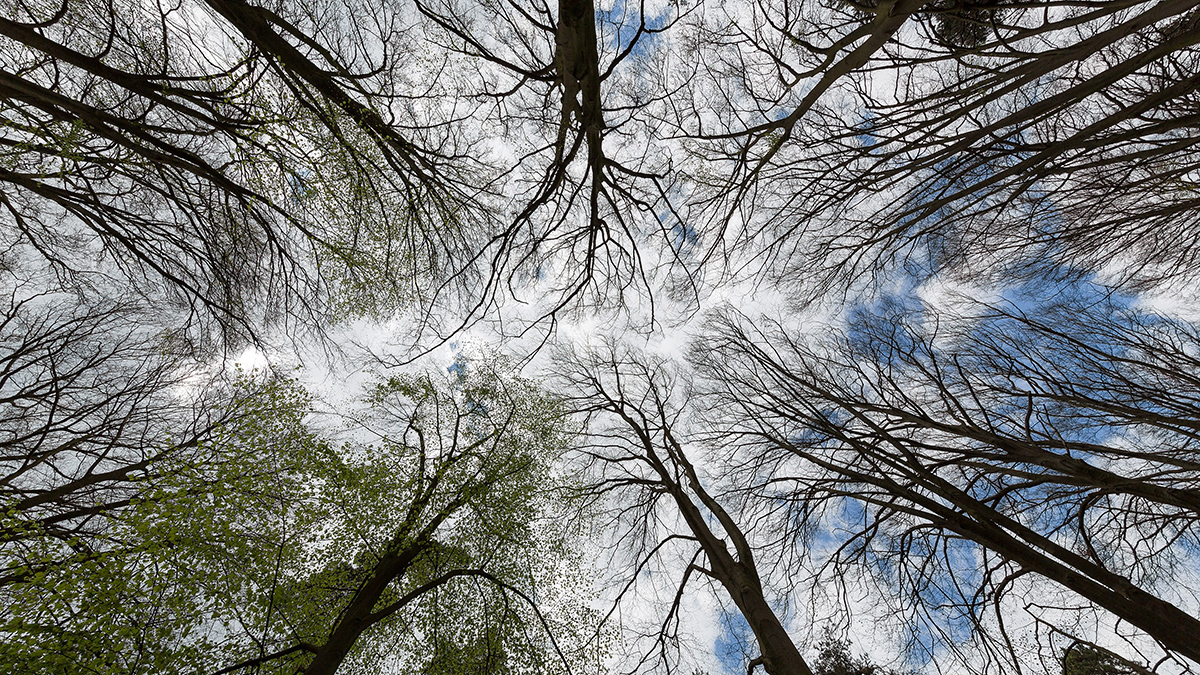
When governments, nongovernmental organizations, or corporations clear forests, they often commit to net zero deforestation goals, meaning that they will plant an equivalent area of forest elsewhere to offset the effects of what they cut.
But a new study published in Nature Ecology and Evolution suggests that larger forests absorb carbon more efficiently than an equivalent area of smaller forests. The new findings reveal previously unknown climate impacts even when net zero deforestation is upheld, suggesting the need for updated deforestation policies.
Yibiao Zou, an ecologist at the Swiss Federal Institute for Forest, Snow and Landscape Research WSL and ETH Zurich, traces his interest in forest ecosystems to childhood, when he learned that habitat fragmentation had wiped out tiger populations near his home in southeastern China. As he later studied ecology, he learned that breaking up forests into smaller, isolated patches is a common occurrence worldwide with widespread ecological consequences, such as reduced biodiversity and changes in forest microclimates that affect carbon storage. But Zou and his colleagues became interested in whether fragmentation also affects a forest’s productivity, which is a measure of how fast it pulls carbon out of the atmosphere.
To answer this question, the researchers used satellite data on tree cover to locate forests, first focusing on the United States because of the high-resolution imagery available. They used existing methods to estimate productivity “based on how green the picture looks from space,” Zou said, a measurement that indicates how actively trees are photosynthesizing and how much carbon dioxide the forest is absorbing.
“A 38% difference in carbon is shocking.”
Across 17 million forest patches in the United States, the analysis showed that a hectare within a large continuous forest (of about 100,000 square kilometers, or 10 million hectares) was 38% more productive on average than an isolated hectare in a similar environment. “This study shows that if you keep the area the same, but you make the forest more fragmented, its function would be highly affected,” Zou said. While he and the team anticipated that productivity would be higher in larger forests, they were surprised by how much. “We didn’t expect that,” he said.
“A 38% difference in carbon is shocking,” agreed Becky Chaplin-Kramer, a landscape ecologist at the World Wildlife Fund who wasn’t involved in the study. “That’s really compelling.”
The researchers calculated that this fragmentation is costing the United States roughly 160 million metric tons of carbon absorption per year, which is around 14% less than if the same forest area were intact.
Although the resolution of satellite data isn’t as high in other parts of the world, the researchers extended their research to other continents. Forest size in Europe did not significantly affect productivity, possibly because there are few large forests left. But the relationship found in the United States was common on all other inhabited continents and was particularly strong in tropical regions.
Edge Effects
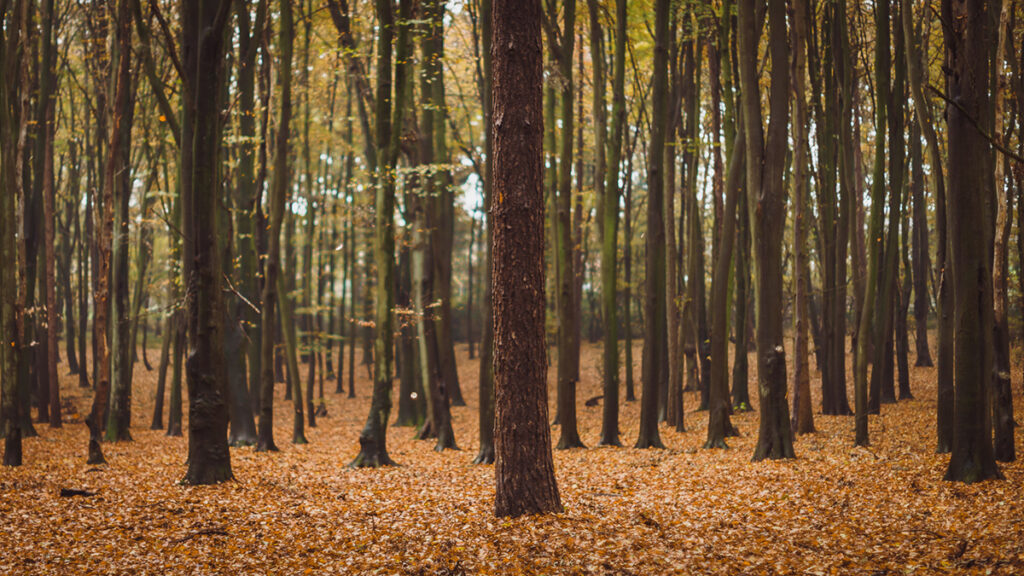
The researchers attribute the drop in productivity in smaller forests to a much higher ratio of edges where the forest meets other ecosystems. Past research suggests that trees at forest edges store less carbon, possibly because they are exposed to more stress from wind, temperature shifts, and direct sunlight. These “edge effects” on carbon storage are also more pronounced in tropical forests, consistent with what the scientists found for productivity.
“We need to know where to regrow forest so it will be most efficient in terms of restoring connectivity to boost biodiversity and carbon sequestration.”
Chaplin-Kramer agreed that edge effects are a likely explanation for the difference in productivity between trees in large and small forests but noted that edges might also simply include fewer trees with more mixed types of lands. She said that the conservation approach would depend on whether the cause is fewer trees or lower productivity of individual trees.
“These questions of mechanisms are really fundamental to being able to move forward and making the science actionable,” she said.
Zou plans to work on practical applications for the findings next by building a tool for policymakers that allows for more strategic reforestation, rather than simply replacing a lost hectare of forest with one somewhere else. “We need to know where to regrow forest so it will be most efficient in terms of restoring connectivity to boost biodiversity and carbon sequestration,” he said. “I am trying to make the tools to identify the prioritized regions to conserve forests and restore forests.”
—Andrew Chapman (@andrewgchapman.bsky.social), Science Writer