
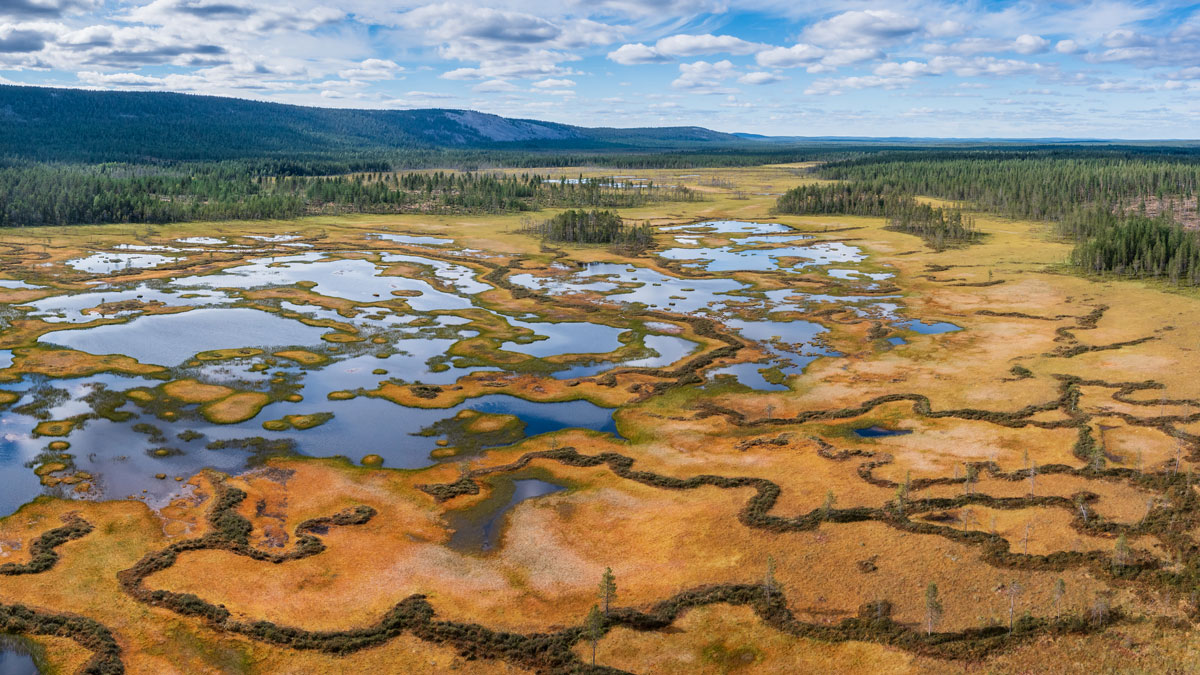
Drained peatlands in Finland can become carbon sinks within just 15 years of restoration, suggests a study published in Restoration Ecology. The findings are a stark contrast to another recent publication that suggests the switch from source to sink can take hundreds of years.
Finland will submit a biodiversity restoration plan to the European Commission this September, and what to do about the country’s 5 million hectares of drained peatland will likely be a hot topic. Teemu Tahvanainen, the author of the new study and a plant ecologist at the University of Eastern Finland (Itä-Suomen Yliopisto), said the upcoming deadline motivated him to add to the conversation.
Moreover, if the country is to one day achieve carbon neutrality, it “cannot neglect those areas,” said peatland ecologist Anke Günther from Universität Rostock, in Germany, who was not involved in the new paper.
Like a Forest with No Air
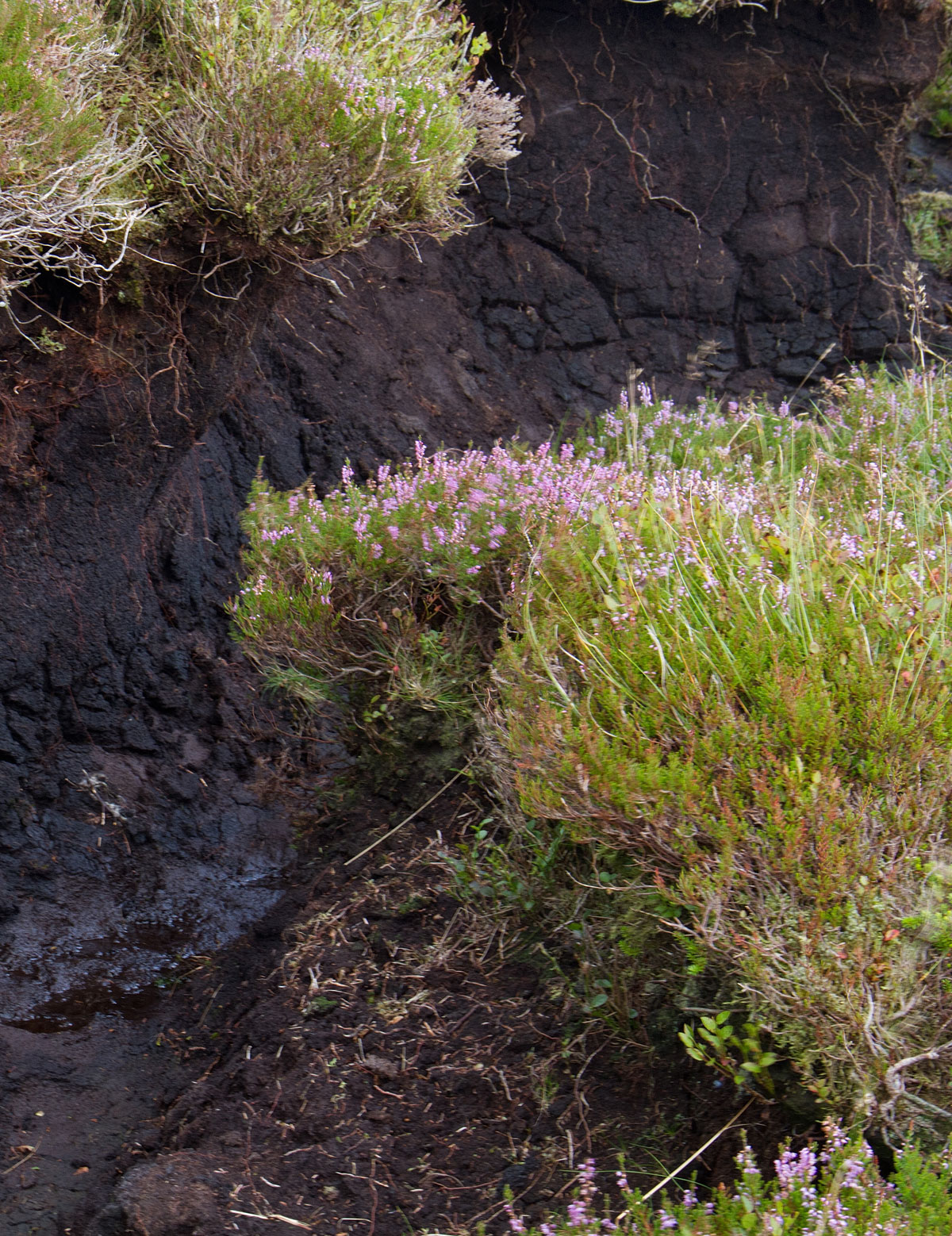
To understand why pristine peatlands are powerful carbon sinks, imagine a forest without any air between the trees, said Günther. That’s how densely the mosses that make up peat are packed together.
To understand why pristine peatlands are powerful carbon sinks, imagine a forest without any air between the trees, said Günther. That’s how densely the mosses that make up peat are packed together. In some places, peatlands can cover millions of hectares and be meters deep. All told, they contain massive amounts of plant matter and therefore massive amounts of carbon—about a third of the total carbon found on Earth.
Peatlands are waterlogged, which largely prevents the peat from decomposing, but also limits how well trees and other plants can grow. Forestry and agricultural companies, governments, and private landowners often dig trenches to drain off some of the water, making the land available for other uses. But draining peat exposes it to oxygen, which then allows microbes to break it down, releasing carbon dioxide.
Rewetting stops these carbon emissions, but it can also cause others, explained soil scientist Jens Leifeld from the Swiss federal research institute Agroscope, who was not involved in the new study. For example, any trees growing in a drained peatland will die upon rewetting, and their deaths will release carbon dioxide if the trees aren’t harvested. Moreover, rewetting shifts the peatland’s microbial population from aerobic microbes to anaerobic, increasing methane emissions. Studies have produced conflicting answers when asking how restoring peatlands affects carbon emissions. “There was no agreed opinion,” Leifeld said.
Increasing the Resolution
Tahvanainen modeled peatland restoration with greater temporal resolution than in previous studies. Rather than assume that parameters such as methane emissions and decomposition of forest litter will remain the same after rewetting, he predicted how these parameters will vary in the years and decades following.
His take-home message: Restoration can cool the climate in as little as a couple of decades. “I’m saying that it can, which sounds a little bit ambiguous on purpose,” he added. There are many variables his approach can’t account for, he said, such as how climate change will progress and the state of a peatland prior to restoration.
“The results make sense to me in a way that other studies didn’t always.”
“The results make sense to me in a way that other studies didn’t always,” said Günther. It seemed implausible to her that the carbon sequestered through a bit of tree growth would compensate for the vast amount of carbon released from draining a peatland.
But rewetting also has consequences the model doesn’t consider, Leifeld pointed out. For example, rewetting changes the color of the landscape in the winter, taking it from the dark color of a forest to the white color of open snow. Snow reflects more sunlight than trees, which cools Earth.
Only field studies can truly answer the question of how rewetting peatlands will affect their greenhouse gas emissions, said forest ecologist Paavo Ojanen from Natural Resources Institute Finland. These studies are ongoing, but they require following peatlands for years. Until they’re complete, “we don’t have the real measurements,” he said.
For now, Tahvanainen said his work adds nuance to studies reporting that peatland restoration won’t bring climate mitigation in the next hundred years. That’s “just way too strongly put,” he said.
—Saima May Sidik (@saimamay.bsky.social), Science Writer