
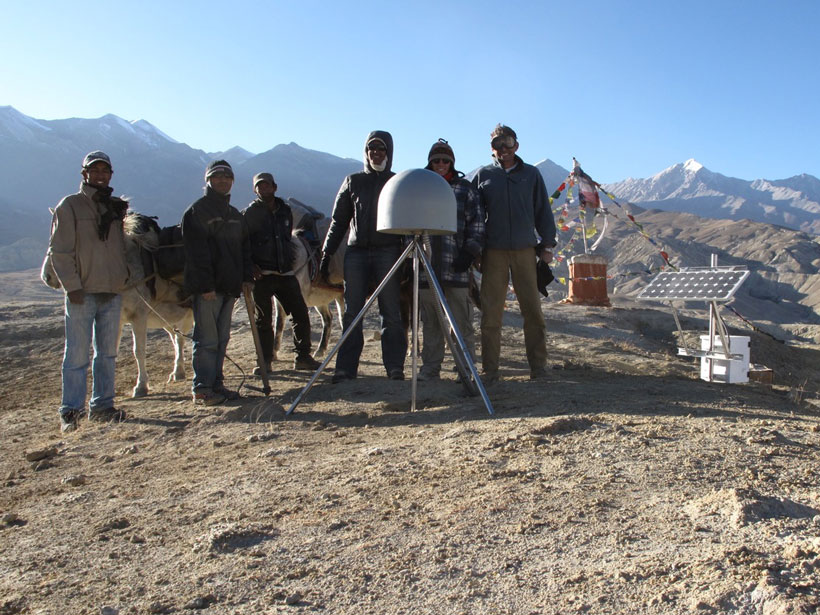

Researcher has the “coolest job” studying solid Earth and climate.
Features

Posted inFeatures
Choose Your Own Geoscience Adventure
There’s no one way to be a scientist. Read on to meet a group of professionals who discovered that their route wasn’t limited to the well-lit avenue.
Posted inFeatures
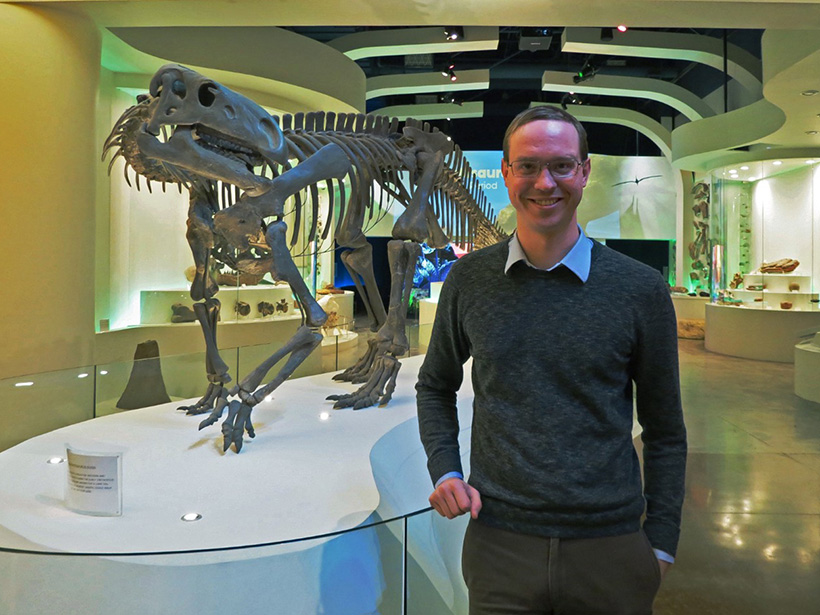
Morgan Rehnberg: The Making of a Museum Chief

From Cassini to #scicomm to showcasing science.

Posted inFeatures
Ten Years on from the Quake That Shook the Nation’s Capital
A decade of study into the Virginia earthquake that damaged D.C. and reverberated up and down the Atlantic coast in 2011 has shed light on rare, but risk-laden, seismicity in eastern North America.

Posted inFeatures
Don’t Call It a Supervolcano

Living in Geologic Time: Scientists dismantle the myths of Yellowstone.
Posted inFeatures
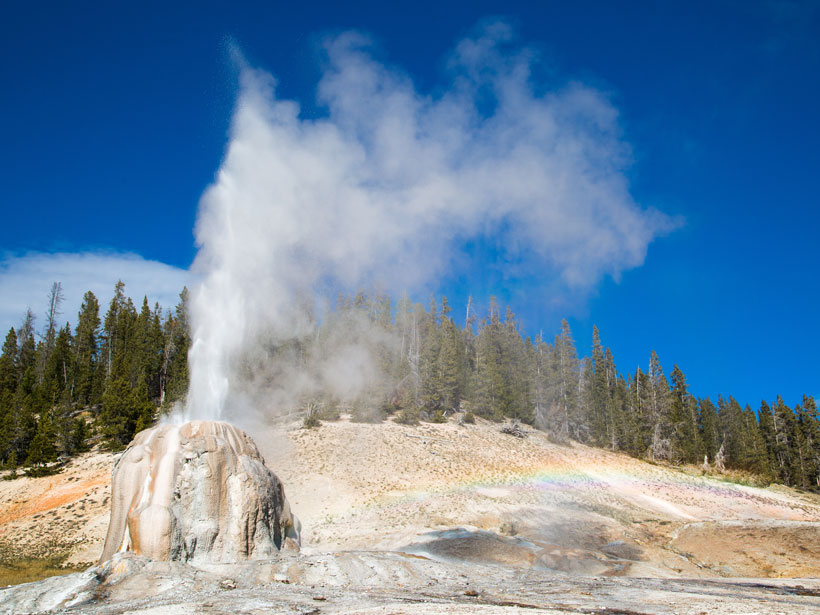
Why Study Geysers?
Aside from captivating our senses, geysers have much to tell us about subsurface fluids, climate change effects, and the occurrence and limits of life on Earth and elsewhere in the solar system.
Posted inFeatures
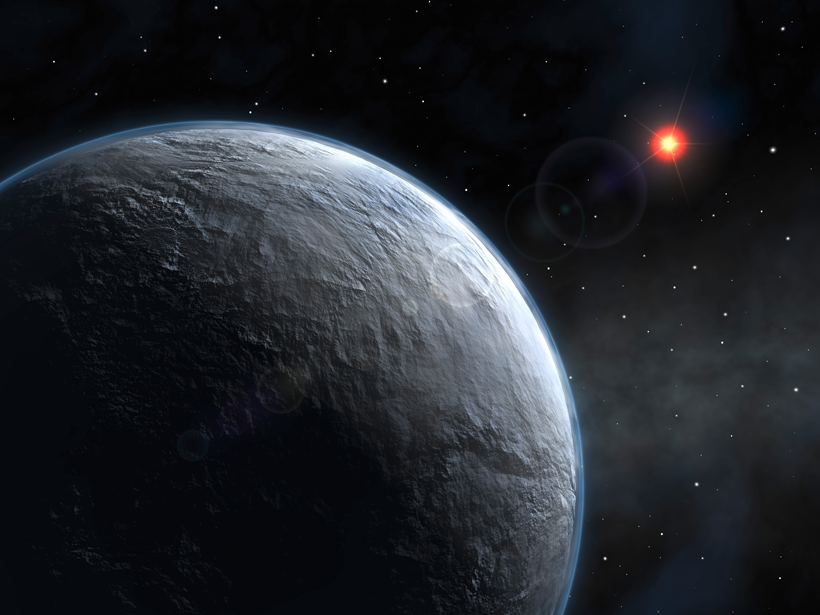
Exoplanets in the Shadows

The bright clutter of individual discoveries can overshadow some fascinating research, from necroplanetology to rogue planets to the intimacy of alphanumeric nomenclature.

Posted inFeatures
Overture to Exoplanets
The curtain is about to rise on the James Webb Space Telescope. Let’s see what’s in store for its opening act.

Posted inFeatures
The Forecast for Exoplanets is Cloudy but Bright
Clouds make climate modeling on Earth difficult. Identifying—and even defining—atmospheric phenomena on other planets is the next big exoplanet challenge.

Posted inFeatures
Hear Ye! Hear Ye! A Declaration of the Rights of the Moon
What are the ethics of mining the Moon? Could humans cause environmental damage to Earth’s only satellite? And could a new Declaration of the Rights of the Moon be one way of mitigating those impacts?