

The current definitions of sediment transport capability don't match up with observations of actual geomorphic systems.
Research Spotlights
Research spotlights are plain-language summaries of recent articles published in AGU’s suite of 24 journals.
Posted inResearch Spotlights
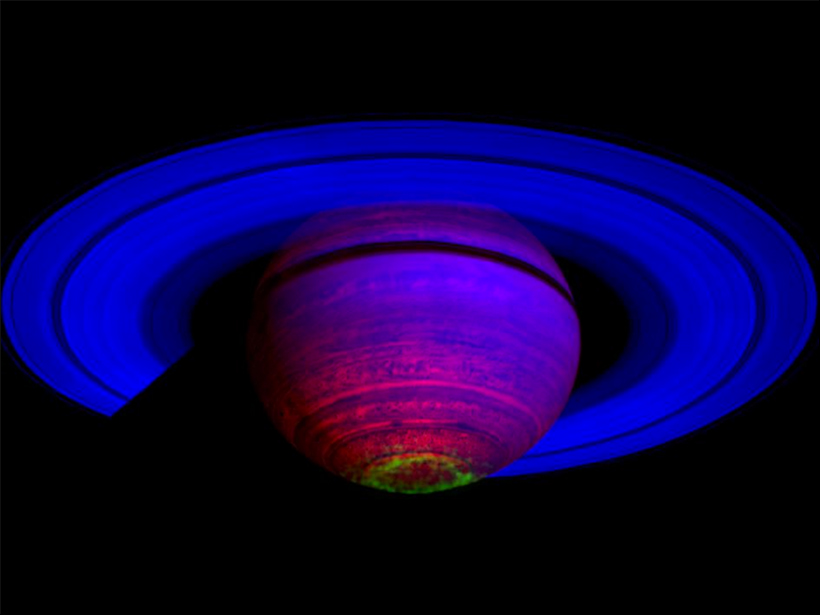
Cassini Observes First Evidence of Saturn's Ionospheric Outflow
Evidence shows the ionosphere may contribute as much mass as the moon Enceladus.
Posted inResearch Spotlights
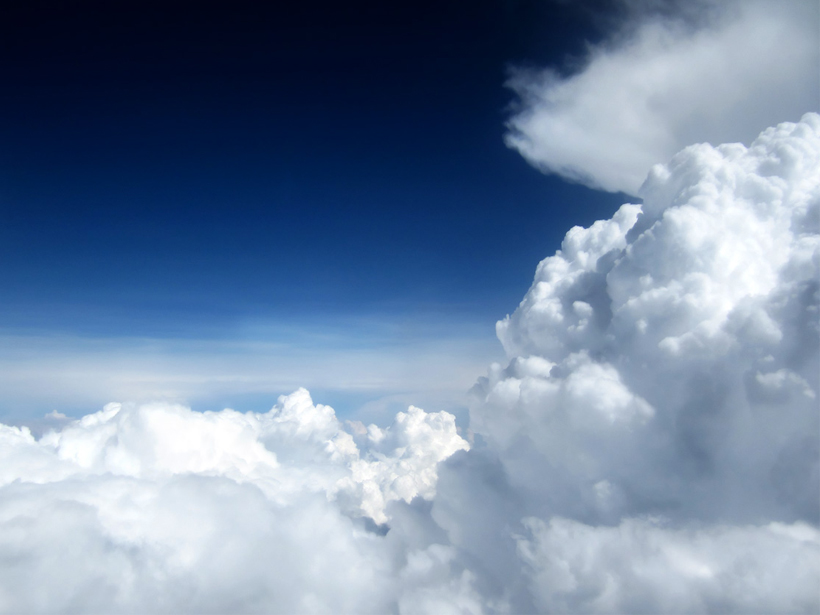
The Forgotten Water Vapor at High Altitudes

Scientists find that estimations of high-altitude atmospheric water, critical for the greenhouse effect, are not as accurate as previously thought.
Posted inResearch Spotlights
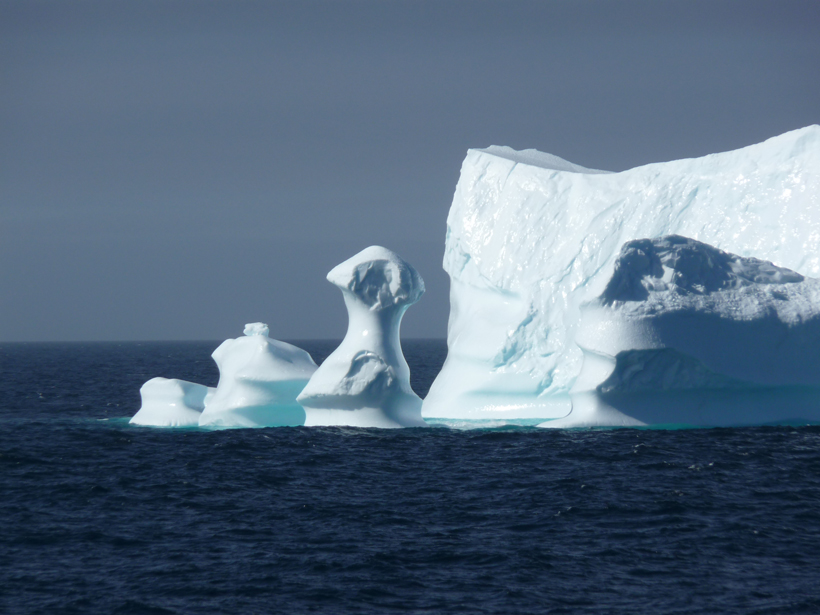
Building New Ways to Think About Arctic Freshwater
A new literature review summarizes the complex role of freshwater in the Arctic and its impact on climate and biogeochemical systems as a whole.
Posted inResearch Spotlights
Tsunami Forecast System Could Provide Early Warnings in Japan
New simulations show that an array of sensors mounted to the ocean floor can capture tsunami size and wavelength.

Posted inResearch Spotlights
Plate Displacement Rate Offers Insight into 2011 Tohoku Quake
For the first time, scientists use GPS to measure the displacement rate of the subducting Pacific Plate near the source of disastrous shaking in 2011.

Posted inResearch Spotlights
Details of Gas Flow in Wetland Plant Roots Unearthed
Scientists track the flow of trace gases through wetland root systems to understand the role of plants in biogenic gas fluxes.
Posted inResearch Spotlights
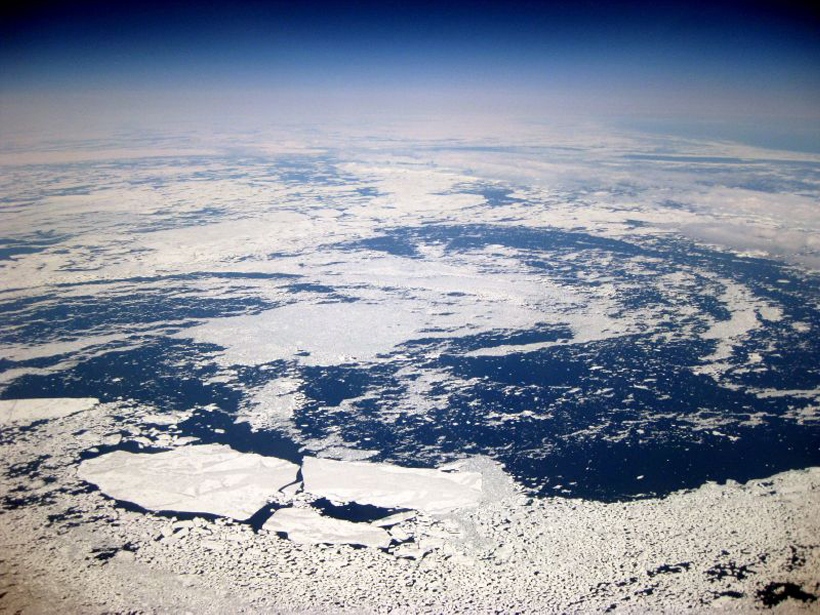
Atlantic Sea Ice Could Grow in the Next Decade
Changing ocean circulation in the North Atlantic could lead to winter sea ice coverage remaining steady and even growing in select regions.

Posted inResearch Spotlights
Conservation Farming Shown to Protect Carbon in Soil
A closer look at cultivated land informs actions to protect the vitality of our soil.
Posted inResearch Spotlights
Methyl Chloride Can Track Tropical Air in the Lower Stratosphere

A new study shows that trace gas samples collected aboard commercial airliners can be used to determine the origin and dynamics of atmospheric air masses.