• About
  • Special Reports
  • Topics
    • Climate
    • Earth Science
    • Oceans
    • Space & Planets
    • Health & Ecosystems
    • Culture & Policy
    • Education & Careers
    • Opinions
  • Projects
    • Postcards From the Field
    • ENGAGE
    • Editors’ Highlights
    • Editors’ Vox
    • Eos en Español
    • Eos 简体中文版
    • Print Archive: 2015–2025
  • Policy Tracker
  • Blogs
    • Research & Developments
    • The Landslide Blog
  • Newsletter
  • Submit to Eos
  • AGU.org
  • Career Center
  • Join AGU
  • Give to AGU
  • About
  • Special Reports
  • Topics
    • Climate
    • Earth Science
    • Oceans
    • Space & Planets
    • Health & Ecosystems
    • Culture & Policy
    • Education & Careers
    • Opinions
  • Projects
    • Postcards From the Field
    • ENGAGE
    • Editors’ Highlights
    • Editors’ Vox
    • Eos en Español
    • Eos 简体中文版
    • Print Archive: 2015–2025
  • Policy Tracker
  • Blogs
    • Research & Developments
    • The Landslide Blog
  • Newsletter
  • Submit to Eos
Skip to content
  • AGU.org
  • Career Center
  • Join AGU
  • Give to AGU
Eos

Eos

Science News by AGU

Support Eos
Sign Up for Newsletter
  • About
  • Special Reports
  • Topics
    • Climate
    • Earth Science
    • Oceans
    • Space & Planets
    • Health & Ecosystems
    • Culture & Policy
    • Education & Careers
    • Opinions
  • Projects
    • Postcards From the Field
    • ENGAGE
    • Editors’ Highlights
    • Editors’ Vox
    • Eos en Español
    • Eos 简体中文版
    • Print Archive: 2015–2025
  • Policy Tracker
  • Blogs
    • Research & Developments
    • The Landslide Blog
  • Newsletter
  • Submit to Eos

Editors’ Highlights

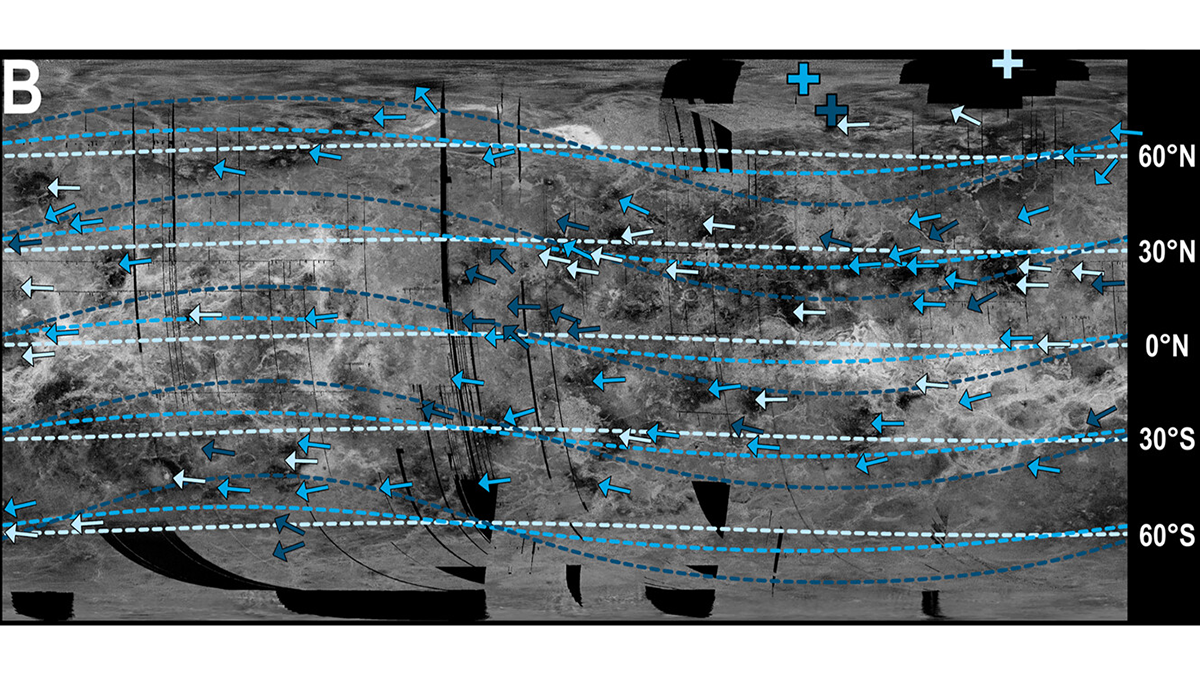
Map from the study.
Posted inEditors' Highlights

300 Million Years of Polar Wander: Slowly but Surely

by Thorsten W. Becker 16 April 202516 April 2025

A reanalysis of paleomagnetic poles provides tighter bounds on the style and rate of motions of our whole planet with respect to its rotation axis.

Photo of a Martian crater.
Posted inEditors' Highlights

Geophysics Sheds Light on Early Martian Water and Habitability

by Michael M. Sori 15 April 202511 April 2025

A new study uses inversions of orbital gravity and magnetic field data to argue for the presence of ancient, long-lasting hydrothermal systems on Mars.

Maps of the study region.
Posted inEditors' Highlights

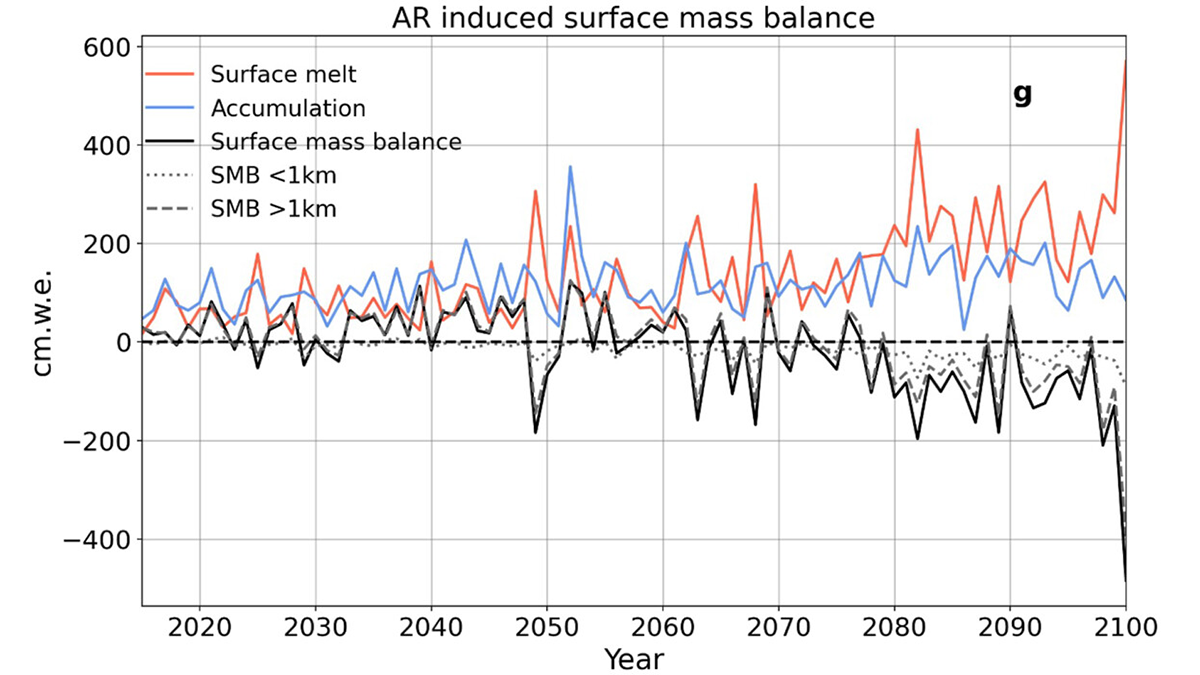
Nonlinear Dynamics May Lead to Faster Retreat of Antarctic Ice

by Minghua Zhang 14 April 202514 April 2025

The Antarctic ice sheet behaves like a non-Newtonian fluid and may be more nonlinear than previously thought. This impacts its future stability and requires revisions to predictions of sea level rise.

Photo of a caldera
Posted inEditors' Highlights

Deflected Dikes Perturb the Plumbing System

by Thorsten W. Becker 11 April 202510 April 2025

A multidisciplinary synthesis of the Campi Flegrei, Italy volcanic setting highlights the importance of sub-caldera layering for magma dynamics.

Diagram from the study.
Posted inEditors' Highlights

Martian Magmas Live Long and Prosper

by Mariek E. Schmidt 10 April 20259 April 2025

The depths, longevity, and potential to generate silicic compositions of magma chambers are linked to crustal temperature, which varies across Mars and over its geological history.

Diagram from the study.
Posted inEditors' Highlights

Fast Flows in Earth’s Magnetotail Surveyed by NASA Satellites

by Mary Hudson 9 April 20253 April 2025

A survey of high-speed electron flow observed by NASA satellites in the Earth’s magnetotail is presented and related to the process of magnetic field line reconnection and particle acceleration.

Map of a study region and photo of a canoe in a river.
Posted inEditors' Highlights

Strange Branching of Water Flows Through Rivers and Lakes

by Georgia Destouni 8 April 20253 April 2025

Sometimes rivers split into branches in unusual ways, reflecting the complexity of Earth’s water system on land and how much we still must learn about it.

Seismic images from the study.
Posted inEditors' Highlights

Seismic Images Show Major Change Along the Mid-Atlantic Ridge

by Andrew Frederiksen 7 April 20253 April 2025

New seismic images of the Lucky Strike slow-spreading segment of the Mid-Atlantic Ridge show thick lower crust at the center that thins in both along-ridge directions.

Graphs and maps from the study.
Posted inEditors' Highlights

Arctic Sea Ice After CO2 Recovery: Implications for North Atlantic Weather

by Gudrun Magnusdottir 4 April 202524 April 2025

Incomplete Arctic sea ice recovery results in equatorward-shifted winter jets. The North Atlantic jet shift is particularly uncertain due to the ocean circulation acting as an additional driver.

Posted inEditors' Highlights

2024年5月超级地磁暴冲击后的电离层变化

by Alberto Montanari 3 April 20253 April 2025

一项新研究发现,2024 年 5 月超级地磁暴影响下,地球高层大气与电离层发生了独特的变化。

Posts pagination

Newer posts 1 … 13 14 15 16 17 … 112 Older posts
Over a dark blue-green square appear the words Special Report: The State of the Science 1 Year On.

Features from AGU Publications

Research Spotlights

How Internal Waves Transport Energy Thousands of Miles Across the Ocean

26 March 202626 March 2026
Editors' Highlights

What’s Under the Water Matters

27 March 202626 March 2026
Editors' Vox

The Future of Earth’s Future

24 March 202624 March 2026
Eos logo at left; AGU logo at right

About Eos
ENGAGE
Awards
Contact

Advertise
Submit
Career Center
Sitemap

© 2026 American Geophysical Union. All rights reserved Powered by Newspack