Research & Developments is a blog for brief updates that provide context for the flurry of news regarding law and policy changes that impact science and scientists today.
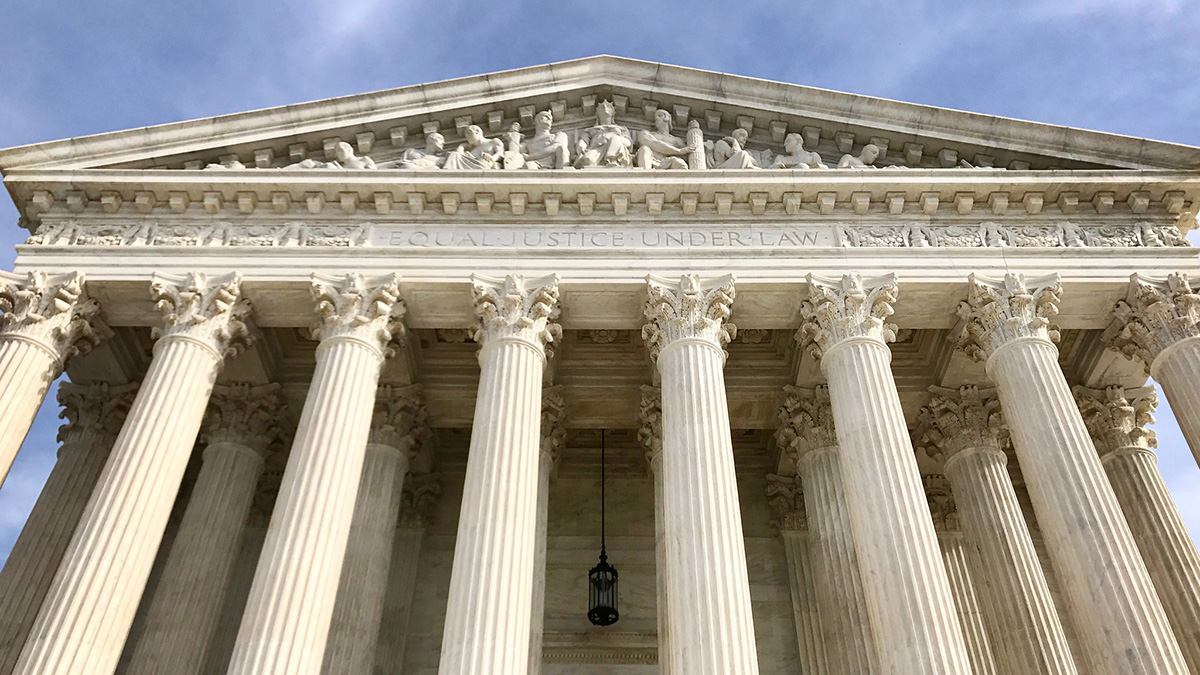
The U.S. Supreme Court opened its newest term by hearing a case about climate change, the outcome of which could have wide-reaching consequences for fossil fuel companies and state and local governments.
In 2018, the city and county of Boulder, Colo., filed a lawsuit in state court against Suncor Energy and ExxonMobil.
Their argument: Because the companies’ production and processing of fossil fuels had contributed to climate change—and because the companies knowingly misled the public about its harms—they should be held responsible for the financial costs associated with it. (A 2026 report from the Colorado Fiscal Institute suggests that climate change could cost the state up to $37 billion between 2025 and 2050.)
It’s expensive, the plaintiffs argued, to protect infrastructure, agricultural land, and public health from climate-related hazards such as extreme precipitation, more intense wildfires, prolonged drought conditions, and diminished air quality.
The companies argue that the issue should be decided in federal court, rather than “through fragmented state-court actions.”
Years of back-and-forth followed, and today the Supreme Court set out to answer the question of whether Suncor Inc. v. Boulder County can move forward at the state level. Justice Samuel Alito recused himself from the case one week ago.
Today’s arguments focused on the question of whether the case should be decided at the federal level, as the companies argue, or at the state level, where the case was originally filed.
The Oil Companies’ Argument
“If Boulder’s claims are allowed to go forward, some 90,000 municipalities across the country will have the ability to make national and international energy policy by asking juries to impose catastrophic damages on selected fossil fuel producers,” argued Kannon Shanmugam, a lawyer for the energy companies, in his opening remarks. He argued that the constitution bars applying state law “to certain inherently federal areas.”
Several times throughout the arguments, the justices inquired if the case was brought to the Supreme Court prematurely, as the Colorado Supreme Court has not yet issued a final resolution. Shanmugam argued that the magnitude of the question at stake meant “the time is really now” to address the question.
“I would submit that, given the extraordinary magnitude of these cases—where in each of these cases, plaintiffs are seeking billions of dollars of damages—that we need an answer to this question sooner rather than later,” he said.
Sarah Harris, a lawyer for the Trump administration, also argued that states should not be able to “fill a vacuum of federal area with state law.”
Boulder’s Argument
Kevin Russell, a lawyer representing Boulder, argued that states have always had the power to provide tort remedies for “injuries occurring within their borders, even when the conduct causing those injuries occurred elsewhere.”
“When somebody in New York defames a citizen of Boulder on national television, or somebody in California releases a computer virus on the Internet, or biological virus into the world, and it causes mass damage in Colorado, it has never been thought that only federal law can provide a remedy,” he said.
The justices asked Russell whether he saw any problem with applying state law to worldwide conduct, but Russell argued that precedent exists: If a car is negligently manufactured in Canada and then causes a problem within a U.S. state, the manufacturer can be held liable under state law.
The justices also raised other concerns, including the possibility of a flood of lawsuits being filed using the same argument and the potential for such cases to bankrupt defendants. Russell argued that the Constitution does not prohibit law from being made that, if copied elsewhere, could cause a lot of litigation. Nor, he argued, does precedent or tradition say that a state doesn’t have a power to apply a law that might have a “prohibitive effect” on another party.
In his rebuttal, Shanmugam argued that the scope of Boulder’s case was overly broad, leaving no limits for who can sue or be sued over the effects of climate change.
“In conclusion, this case, and others like it, reflect an all-too-regrettable trend of trying to resolve major political issues in court rather than leaving them to the political branches where they belong,” he said. “Climate change is certainly one of the most pressing issues of the day, but we would submit that this is exactly the wrong way to go about resolving it.”
One thing everyone seemed to agree on is that this case is not a simple one, with the plaintiffs, defendants, and even the justices referencing the complicated nature of its legal arguments.
While conservative Justice Brett Kavanaugh sounded firm in his support of the oil companies and the liberal wing of the court—Justices Sonia Sotomayor, Elena Kagan, and Ketanji Brown Jackson—seems likely cast votes in favor of Boulder, it’s not immediately clear where other justices will land. Justices Clarence Thomas, Neil Gorsuch, and Amy Coney Barrett, as well as Chief Justice John Roberts, will likely decide the outcome. A ruling is expected by next summer.
In the event of a tie (possible because of Justice Alito’s recusal), the case would continue in the lower courts.
—Emily Gardner (@emfurd.bsky.social), Deputy Editor
These updates are made possible through information from the scientific community. Do you have a story about how changes in law or policy are affecting scientists or research? Send us a tip at [email protected].