Source: Journal of Geophysical Research: Biogeosciences
Human activities add large quantities of nitrogen to the environment, much of which gets washed into streams and rivers. These waterways transport some of that nitrogen to the oceans, but they also remove a significant portion of it through a process called denitrification: Microbes facilitate a series of chemical reactions that turn nitrate into dinitrogen gas, which is then released into the atmosphere.
Existing research, largely in streams, shows a wide range of denitrification rates, but the factors affecting this process aren’t fully quantified, especially in rivers. Pruitt et al. compared denitrification rates in a stream and a river across three seasons to study how the process varies across waterway scales.
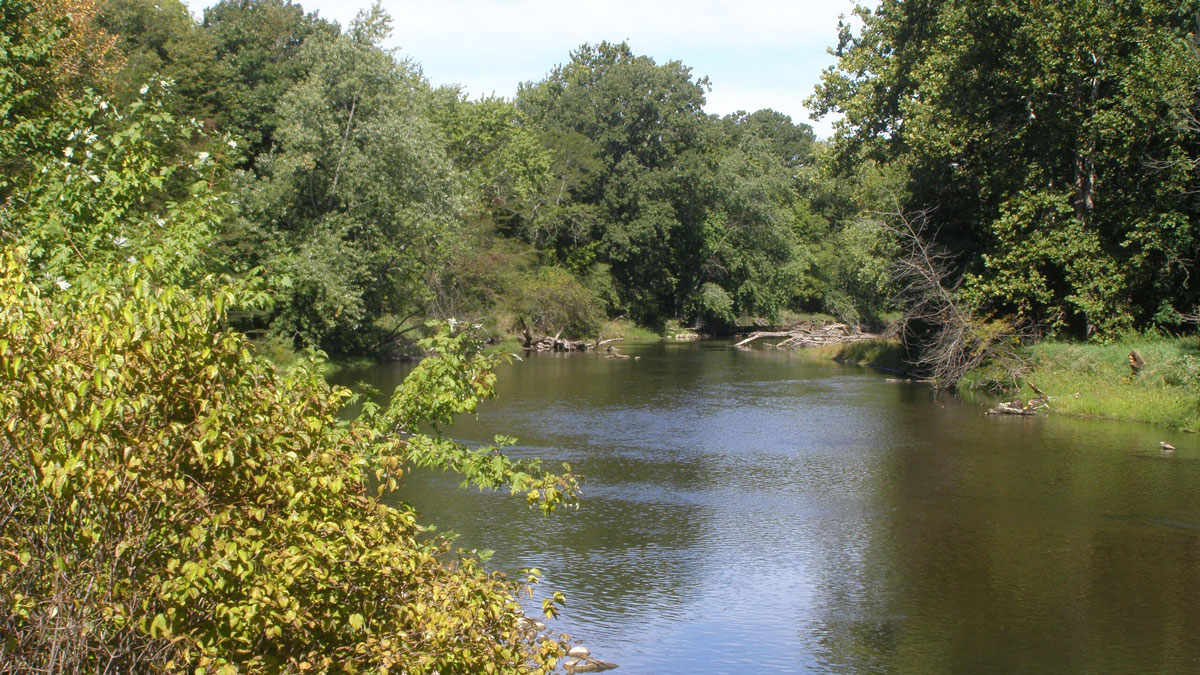
The researchers took hourly water samples from the Tippecanoe River and the Shatto Ditch in Indiana over 36-hour periods in spring, summer, and fall. They used open-channel metabolism and a membrane inlet mass spectrometry–based model to study how rates of denitrification fluctuated in both waterways as the seasons changed. They found the stream had higher denitrification rates per square meter than the river in all seasons. They attribute this in part to higher nitrate levels in the stream, as well as a proportionally greater contribution of microbial activity on the streambed. However, when the researchers scaled up, the denitrification rate in rivers per kilometer of channel length was equal to or even higher than that of streams.
The researchers also observed different seasonal denitrification patterns. In the stream, denitrification rates were highest in spring and lower in summer and fall, whereas in the river, denitrification rates were highest in the fall, followed by spring, and very low in summer. Fertilizer application and higher precipitation rates in spring likely drive the stream dynamics, they suggest, whereas higher rates of ecosystem respiration increasing denitrifier activity in the fall may explain the pattern seen in the river.
Additionally, nitrogen gas concentrations varied by hour, the authors report, which could help explain the large range of rates found by previous studies. They recommend that future work use both the open-channel method and an in situ chamber assay and compare the two sampling methods. The authors also suggest that separating incomplete from complete denitrification could be valuable to explore the release of nitrous oxide, a potent greenhouse gas, to the atmosphere. (Journal of Geophysical Research: Biogeosciences, https://doi.org/10.1029/2025JG009044, 2025)
—Nathaniel Scharping (@nathanielscharp), Science Writer