• About
  • Sections
  • Topics
    • Climate
    • Earth Science
    • Oceans
    • Space & Planets
    • Health & Ecosystems
    • Culture & Policy
    • Education & Careers
    • Opinions
  • Projects
    • Postcards From the Field
    • ENGAGE
    • Editors’ Highlights
    • Editors’ Vox
    • Eos en Español
    • Eos 简体中文版
    • Print Archive: 2015–2025
  • Science Policy Tracker
  • Blogs
    • Research & Developments
    • The Landslide Blog
  • Newsletter
  • Submit to Eos
  • AGU.org
  • Career Center
  • Join AGU
  • Give to AGU
  • About
  • Sections
  • Topics
    • Climate
    • Earth Science
    • Oceans
    • Space & Planets
    • Health & Ecosystems
    • Culture & Policy
    • Education & Careers
    • Opinions
  • Projects
    • Postcards From the Field
    • ENGAGE
    • Editors’ Highlights
    • Editors’ Vox
    • Eos en Español
    • Eos 简体中文版
    • Print Archive: 2015–2025
  • Science Policy Tracker
  • Blogs
    • Research & Developments
    • The Landslide Blog
  • Newsletter
  • Submit to Eos
Skip to content
  • AGU.org
  • Career Center
  • Join AGU
  • Give to AGU
Eos

Eos

Science News by AGU

Support Eos
Sign Up for Newsletter
  • About
  • Sections
  • Topics
    • Climate
    • Earth Science
    • Oceans
    • Space & Planets
    • Health & Ecosystems
    • Culture & Policy
    • Education & Careers
    • Opinions
  • Projects
    • Postcards From the Field
    • ENGAGE
    • Editors’ Highlights
    • Editors’ Vox
    • Eos en Español
    • Eos 简体中文版
    • Print Archive: 2015–2025
  • Science Policy Tracker
  • Blogs
    • Research & Developments
    • The Landslide Blog
  • Newsletter
  • Submit to Eos

Bangladesh

A new initiative uses satellite data, observations, and communication networks to warn Bangladeshis of cholera hazards.
Posted inScience Updates

Satellites and Cell Phones Form a Cholera Early-Warning System

by A. S. Akanda, S. Aziz, Antarpreet Jutla, A. Huq, M. Alam, G. U. Ahsan and Rita R. Colwell 27 March 201824 February 2023

A new initiative combines satellite data with ground observations to assess and predict the risk of cholera outbreaks in Bangladesh’s vulnerable populations.
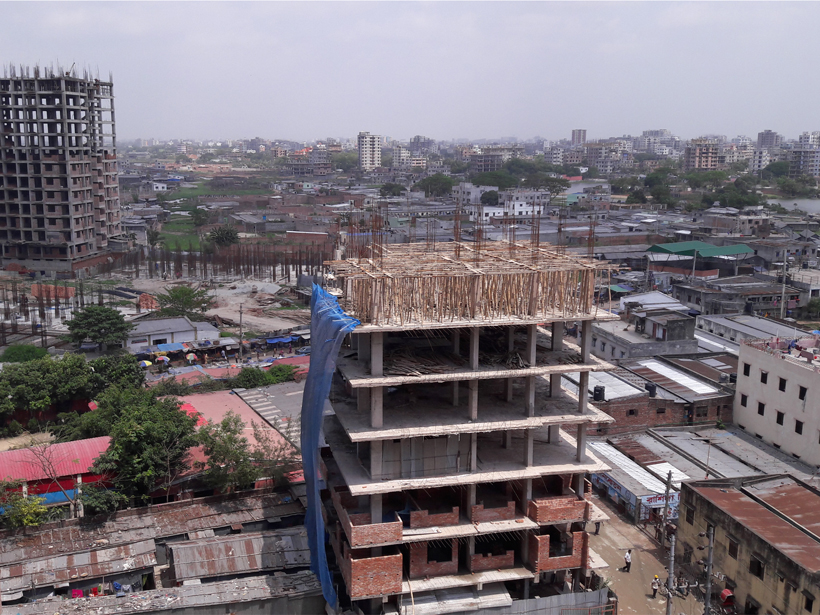
Dhaka, Bangladesh, has dense residences and skyscrapers; mitigating earthquake hazards here is a “wicked problem.”
Posted inFeatures

The Wicked Problem of Earthquake Hazard in Developing Countries

by M. S. Steckler, S. Stein, S. H. Akhter and L. Seeber 7 March 201816 March 2022

Earthquake preparation in Bangladesh is a conundrum, where crucial information is missing and investments often involve painful trade-offs.

Posted inResearch Spotlights

Satellite Imaging Improves Study of Sinking River Deltas

JoAnna Wendel, freelance science writer and illustrator by JoAnna Wendel 10 January 201519 September 2023

Researchers know that the Ganges-Brahmaputra river delta is sinking. Now they have an accurate reading on the rate of subsidence.

Posts pagination

Newer posts 1 2
A view of a bridge, with the New Orleans skyline visible in the distance between the bridge and the water. A purple tint, a teal curved line representing a river, and the text “#AGU25 coverage from Eos” overlie the photo.

Features from AGU Publications

Research Spotlights

Denitrification Looks Different in Rivers Versus Streams

16 January 202616 January 2026
Editors' Highlights

ALMA’s New View of the Solar System

16 January 202616 January 2026
Editors' Vox

Bridging the Gap: Transforming Reliable Climate Data into Climate Policy

16 January 202616 January 2026
Eos logo at left; AGU logo at right

About Eos
ENGAGE
Awards
Contact

Advertise
Submit
Career Center
Sitemap

© 2026 American Geophysical Union. All rights reserved Powered by Newspack