• About
  • Sections
  • Topics
    • Climate
    • Earth Science
    • Oceans
    • Space & Planets
    • Health & Ecosystems
    • Culture & Policy
    • Education & Careers
    • Opinions
  • Projects
    • Postcards From the Field
    • ENGAGE
    • Editors’ Highlights
    • Editors’ Vox
    • Eos en Español
    • Eos 简体中文版
    • Print Archive: 2015–2025
  • Science Policy Tracker
  • Blogs
    • Research & Developments
    • The Landslide Blog
  • Newsletter
  • Submit to Eos
  • AGU.org
  • Career Center
  • Join AGU
  • Give to AGU
  • About
  • Sections
  • Topics
    • Climate
    • Earth Science
    • Oceans
    • Space & Planets
    • Health & Ecosystems
    • Culture & Policy
    • Education & Careers
    • Opinions
  • Projects
    • Postcards From the Field
    • ENGAGE
    • Editors’ Highlights
    • Editors’ Vox
    • Eos en Español
    • Eos 简体中文版
    • Print Archive: 2015–2025
  • Science Policy Tracker
  • Blogs
    • Research & Developments
    • The Landslide Blog
  • Newsletter
  • Submit to Eos
Skip to content
  • AGU.org
  • Career Center
  • Join AGU
  • Give to AGU
Eos

Eos

Science News by AGU

Support Eos
Sign Up for Newsletter
  • About
  • Sections
  • Topics
    • Climate
    • Earth Science
    • Oceans
    • Space & Planets
    • Health & Ecosystems
    • Culture & Policy
    • Education & Careers
    • Opinions
  • Projects
    • Postcards From the Field
    • ENGAGE
    • Editors’ Highlights
    • Editors’ Vox
    • Eos en Español
    • Eos 简体中文版
    • Print Archive: 2015–2025
  • Science Policy Tracker
  • Blogs
    • Research & Developments
    • The Landslide Blog
  • Newsletter
  • Submit to Eos

carbon emissions

Posted inResearch Spotlights

Reduced Emissions Lead to Clearer Skies over Alabama

by S. Palus 20 February 201513 February 2023

Aerosol pollutants are on the decline—and so are their effects.

Posted inScience Updates

Counting the Ocean's Greenhouse Gas Emissions

by A. Kock and H. W. Bange 10 February 20157 October 2021

A new database seeks to improve estimates of oceanic emissions of methane and nitrous oxide.

Posted inResearch Spotlights

Colorado Hydrocarbon Leakage Rates Much Higher Than Reported

by C. Schultz 14 January 20158 February 2023

Airborne measurements put methane emissions from Colorado's Denver-Julesburg Basin at 12 to 26 tons per hour.

Posted inResearch Spotlights

Southwest’s Four Corners Home to Largest U.S. Methane Signal

by E. Betz 5 January 20158 February 2023

Satellite data reveal fossil fuel harvesting operations in the Southwest's Four Corners are generating the country's largest methane signal viewable from space.

Posted inNews

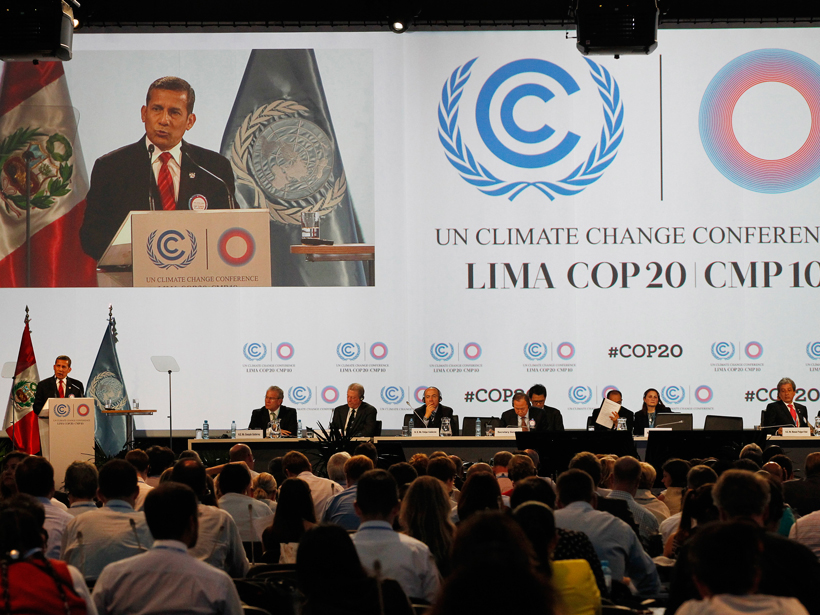
Countries Worldwide Commit to Curbing Greenhouse Gas Emissions

Mohi Kumar headshot by M. Kumar 14 December 201430 May 2023

Although the agreement is a political breakthrough, it falls short of keeping future temperatures from rising more than 2°C above those of pre-industrial times.

Posted inNews

Report Addresses Timeline for Cutting Greenhouse Gas Emissions

by Randy Showstack 2 December 201416 March 2023

Levels of greenhouse gas emissions need to be limited by midcentury to keep within a 2°C increase, a new United Nations report states.

Posted inResearch Spotlights

Upper Atmosphere Has Cooled Steadily for Three Decades

JoAnna Wendel, freelance science writer and illustrator by JoAnna Wendel 25 November 201423 January 2023

Scientists projected that the upper atmosphere would continue to cool and contract with rising greenhouse gas emissions. Now, these projections have been confirmed for the first time.

Posted inNews

Methane-Producing Microbes Important for Studying Greenhouse Gas Emissions

JoAnna Wendel, freelance science writer and illustrator by JoAnna Wendel 4 November 20141 March 2023

Scientists have long thought that methane-producing microbes contribute to climate change but are slowly learning just how big a role these microbes play.

Posted inResearch Spotlights

Black Carbon Reductions in the Arctic Tied to Declining Emissions

by C. Schultz 21 October 201417 March 2023

Researchers track the presence of black carbon above the Arctic Circle.

Posts pagination

Newer posts 1 … 21 22 23
A view of a bridge, with the New Orleans skyline visible in the distance between the bridge and the water. A purple tint, a teal curved line representing a river, and the text “#AGU25 coverage from Eos” overlie the photo.

Features from AGU Publications

Research Spotlights

Denitrification Looks Different in Rivers Versus Streams

16 January 202616 January 2026
Editors' Highlights

Kyanite Exsolution Reveals Ultra-Deep Subduction of Continents

23 January 202622 January 2026
Editors' Vox

Bridging the Gap: Transforming Reliable Climate Data into Climate Policy

16 January 202616 January 2026
Eos logo at left; AGU logo at right

About Eos
ENGAGE
Awards
Contact

Advertise
Submit
Career Center
Sitemap

© 2026 American Geophysical Union. All rights reserved Powered by Newspack