
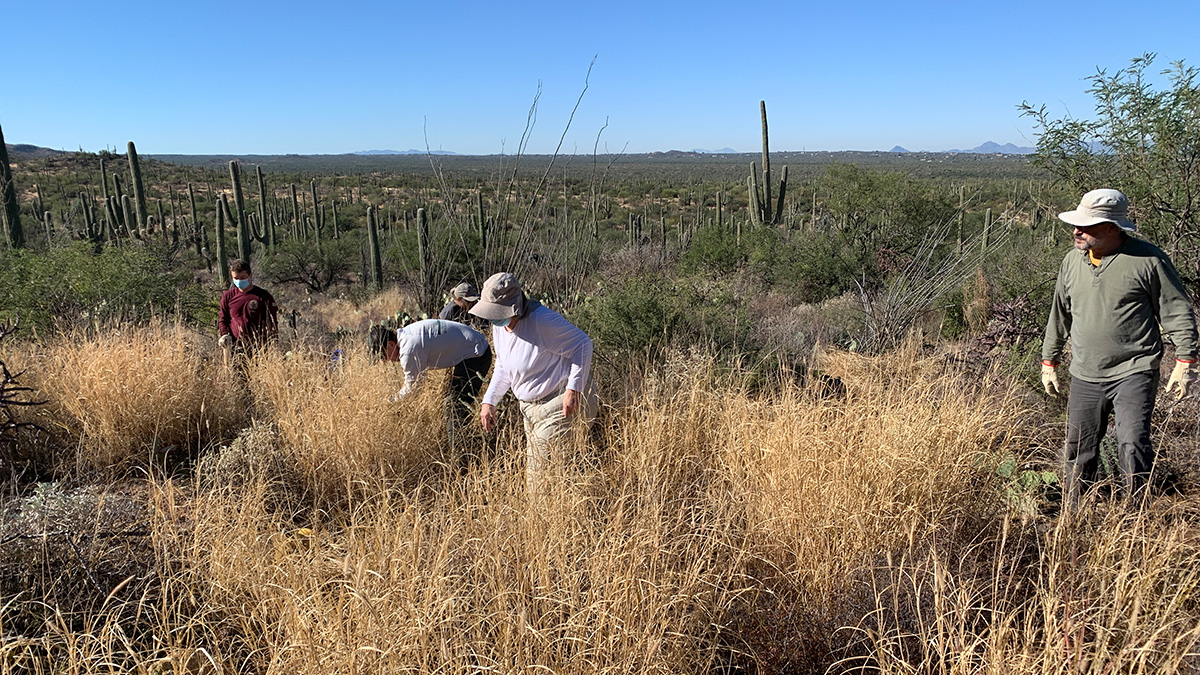

In experiments conducted in Biosphere 2, invasive buffelgrass weathers higher temperatures and drought conditions better than its native brethren.
Climate Change

Posted inResearch Spotlights
Drop in Rain Forest Productivity Could Speed Future Climate Change

As temperatures rise, tropical forests will become more stressed and photosynthesize less.

Posted inEditors' Highlights
Managing Strategic Water Resources in a Changing Climate
Another significant step has been taken in methods for managing water resources in the face of climatic changes and other future uncertainties. Dynamic adaptation is becoming a reality.

Posted inNews
Did Volcanoes Accelerate the Fall of Chinese Dynasties?

After analyzing ice cores and historical documents, researchers found a link between eruptions and political change in China over the past 2 millennia.


Posted inFeatures
The Uncertain Future of Antarctica’s Melting Ice
A new multidisciplinary, international research program aims to tackle one of the grand challenges in climate science: resolving the Antarctic Ice Sheet’s contribution to future sea level rise.

Posted inResearch Spotlights
Health Impacts of Air Pollution from Australian Megafires
Models suggest that thousands of Australians experienced dangerous levels of air pollution for several months, leading to more than a hundred deaths.

Posted inResearch Spotlights
The AI Forecaster: Machine Learning Takes On Weather Prediction

A novel approach to weather forecasting uses convolutional neural networks to generate exceptionally fast global forecasts based on past weather data.
Posted inENGAGE, News
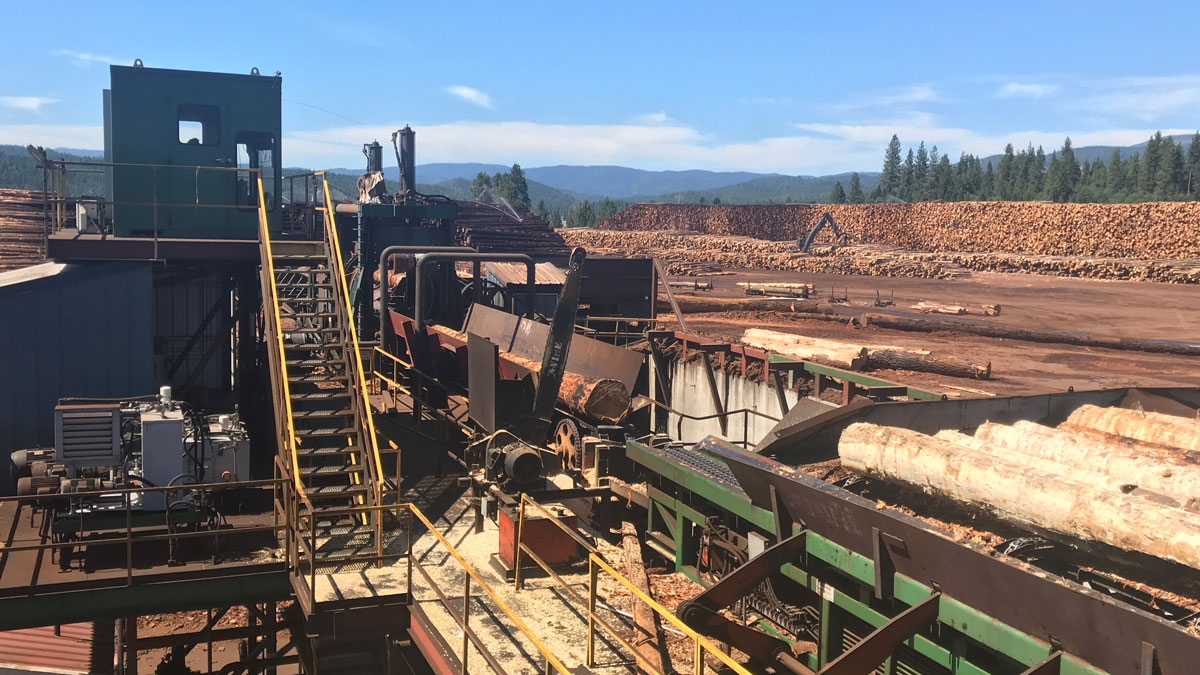
Clever Wood Use Could Mitigate Wildfires and Climate Change
California plans to use forest thinning to reduce wildfire risk. New research suggests the state could also see a climate benefit by repurposing waste wood produced by thinning.
Posted inNews
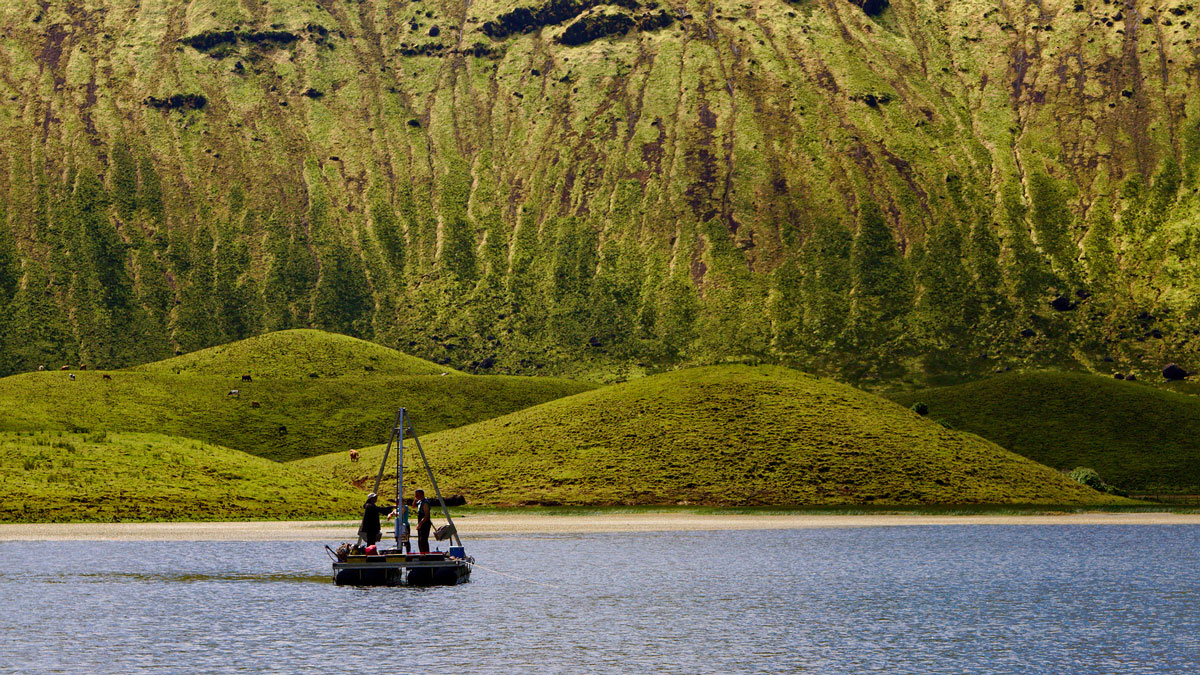
Sediments Suggest Vikings May Have Been the First to Settle the Azores
A multidisciplinary team studying lake sediments and climate change found evidence that the archipelago was inhabited 700 years earlier than historical sources claim.