• About
  • Special Reports
  • Topics
    • Climate
    • Earth Science
    • Oceans
    • Space & Planets
    • Health & Ecosystems
    • Culture & Policy
    • Education & Careers
    • Opinions
  • Projects
    • Postcards From the Field
    • ENGAGE
    • Editors’ Highlights
    • Editors’ Vox
    • Eos en Español
    • Eos 简体中文版
    • Print Archive: 2015–2025
  • Policy Tracker
  • Blogs
    • Research & Developments
    • The Landslide Blog
  • Newsletter
  • Submit to Eos
  • AGU.org
  • Career Center
  • Join AGU
  • Give to AGU
  • About
  • Special Reports
  • Topics
    • Climate
    • Earth Science
    • Oceans
    • Space & Planets
    • Health & Ecosystems
    • Culture & Policy
    • Education & Careers
    • Opinions
  • Projects
    • Postcards From the Field
    • ENGAGE
    • Editors’ Highlights
    • Editors’ Vox
    • Eos en Español
    • Eos 简体中文版
    • Print Archive: 2015–2025
  • Policy Tracker
  • Blogs
    • Research & Developments
    • The Landslide Blog
  • Newsletter
  • Submit to Eos
Skip to content
  • AGU.org
  • Career Center
  • Join AGU
  • Give to AGU
Eos

Eos

Science News by AGU

Support Eos
Sign Up for Newsletter
  • About
  • Special Reports
  • Topics
    • Climate
    • Earth Science
    • Oceans
    • Space & Planets
    • Health & Ecosystems
    • Culture & Policy
    • Education & Careers
    • Opinions
  • Projects
    • Postcards From the Field
    • ENGAGE
    • Editors’ Highlights
    • Editors’ Vox
    • Eos en Español
    • Eos 简体中文版
    • Print Archive: 2015–2025
  • Policy Tracker
  • Blogs
    • Research & Developments
    • The Landslide Blog
  • Newsletter
  • Submit to Eos

Climate Change

Satellite image of Tropical Cyclone Maha as it swirls over the Arabian Sea, with the Arabian Peninsula visible to the west and the Indian coast to the east.
Posted inENGAGE, News

Climate Change Is Making India’s West Coast More Vulnerable to Cyclones

Rishika Pardikar, Science Writer by Rishika Pardikar 13 September 202129 March 2023

A new study found significant increases in the intensity, frequency, and duration of cyclonic storms over the Arabian Sea. Is the west coast prepared?

Black carbon particles are spread throughout our atmosphere, produced by the burning of fuels or industrial processes.
Posted inResearch Spotlights

How Long Do Black Carbon Particles Linger in the Atmosphere?

Sarah Derouin, Science Writer by Sarah Derouin 10 September 20218 March 2022

Researchers uncover how black carbon evolves from hydrophobic particles to cloud nucleation sites, eventually removing the heat-absorbing particles from the sky.

Carro eléctrico cargando en un estación en Berlín
Posted inENGAGE, Research Spotlights

La Captura de Carbono No Puede Resolver el Problema Climático Sin Acciones Individuales

Joshua Learn, Science Writer by Joshua Rapp Learn 9 September 202129 March 2023

Las elecciones individuales, como la adopción de vehículos eléctricos, serán un factor importante en el cumplimiento de los objetivos climáticos del Acuerdo de París.

A coast of the Galapagos Islands in the eastern tropical Pacific
Posted inNews

Tropical Climate Change Is a Puzzle—Could Aerosols Be a Piece?

by Andrew Chapman 9 September 202114 April 2022

The eastern tropical Pacific Ocean hasn’t warmed as much as climate change models projected. A new study shows that aerosols in the atmosphere could be responsible.

Photograph of the Grosser Aletschgletscher, the largest glacier in the European Alps
Posted inEditors' Vox

Glacier Structures: History Written in the Ice

by S. J. A. Jennings and M. J. Hambrey 8 September 20211 October 2021

As Earth’s climate heats up, glacier structures are being revealed in unprecedented detail, allowing glaciologists to understand how the behavior of glaciers has changed over centuries to millennia.

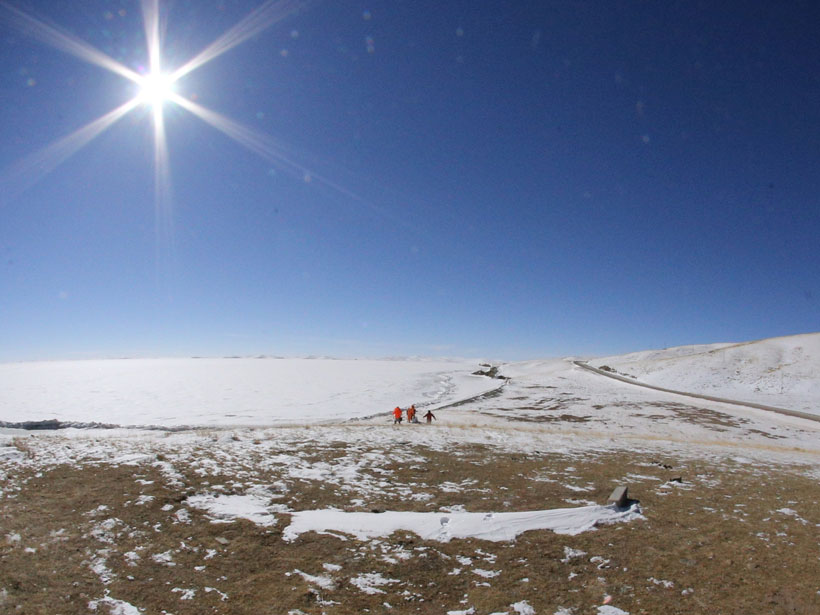
A view of ice covering Ngoring Lake, which is the largest freshwater lake (610 square kilometers) on the Tibetan Plateau.
Posted inResearch Spotlights

Tibetan Plateau Lakes as Heat Flux Hot Spots

Kate Wheeling, freelance science writer by Kate Wheeling 3 September 202126 October 2021

Freshwater lakes on the highest plateau in the world act like lenses that accumulate heat from the intense solar radiation, accelerating ice cover melt and affecting land-atmosphere fluxes.

Green mossy forest
Posted inENGAGE, News

How the “Best Accidental Climate Treaty” Stopped Runaway Climate Change

Jenessa Duncombe, Staff Writer by Jenessa Duncombe 2 September 20213 June 2024

The Montreal Protocol halted the destruction of the ozone layer. In the process, it saved one of Earth’s most important carbon sinks.

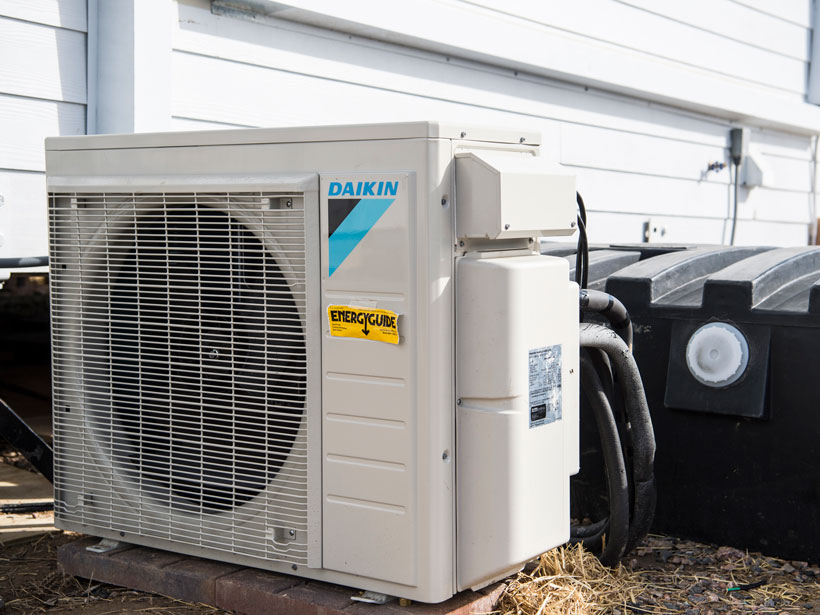
The outdoor component of a residential heat pump
Posted inENGAGE, News

Heat Pumps Can Lower Home Emissions, but Not Everywhere

by Jackie Rocheleau 2 September 20211 June 2023

A new study shows that in the right places, heat pumps can help homeowners lower greenhouse gas emissions, save on heating and cooling costs, and promote public health.

A wind turbine is assembled.
Posted inNews

Forecast: 8 Million Energy Jobs Created by Meeting Paris Agreement

Jenessa Duncombe, Staff Writer by Jenessa Duncombe 1 September 202124 April 2026

Quickly switching to renewables will create 5 million more jobs by 2050 than sticking to fossil fuels will, according to projections.

在中生代,泛大陆的分裂导致了长期的气候趋势。
Posted inResearch Spotlights

中生代1.95亿年的全球气候模拟

by Jack Lee 31 August 202126 October 2021

集合气候模拟确定了推动史前温室气候长期趋势的因素。

Posts pagination

Newer posts 1 … 92 93 94 95 96 … 262 Older posts
Over a dark blue-green square appear the words Special Report: The State of the Science 1 Year On.

Features from AGU Publications

Research Spotlights

What Australian Lakes Showed Us About Martian Hydrology

27 July 202627 July 2026
Editors' Highlights

Enhancing Induced Seismicity: A New Window into Earthquake Physics

28 July 202627 July 2026
Editors' Vox

The Hidden Costs of Mining River Sand

27 July 202627 July 2026
Eos logo at left; AGU logo at right

About Eos
ENGAGE
Awards
Contact

Advertise
Submit
Career Center
Sitemap

© 2026 American Geophysical Union. All rights reserved Powered by Newspack