• About
  • Special Reports
  • Topics
    • Climate
    • Earth Science
    • Oceans
    • Space & Planets
    • Health & Ecosystems
    • Culture & Policy
    • Education & Careers
    • Opinions
  • Projects
    • Postcards From the Field
    • ENGAGE
    • Editors’ Highlights
    • Editors’ Vox
    • Eos en Español
    • Eos 简体中文版
    • Print Archive: 2015–2025
  • Policy Tracker
  • Blogs
    • Research & Developments
    • The Landslide Blog
  • Newsletter
  • Submit to Eos
  • AGU.org
  • Career Center
  • Join AGU
  • Give to AGU
  • About
  • Special Reports
  • Topics
    • Climate
    • Earth Science
    • Oceans
    • Space & Planets
    • Health & Ecosystems
    • Culture & Policy
    • Education & Careers
    • Opinions
  • Projects
    • Postcards From the Field
    • ENGAGE
    • Editors’ Highlights
    • Editors’ Vox
    • Eos en Español
    • Eos 简体中文版
    • Print Archive: 2015–2025
  • Policy Tracker
  • Blogs
    • Research & Developments
    • The Landslide Blog
  • Newsletter
  • Submit to Eos
Skip to content
  • AGU.org
  • Career Center
  • Join AGU
  • Give to AGU
Eos

Eos

Science News by AGU

Support Eos
Sign Up for Newsletter
  • About
  • Special Reports
  • Topics
    • Climate
    • Earth Science
    • Oceans
    • Space & Planets
    • Health & Ecosystems
    • Culture & Policy
    • Education & Careers
    • Opinions
  • Projects
    • Postcards From the Field
    • ENGAGE
    • Editors’ Highlights
    • Editors’ Vox
    • Eos en Español
    • Eos 简体中文版
    • Print Archive: 2015–2025
  • Policy Tracker
  • Blogs
    • Research & Developments
    • The Landslide Blog
  • Newsletter
  • Submit to Eos

Earth science

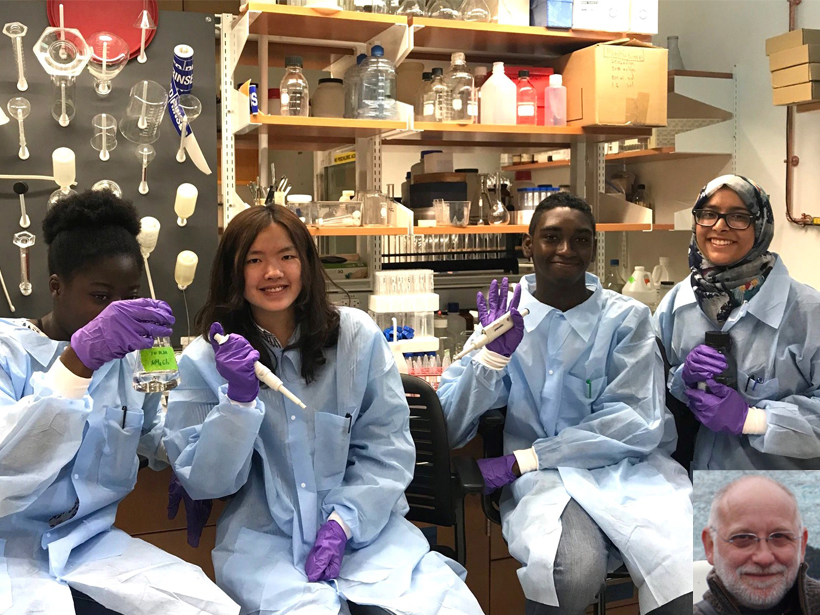
Students participating in Lamont-Doherty Earth Observatory’s Secondary School Field Research Program pose for a photo in Lamont’s marine microbiology laboratory.
Posted inOpinions

Promoting Racial Diversity in Geoscience Through Transparency

by K. Dutt 3 December 201921 March 2023

Geoscience is notoriously lacking in diversity. Institutions can change this by making recruitment and selection processes transparent and by actively engaging minority students.

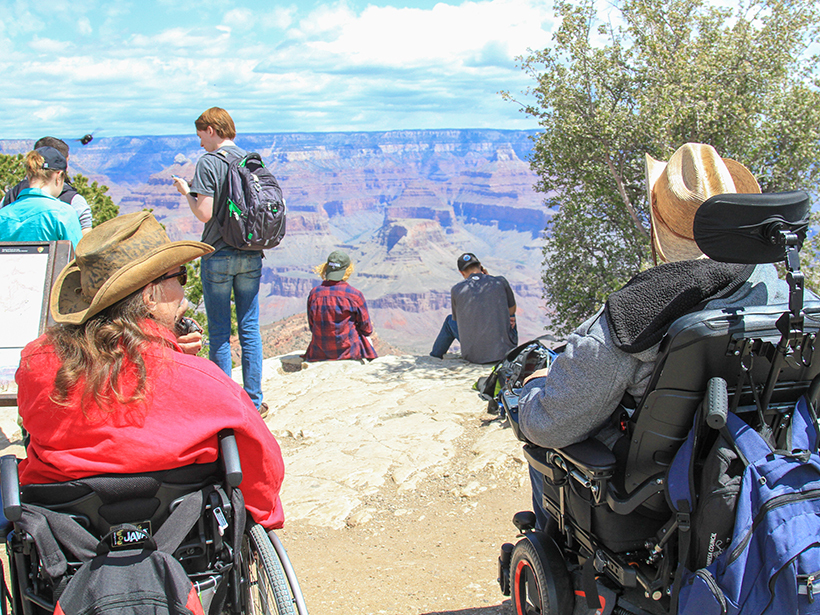
A group participating in an accessible geology field trip to the Grand Canyon.
Posted inOpinions

Creating Spaces for Geoscientists with Disabilities to Thrive

by A. M. Marshall and S. Thatcher 2 December 201921 March 2023

Flexible fieldwork options and more thoughtful recruitment efforts will better open our community to the diverse talent it needs.

Data servers
Posted inFeatures

A Geodata Fabric for the 21st Century

by J. de La Beaujardière 25 November 201925 March 2022

We have the potential to transform our understanding of Earth—if we can just figure out how to harness ever growing data streams.

close up of book pages
Posted inAGU News

AGU Welcomes New Editors in Chief to Lead Six Prominent Journals

by Matt Giampoala 12 November 201927 March 2023

As leaders in their respective fields, this new cohort of Earth and space scientists will help ensure the continued success of AGU publications.

Close-up of a mussel shell near the waterline on a sandy beach
Posted inNews

Shells Sound Out Sand’s Acoustic Signatures

Hannah Thomasy, Science Writer by Hannah Thomasy 11 November 20193 November 2021

Shell remains give sand from different locations unique acoustic signatures.

Posted inNews

Nicholas Constantinos Matalas (1930–2019)

by R. M. Vogel, J. R. Stedinger and J. M. Landwehr 7 November 20191 March 2023

A modest giant in the field of stochastic hydrology.
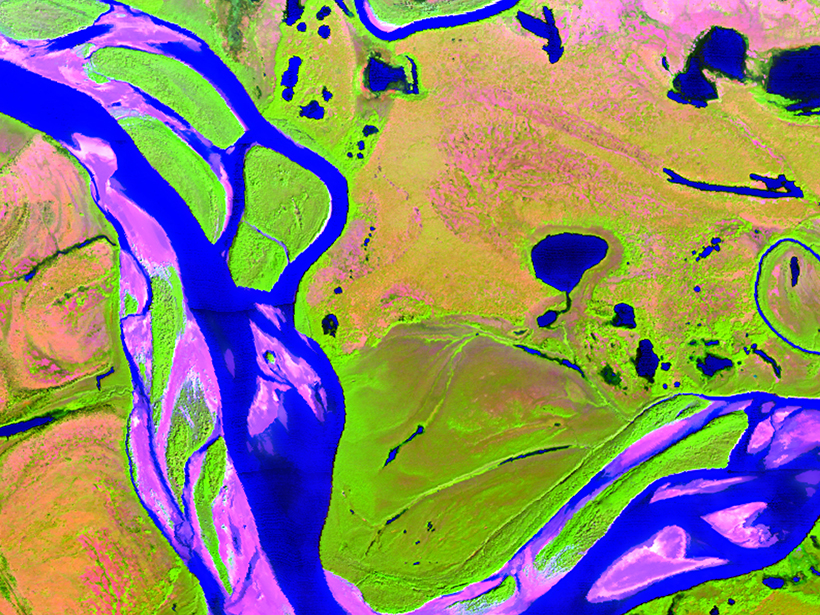
False-color composite image of the landscape near Noatak, Alaska, showing 3 of 425 spectral bands of NASA’s AVRIS-NG
Posted inScience Updates

Watching Earth’s Interconnected Systems at Work

by F. D. Schneider, A. Ferraz and D. Schimel 31 October 201931 March 2023

Surface Biology and Geology, a new NASA Earth observation effort, is developing a path forward for monitoring the Earth system from space.

Illustration of points of light in a web connecting to Earth
Posted inOpinions

Improving Reproducibility in Earth Science Research

by Zhong Liu, J. Wang, S. Pan and David Meyer 30 October 20195 May 2022

Earth scientists need software technology that better integrates legacy data with current and future processing capabilities so they can assess and reproduce their colleagues’ results.

Physical world map showing the tectonic plate boundaries with their movement vectors and selected hot spots
Posted inNews

Podcast: Plate Tectonics, the Theory That Changed Earth Science

Nanci Bompey, assistant director of AGU’s media relations department by N. Bompey 22 October 20196 March 2026

Third Pod from the Sun talks with pioneering geophysicist Xavier Le Pichon about what it was like to be a young scientist challenging deeply held theories.
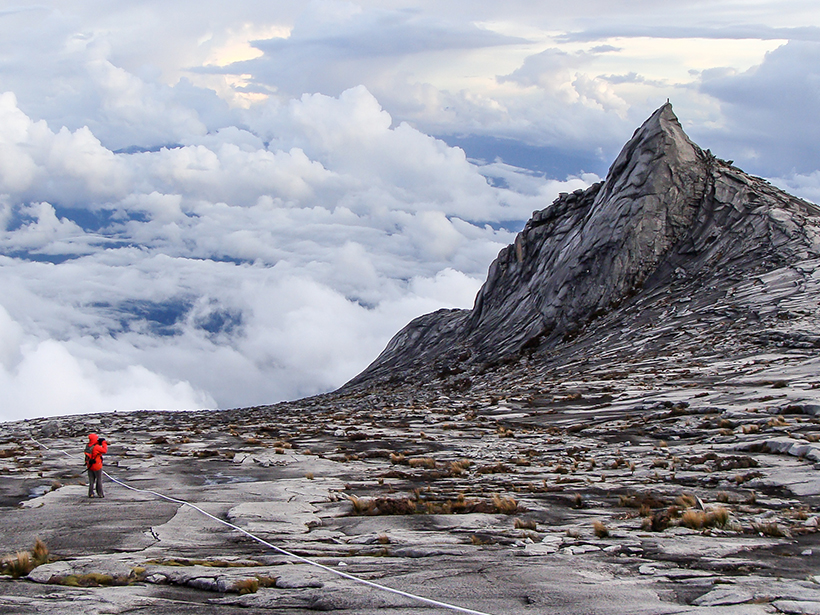
Person standing near Mount Kinabalu in Malaysia
Posted inAGU News

This Is How the World Moves

Heather Goss, AGU Publisher by Heather Goss 1 October 20197 December 2022

In October, we celebrate AGU’s Centennial by looking under our feet, where the relatively new study of plate tectonics is evolving rapidly.

Posts pagination

Newer posts 1 … 141 142 143 144 145 … 160 Older posts
Over a dark blue-green square appear the words Special Report: The State of the Science 1 Year On.

Features from AGU Publications

Research Spotlights

The Speedy Particles That Could Help Us Learn More About Uranus

18 June 202618 June 2026
Editors' Highlights

Where Methane is Emitted Matters for Global Burden

18 June 202616 June 2026
Editors' Vox

Small-Scale Indian Ocean Dynamics Underpin Marine Ecology and Climate

4 June 20263 June 2026
Eos logo at left; AGU logo at right

About Eos
ENGAGE
Awards
Contact

Advertise
Submit
Career Center
Sitemap

© 2026 American Geophysical Union. All rights reserved Powered by Newspack