• About
  • Special Reports
  • Topics
    • Climate
    • Earth Science
    • Oceans
    • Space & Planets
    • Health & Ecosystems
    • Culture & Policy
    • Education & Careers
    • Opinions
  • Projects
    • Postcards From the Field
    • ENGAGE
    • Editors’ Highlights
    • Editors’ Vox
    • Eos en Español
    • Eos 简体中文版
    • Print Archive: 2015–2025
  • Policy Tracker
  • Blogs
    • Research & Developments
    • The Landslide Blog
  • Newsletter
  • Submit to Eos
  • AGU.org
  • Career Center
  • Join AGU
  • Give to AGU
  • About
  • Special Reports
  • Topics
    • Climate
    • Earth Science
    • Oceans
    • Space & Planets
    • Health & Ecosystems
    • Culture & Policy
    • Education & Careers
    • Opinions
  • Projects
    • Postcards From the Field
    • ENGAGE
    • Editors’ Highlights
    • Editors’ Vox
    • Eos en Español
    • Eos 简体中文版
    • Print Archive: 2015–2025
  • Policy Tracker
  • Blogs
    • Research & Developments
    • The Landslide Blog
  • Newsletter
  • Submit to Eos
Skip to content
  • AGU.org
  • Career Center
  • Join AGU
  • Give to AGU
Eos

Eos

Science News by AGU

Support Eos
Sign Up for Newsletter
  • About
  • Special Reports
  • Topics
    • Climate
    • Earth Science
    • Oceans
    • Space & Planets
    • Health & Ecosystems
    • Culture & Policy
    • Education & Careers
    • Opinions
  • Projects
    • Postcards From the Field
    • ENGAGE
    • Editors’ Highlights
    • Editors’ Vox
    • Eos en Español
    • Eos 简体中文版
    • Print Archive: 2015–2025
  • Policy Tracker
  • Blogs
    • Research & Developments
    • The Landslide Blog
  • Newsletter
  • Submit to Eos

Earth science

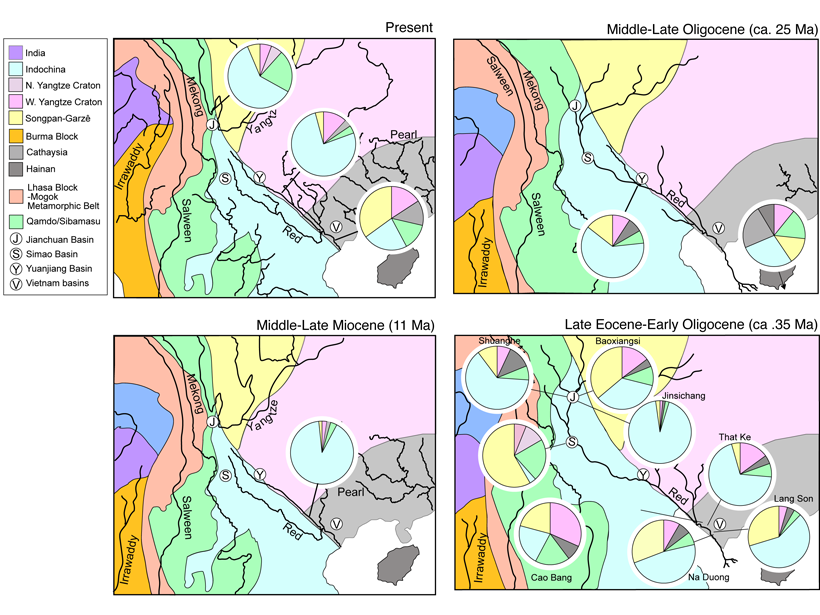
Four maps of the Red River region in different periods of geologic history showing composition of sediment samples
Posted inEditors' Highlights

A River Ran Through It

by Peter van der Beek 19 August 202026 January 2023

The history of river system in southeast Tibet and Indochina reconstructed using the ages of thousands of zircon sand grains in modern and ancient river sediments.

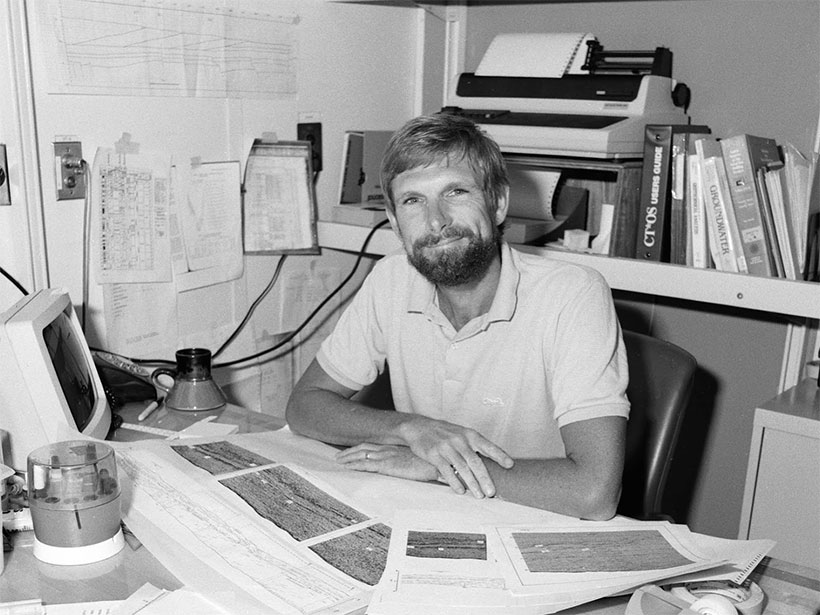
A smiling Casey Moore sits at a desk aboard the drilling vessel JOIDES Resolution
Posted inNews

J. Casey Moore (1945–2020)

by C. Rowe and T. Byrne 5 August 20201 October 2021

This polymath Earth scientist pioneered multidisciplinary studies of subduction zones on land and at sea.
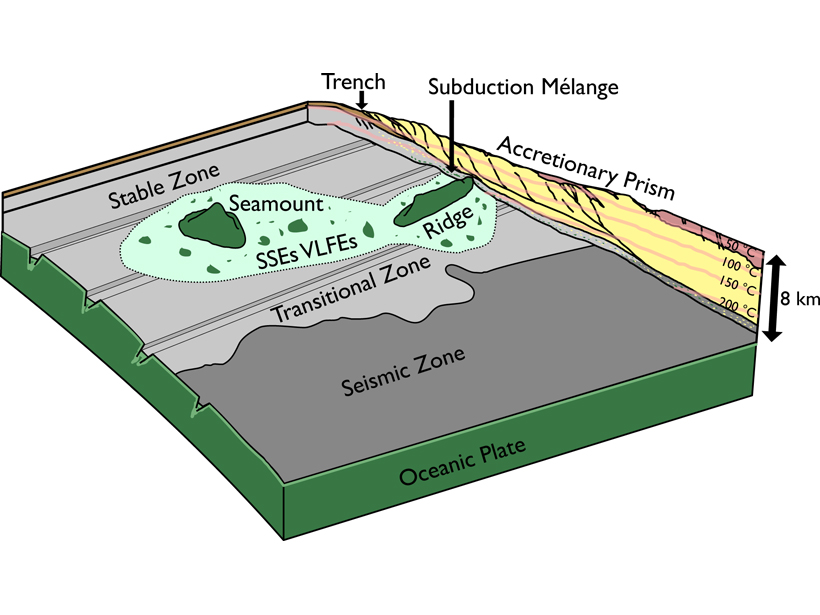
Cartoon showing a map view of the top of a subducting plate modeled on present day subduction at Nankai in southwest Japan
Posted inEditors' Highlights

A Mechanism for Shallow, Slow Earthquakes in Subduction Zones

by U. Faul 30 July 202018 January 2022

Slow earthquakes beneath the accretionary prism updip from the locked portion of a subduction zone can be caused by basaltic blocks embedded in a shale matrix.
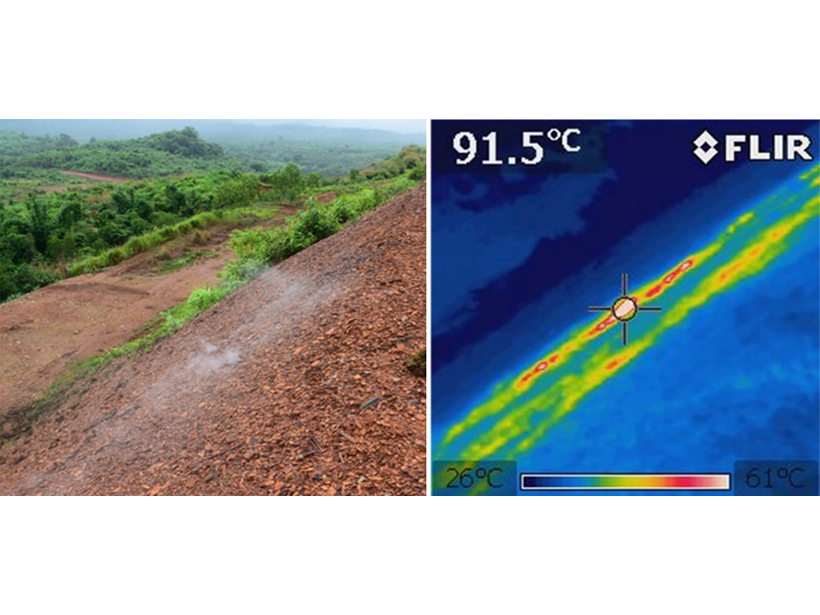
Photograph and heat map plot of a spontaneously combusting coal-mine waste heap in Myanmar heating up to 91.5 degrees Celsius
Posted inEditors' Highlights

Citizen Science Reduces Risks from Combusting Coal-Mine Wastes

by K. Hudson-Edwards 17 July 20206 January 2023

A community-based citizen science study on spontaneously combusting coal-mine waste heaps in Myanmar underpins the development of risk management plans to protect individuals and communities.

Posted inNews

Orson Anderson (1924–2019)

by R. C. Liebermann and D. Isaak 8 July 20205 January 2022

This pioneer in the field of mineral physics contributed mightily to our understanding of mineral properties at high temperatures and high pressures and of Earth’s interior.
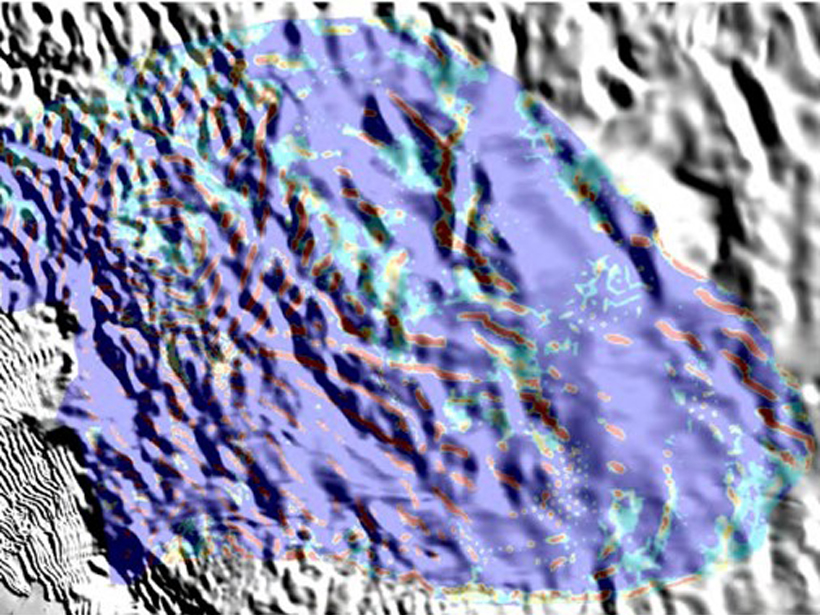
Results of an inverse model showing inferred basal shear underneath Thwaites Glacier, West Antarctica
Posted inEditors' Vox

Modeling: A Powerful and Versatile Tool in Glaciology

by Olga Sergienko, Mathieu Morlighem, S. Nowicki and L. Padman 1 July 20209 February 2023

Papers are invited for a new special collection presenting advances in modeling in glaciology that improve understanding of glaciers and ice sheets and their interactions with the Earth system.
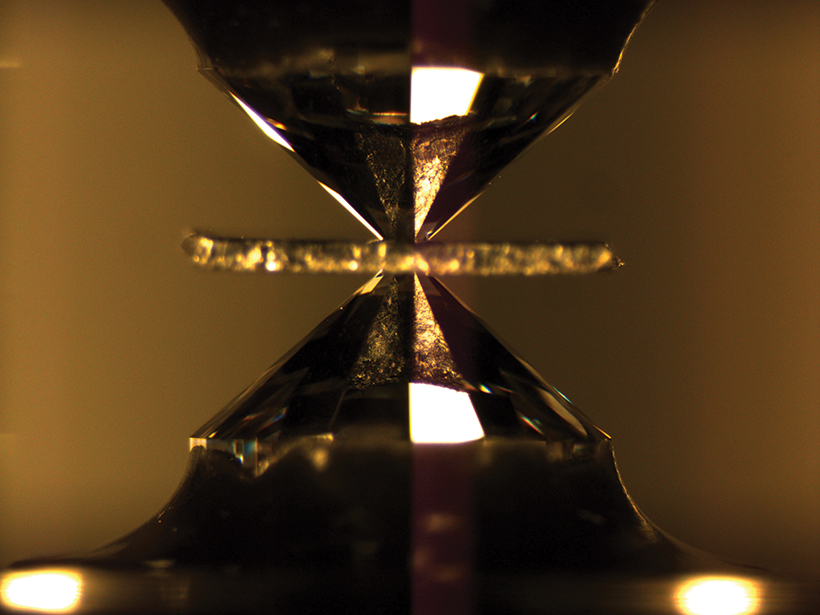
Sepia-toned photograph of two diamonds pressing a sample between their points
Posted inFeatures

Reflecting on a Half Century of Mineral and Rock Physics at AGU

by R. C. Liebermann 24 June 202030 September 2023

Research fields focused on the physical properties of Earth materials emerged in the 20th century and have been making major contributions within geoscience ever since.

Posted inNews

Adolphe Nicolas (1936–2020)

by F. Boudier, B. Coleman, B. Ildefonse, P. Kelemen and D. Mainprice 28 May 202012 January 2023

This decorated researcher and educator made major contributions to understanding mantle processes and the creation of oceanic crust at spreading ridges, together with public outreach on climate change.
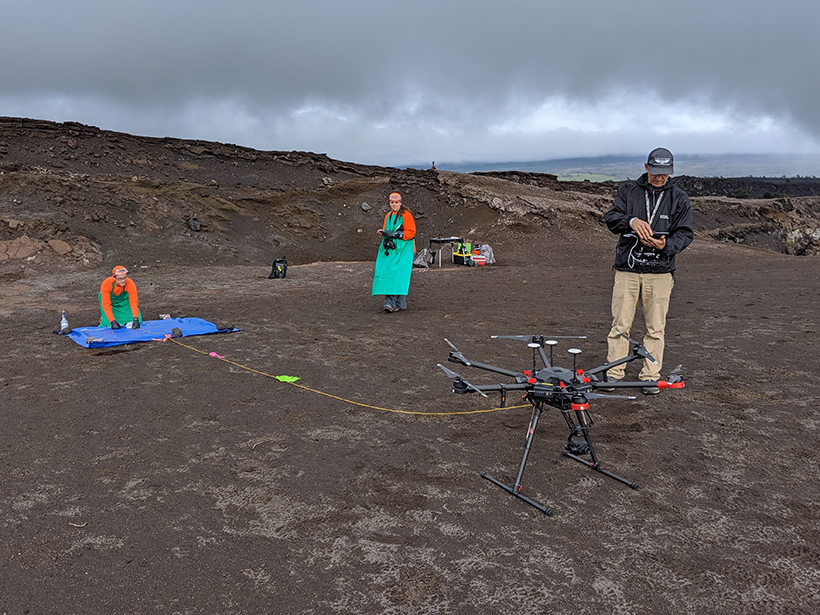
Scientists test a drone atop Mount Kīlauea in Hawaii.
Posted inNews

NSF Plots a Course for the Next Decade of Earth Sciences Research

Rachel Fritts, Science Writer by Rachel Fritts 20 May 20206 February 2023

Committee members who put together the new report Earth in Time describe this as an “all hands on deck” moment for the field.

Posted inAGU News

McEnroe Receives 2019 William Gilbert Award

by AGU 19 May 20203 January 2023

Suzanne A. McEnroe received the 2019 William Gilbert Award at AGU’s Fall Meeting 2019 Honors Ceremony, held 9–13 December in San Francisco, Calif. The award recognizes “outstanding and unselfish work in magnetism of Earth materials and of the Earth and planets.”

Posts pagination

Newer posts 1 … 139 140 141 142 143 … 160 Older posts
Over a dark blue-green square appear the words Special Report: The State of the Science 1 Year On.

Features from AGU Publications

Research Spotlights

The Speedy Particles That Could Help Us Learn More About Uranus

18 June 202618 June 2026
Editors' Highlights

Where Methane is Emitted Matters for Global Burden

18 June 202616 June 2026
Editors' Vox

Small-Scale Indian Ocean Dynamics Underpin Marine Ecology and Climate

4 June 20263 June 2026
Eos logo at left; AGU logo at right

About Eos
ENGAGE
Awards
Contact

Advertise
Submit
Career Center
Sitemap

© 2026 American Geophysical Union. All rights reserved Powered by Newspack